

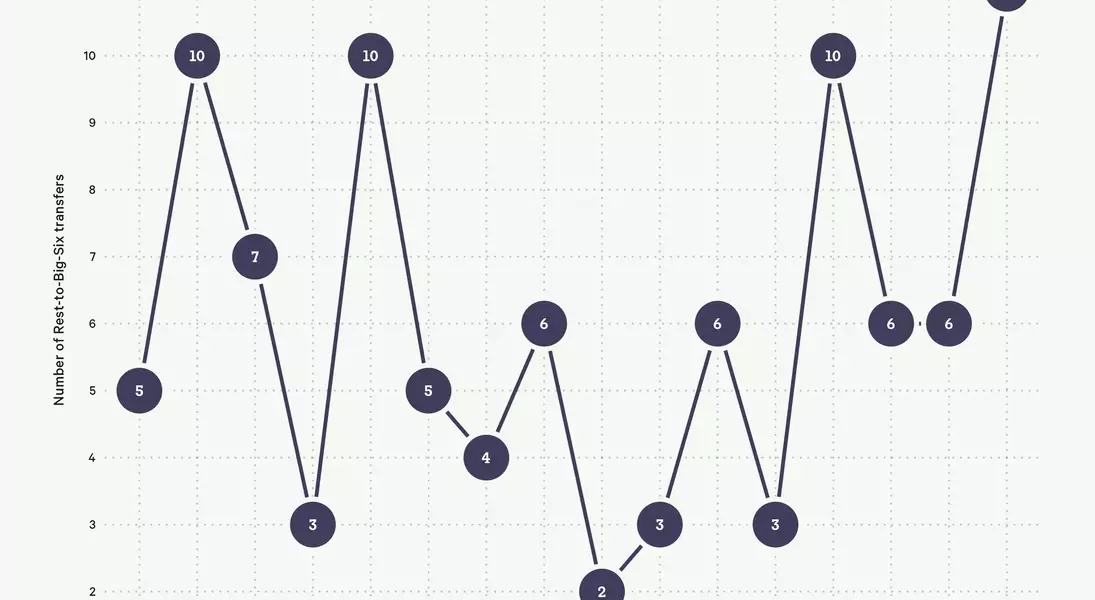
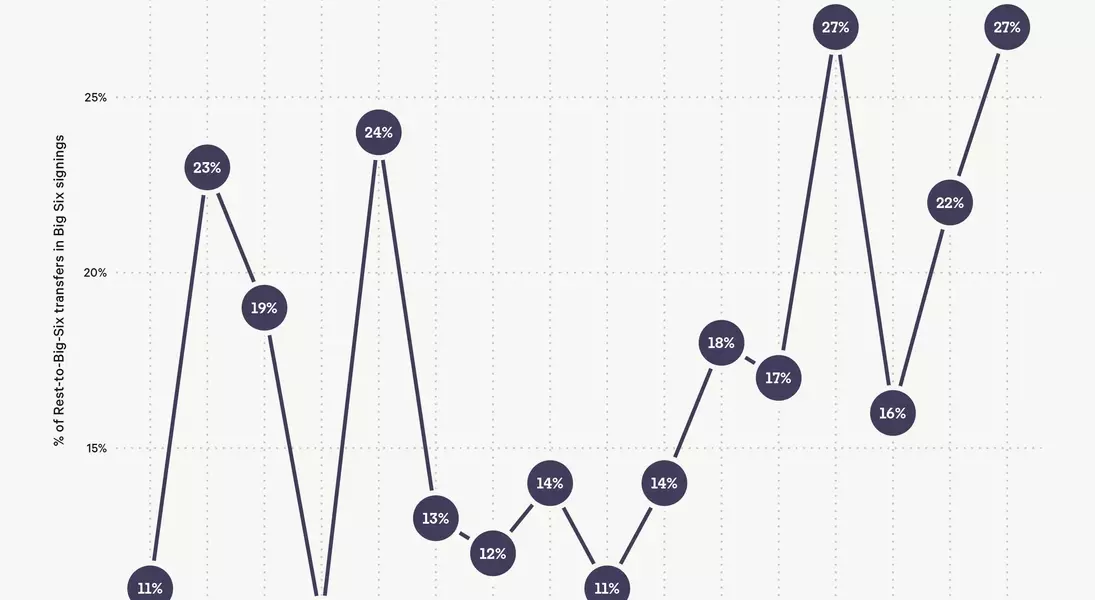
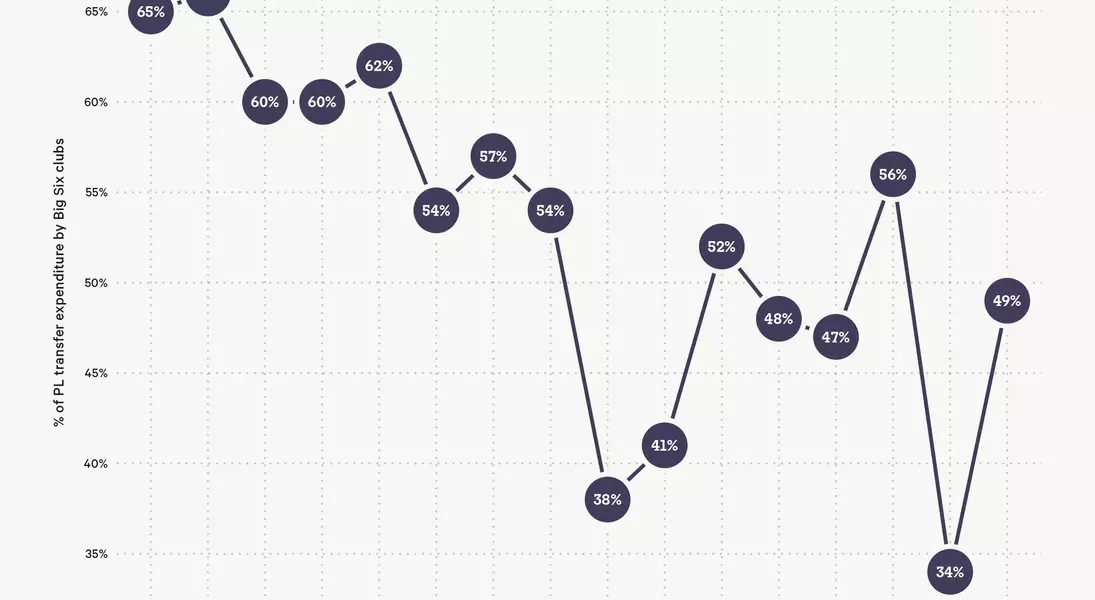
The recent closure of the Premier League transfer window has brought into sharp focus a distinct shift in the balance of power, firmly tilting towards the established financial heavyweights. This summer's activity underscored a burgeoning trend where the league's most affluent clubs are increasingly siphoning talent from their domestic rivals, rather than primarily looking abroad. This strategy, driven by immense financial might and the allure of top-tier competition, presents a formidable challenge to the aspirations of the remaining fourteen clubs, many of whom are grappling with stringent financial fair play regulations and the sheer economic disparity. The narrative of player movement now vividly illustrates a hierarchical structure, where leading players often seek to elevate their careers by joining the most prestigious and prosperous teams in English football.
Elite Clubs Consolidate Power in a Transformative Transfer Window
As the curtains fell on the vibrant summer transfer period in early September 2025, a pivotal moment unfolded with Alexander Isak's high-profile, record-shattering move from Newcastle United to Liverpool. This significant transaction, finalized on the dramatic deadline day, vividly highlighted a season-long phenomenon: the escalating influence wielded by players and, more profoundly, by the Premier League's most formidable and financially robust clubs. Isak's determined quest for a transfer, marked by his refusal to participate in Newcastle's initial matches, epitomized a broader trend. Across this transfer window, there was a noticeable surge in the number of exceptional players being meticulously selected from within the Premier League by the long-standing 'Big Six' — a designation encompassing Arsenal, Chelsea, Liverpool, Manchester City, Manchester United, and Tottenham. This development has cast a rather sobering shadow over the other fourteen top-flight clubs in England, many of whom found themselves constrained either by the league's financial regulations or by prevailing economic realities.
While the term 'Big Six' can sometimes provoke strong reactions among supporters of other clubs, particularly following a season where Newcastle, Aston Villa, and Nottingham Forest showcased impressive performances by securing fifth, sixth, and seventh positions respectively, this label signifies the clubs possessing the greatest financial power and influence. Their standing has remained largely unassailable for approximately a decade and a half. Despite fluctuations in on-pitch performance, the inherent financial muscle of this established elite has proven exceptionally difficult to surmount. Even Newcastle, under its Saudi Arabian ownership, has seen its spending curtailed by the Premier League's Profit and Sustainability Rules (PSR). The club's disruptive potential was further challenged by Isak's persistent efforts to engineer his move to Liverpool.
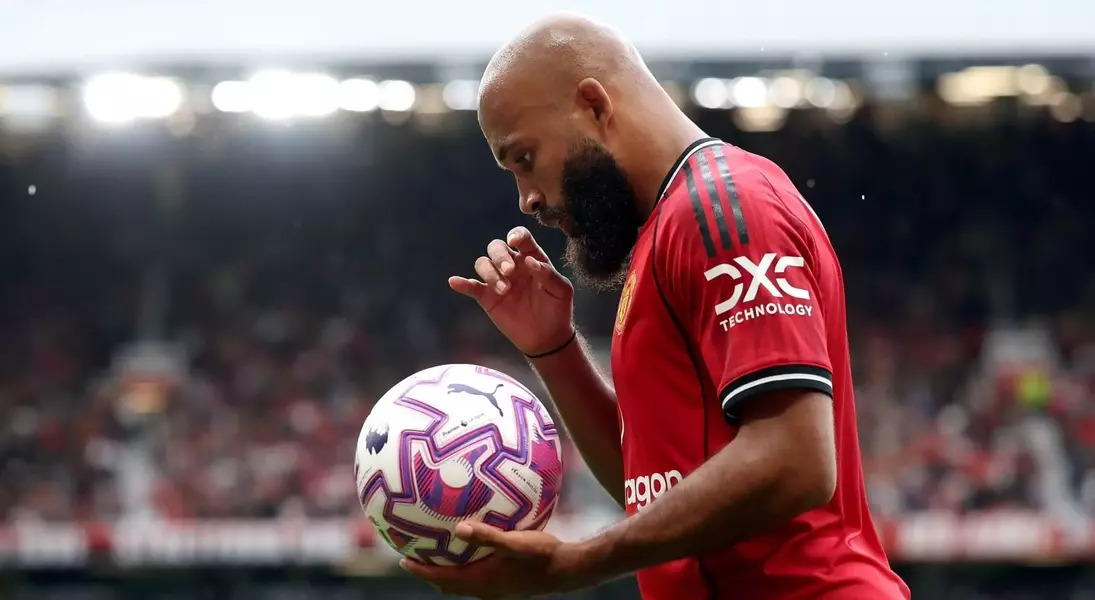
Beyond the groundbreaking British transfer record paid for Isak from Newcastle, Liverpool’s monumental expenditure exceeded £400 million, including a £40 million acquisition of Milos Kerkez from Bournemouth. Arsenal's outlay surpassed £250 million, securing talents such as Christian Norgaard from Brentford and Eberechi Eze from Crystal Palace. Manchester City brought in James Trafford from newly promoted Burnley and Rayan Ait-Nouri from Wolves. Manchester United bolstered their squad with Matheus Cunha from Wolves and Bryan Mbeumo from Brentford. Tottenham acquired Mohammed Kudus from West Ham United. Chelsea's notable additions included Facundo Buonanotte on loan and Joao Pedro from Brighton & Hove Albion. Another promising young talent from Brighton, Julio Enciso, made a cross-channel move to French club Strasbourg, which shares ownership with Chelsea under BlueCo. This period marked a significant departure from earlier seasons, where such intra-league transfers involving 'Big Six' clubs were far less frequent, demonstrating a clear shift in recruitment strategies towards proven domestic talent.
The increasing gravitation of talent towards the 'Big Six' is not solely attributable to financial regulations. Insights from Premier League recruitment specialists suggest additional factors are at play. One significant element is the heightened sophistication in player recruitment and trading strategies adopted by clubs outside the elite. What began as an innovative approach at Southampton in the mid-2010s—identifying and nurturing relatively unknown players before selling them to larger Premier League clubs—has now been widely adopted by teams like Leicester, Brighton, Bournemouth, and Brentford. Furthermore, the Premier League's global ascendancy plays a crucial role. Recent Deloitte reports on football club revenues place six English clubs within the top ten worldwide, with an additional eight featuring in the top 30. This dominance is underscored by the league's total transfer expenditure exceeding £3 billion for the first time this summer, surpassing the combined spending of the French, German, Italian, and Spanish leagues. This financial might, fueled by immense broadcast and commercial deals, has centralized much of the sport's wealth and talent within the Premier League.
Consequently, when top clubs like Liverpool sought a young left-back, despite high-caliber candidates globally, their analysis pointed to Kerkez at Bournemouth as the ideal fit due to his technical and physical attributes, and his existing assimilation into English football. Similarly, Real Madrid and Paris Saint-Germain recruited promising central defenders, Dean Huijsen and Illia Zabarnyi, from Bournemouth. Manchester United's strategic focus this summer was on acquiring established Premier League players, leading to the signings of Cunha and Mbeumo, and attempts to secure Carlos Baleba from Brighton. The influence of agents and player power also remains a potent force, as evidenced by players like Alexander Isak and Yoane Wissa actively pursuing transfers. While some players, such as Marc Guehi, did not secure desired moves due to club circumstances, others like Eze found success through their professionalism. The long-term challenge for Newcastle remains transforming the 'Big Six' into a 'Big Seven,' navigating regulatory hurdles that did not exist when Chelsea and Manchester City rose to prominence. While Newcastle has made significant intra-league signings, the financial and organizational strength of the 'Big Six' still represents a formidable barrier to their full integration into the elite echelon of European football.
A Shifting Landscape: Reflections on Power, Ambition, and Evolution in Football
The recent transfer window serves as a stark reminder of the ever-evolving dynamics within professional football. From a journalist's perspective, it’s fascinating to observe how financial might, strategic player recruitment, and the sheer ambition of both clubs and individual athletes converge to reshape the competitive landscape. The narrative of the 'Big Six' solidifying their grip on top-tier talent is not merely a tale of wealth, but also one of sophisticated market intelligence and the compelling allure of elite competition. It prompts us to consider the future of competitive balance in the Premier League. Will the current financial regulations truly level the playing field, or will they inadvertently entrench the dominance of those already at the summit? For the ambitious clubs outside this exclusive circle, the challenge is clear: how to cultivate and retain talent against the formidable pull of the giants, while simultaneously navigating the intricate web of financial sustainability. This period marks a pivotal moment, urging us to ponder whether the dream of widespread competition will persist, or if a more stratified league structure is becoming the inescapable reality.
