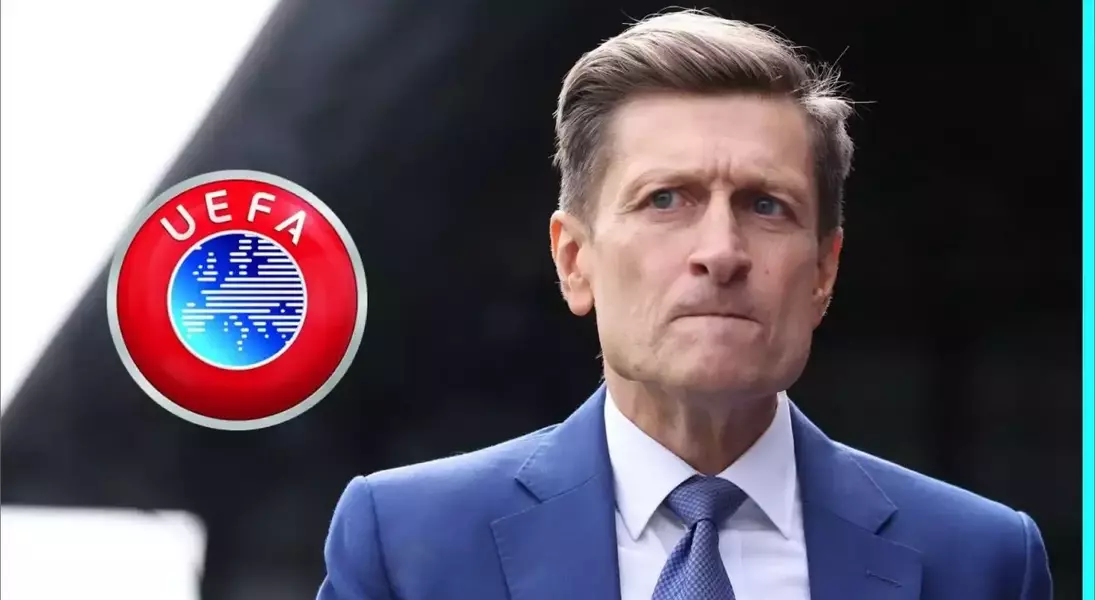
This article explores the controversy surrounding Crystal Palace's exclusion from the Europa League, shedding light on UEFA's multi-club ownership regulations and the ensuing disappointment for the club and its supporters.
A Tale of Two Clubs: Navigating European Football's Complex Ownership Landscape
Unraveling the European Competition Conundrum for Crystal Palace
Crystal Palace's recent FA Cup victory, a momentous achievement, was unfortunately followed by a setback concerning their European aspirations. Despite their domestic triumph, the club found its path to the Europa League blocked by intricate regulations established by UEFA. This situation sparked considerable debate, particularly among the club's faithful.
UEFA's Stance on Club Ownership and Credibility
Aleksander Ceferin, the president of UEFA, addressed the concerns of Crystal Palace fans directly, clarifying that the responsibility for their club's absence from the Europa League lay not with the governing body, but with the club's non-compliance with specific rules. He emphasized that adherence to established guidelines is paramount for maintaining the integrity and fairness of European competitions.
The Role of Multi-Club Ownership in European Football
A key factor in Crystal Palace's situation was the issue of multi-club ownership. The club's connection to John Textor, who also held stakes in another European team, Lyon, posed a conflict under UEFA's regulations. Despite arguments presented by Crystal Palace regarding Textor's lack of decisive influence, both UEFA and the Court of Arbitration for Sport (CAS) upheld the initial decision, highlighting the stringent nature of these rules.
Navigating Investor Interests and Competitive Integrity
Ceferin also touched upon the broader implications of multi-club ownership for the future of football. He acknowledged the importance of attracting investors to the sport while stressing the critical need to preserve competitive balance and public trust. The challenge lies in finding a regulatory framework that accommodates diverse ownership structures without compromising the inherent credibility of the competitions.
The Future of Multi-Club Ownership Regulations
The discussion around multi-club ownership is ongoing, with UEFA continually evaluating how best to adapt its policies to the evolving landscape of global football. Solutions like blind trusts are being explored to mitigate potential conflicts of interest, aiming to strike a delicate balance between fostering investment and safeguarding the fairness and excitement that define European football.
