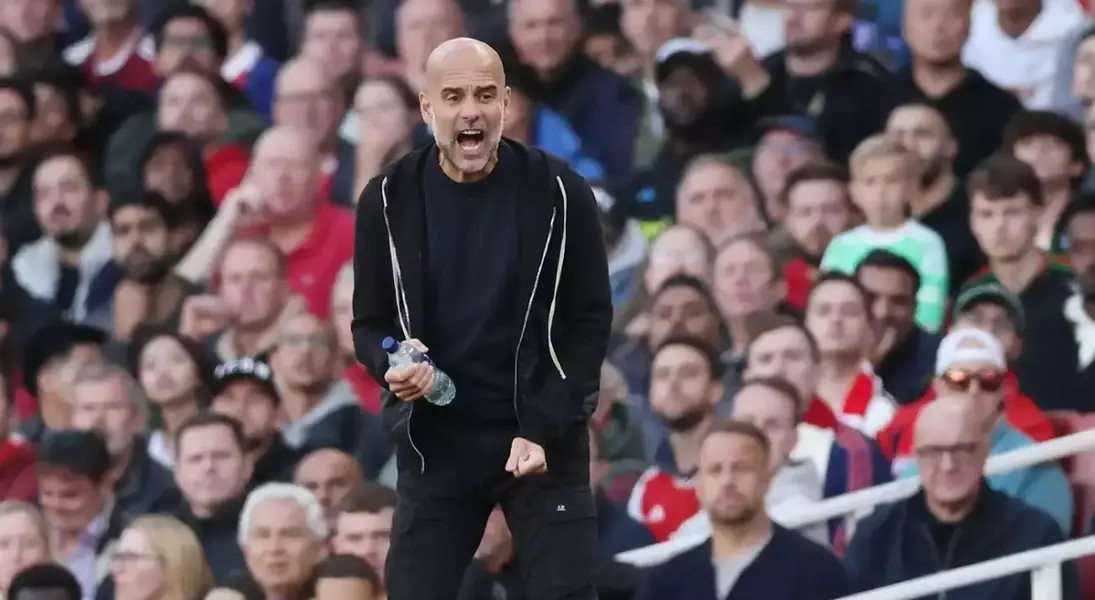
Pep Guardiola's strategic choices during Manchester City's recent draw against Arsenal have become a focal point of discussion within the football community. The match, which concluded in a 1-1 stalemate, saw City's manager adopt an uncharacteristic defensive posture, a move that drew parallels to the pragmatic styles of other renowned tacticians. This departure from his typical offensive philosophy prompted questions and analysis from pundits and fans alike, particularly concerning the rationale behind such a significant tactical adjustment in a high-stakes encounter.
The debate surrounding Guardiola's approach intensified as the game unfolded, revealing a Manchester City side that, despite scoring an early goal, appeared to cede control and possession to their opponents. This conservative stance, unusual for a manager known for his emphasis on dominance and intricate passing, led to a second half characterized by defensive solidity rather than relentless attack. Ultimately, Arsenal capitalized on a late defensive error to secure an equalizer, further highlighting the consequences of City's altered strategy.
Guardiola's Pragmatic Approach Against Arsenal
In a surprising turn for a manager known for his attacking philosophy, Pep Guardiola opted for a more pragmatic style during Manchester City's 1-1 draw with Arsenal. This tactical shift, highlighted by former City defender Micah Richards, saw Guardiola's team prioritize defense and transition-based play, departing from their usual possession-dominant strategy. Despite an early lead, City's energy levels appeared to wane, with Guardiola himself admitting Arsenal were the better side on the day. This unexpected approach led to a tightly contested match where City, despite their early goal, found themselves defending deep against a persistent Arsenal attack, ultimately conceding a late equalizer.
Guardiola's decision to field the same starting lineup for the third consecutive match, following challenging fixtures against Manchester United and Napoli, may have contributed to his team's fatigue. This weariness, coupled with Arsenal's high energy, seemingly compelled Guardiola to abandon his customary fluid, attacking football in favor of a more cautious, counter-attacking system. The match became a test of resilience for City, as they absorbed pressure and sought to exploit transitional moments. However, a lapse in concentration in the dying minutes allowed Arsenal to level the score, demonstrating that while effective in containing their opponents, this pragmatic strategy ultimately prevented City from securing a full three points.
The Impact of Tactical Flexibility and Fatigue
The match against Arsenal exposed the intricate balance between tactical adherence and necessary adaptation, especially when facing fixture congestion and formidable opponents. Guardiola's willingness to deviate from his established principles, adopting a defensive 5-4-1 formation, showcased a rare display of flexibility. This tactical adjustment, while unexpected, was a direct response to the perceived superior energy of the Arsenal squad and the cumulative fatigue affecting his own players, who had just endured two demanding matches. The shift underscored the manager's pragmatic side, prioritizing a result in challenging circumstances over a rigid commitment to his signature style, even if it meant risking criticism for an uncharacteristic performance.
Ultimately, the draw with Arsenal illuminated the fine margins in top-tier football and the critical role of player fatigue in tactical execution. Despite Guardiola's adaptive strategy, which largely contained Arsenal's attack for much of the second half, a single defensive misstep proved costly. This moment of vulnerability allowed Arsenal to snatch an equalizer, transforming what could have been a hard-fought victory into a shared point. The outcome serves as a reminder that even the most astute tactical adjustments cannot always compensate for the physical demands of a relentless schedule and the unpredictable nature of the game.
