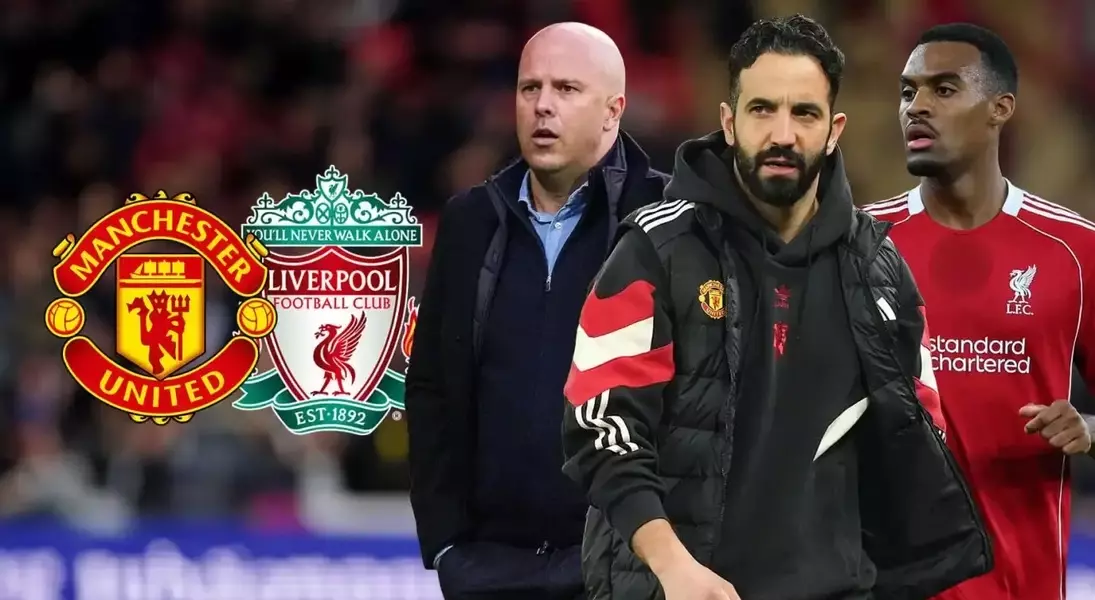
In the evolving landscape of Premier League management, the distinct strategies of coaches like Ruben Amorim and Arne Slot come under intense scrutiny. This analysis delves into the challenges faced by Amorim at Manchester United regarding the utilization of young talent Kobbie Mainoo, contrasting it with the remarkable success of Slot in transforming Liverpool's Ryan Gravenberch into a pivotal midfield presence. The central question revolves around why Amorim appears hesitant to adapt his tactical philosophy to fully integrate Mainoo, especially when Slot has demonstrated the efficacy of such flexibility. This comparison not only highlights divergent coaching philosophies but also underscores the potential benefits of nurturing and adapting player roles to unlock their full capabilities.
Ruben Amorim's tenure at Manchester United has been characterized by fluctuating fortunes, with recent victories, such as against Chelsea, offering temporary respite from mounting pressure. Despite these wins, a persistent challenge for Amorim has been the effective deployment of Kobbie Mainoo. Mainoo, a promising young midfielder, has shown glimpses of brilliance in limited appearances, notably influencing games from the bench. His brief but impactful cameos against Chelsea and a standout performance against Manchester City underscore his potential. However, Amorim's perceived reluctance to integrate Mainoo into the starting eleven, citing incompatibility with Bruno Fernandes in a double pivot, has sparked debate among observers and fans alike. This hesitancy stands in stark contrast to the transformational approach seen elsewhere in the league.
Across the league, Arne Slot at Liverpool has provided a compelling blueprint for player development and tactical adaptation. The case of Ryan Gravenberch serves as a prime example. Once considered a potential departure, Gravenberch has, under Slot's guidance, been successfully molded into a world-class defensive midfielder. His recent outstanding performances, including a pivotal role in Liverpool's victory over Everton, have drawn widespread acclaim, with pundits like Michael Owen hailing him as one of the best in his position globally. This transformation is particularly noteworthy given that Gravenberch was initially viewed as an unconventional fit for the number six role. Slot's ability to identify, nurture, and strategically position Gravenberch, even when faced with initial positional misgivings, showcases a coaching philosophy centered on adaptability and player-centric development.
The contrasting situations of Mainoo and Gravenberch bring into sharp focus the differing coaching philosophies regarding player roles and team dynamics. While Amorim reportedly fears that deviating from his established tactical framework might lead to a loss of respect from his players, Slot's success with Gravenberch suggests that flexibility can, in fact, enhance a coach's standing and foster greater player loyalty. Gravenberch's journey, from being on the brink of an exit to becoming an indispensable asset, illustrates the profound impact a coach's belief and adaptive strategies can have on a player's career and a team's overall performance. As Liverpool reaps the rewards of Slot's innovative approach, questions linger over whether Amorim will embrace a similar willingness to adapt and unlock the full potential of talents like Mainoo at Manchester United.
The comparison between Amorim's cautious approach with Mainoo and Slot's bold transformation of Gravenberch highlights a critical aspect of modern football management: the ability to adapt and evolve players' roles. Slot's success in converting a perceived square peg into a perfectly rounded fit for a crucial midfield position offers a valuable lesson. It suggests that a coach's willingness to experiment and invest in a player's development, even in an unfamiliar role, can yield extraordinary results. For Manchester United, this raises the question of whether a similar commitment to adapting Mainoo's role could benefit the team, especially given the current midfield challenges. The journey of Gravenberch under Slot provides a compelling argument for embracing tactical flexibility and player development as cornerstones of success.
