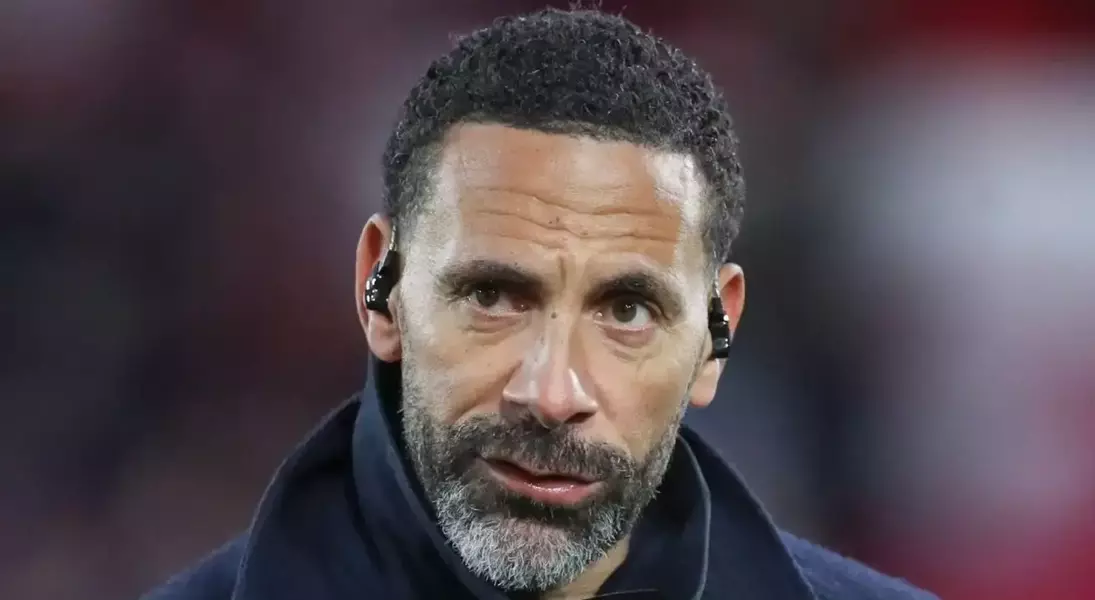
Rio Ferdinand, a revered figure in Manchester United's history, has cast a critical eye on the club's recent transfer strategies, particularly highlighting what he perceives as a monumental misstep in their pursuit of star players. His strong conviction centers on the missed opportunities to acquire Harry Kane and Declan Rice, arguing that these failures have had a profound and lasting impact on the team's trajectory. This perspective resonates with many observers who have witnessed United's struggle to reclaim their dominant position in English football since Sir Alex Ferguson's departure. The former defender's insights underscore the complex interplay between strategic recruitment, financial constraints, and on-field performance, emphasizing how pivotal decisions in the transfer market can shape a club's destiny.
Despite the significant financial outlay on new attacking talent this summer, Ferdinand contends that the current offensive lineup pales in comparison to what could have been achieved with the addition of a proven goal-scorer like Kane. His analysis extends beyond mere statistics, delving into the intangible qualities that such players bring—leadership, winning mentality, and the ability to elevate those around them. This sentiment is echoed by fellow football pundit Michael Owen, who believes the acquisition of Kane was not only desirable but also attainable for the Red Devils. The collective voice of these former players serves as a potent reminder of the high stakes involved in elite football transfers and the enduring consequences of strategic misjudgments.
The Critical Missed Opportunities
Rio Ferdinand, the former Manchester United stalwart, has voiced a powerful opinion regarding the club's transfer decisions, labelling their failure to sign Harry Kane as the "biggest mistake" in the last decade. He firmly believes that had United pushed harder and met Tottenham's asking price for Kane, the club's current offensive capabilities and overall standing would be vastly superior. This conviction stems from the perceived transformative impact a player of Kane's caliber could have had on the team's attacking prowess and leadership on the field. Ferdinand further extends this argument to include Declan Rice, suggesting that the simultaneous acquisition of both players would have fundamentally altered Manchester United's fortunes, positioning them as genuine title contenders rather than a side in perpetual transition.
Ferdinand's assertion is not made in isolation; he points to the financial investments made in other attacking players, such as Matheus Cunha, Bryan Mbeumo, and Benjamin Sesko, suggesting that while these were significant outlays, they did not address the fundamental need for a world-class, proven goal scorer that Kane represents. The former defender implies that the financial prudence, or rather, the lack of aggressive spending on key targets, has cost United dearly, preventing them from assembling a truly formidable squad. Michael Owen, another prominent figure in English football, supports this view, echoing Ferdinand's sentiment that securing Kane was a missed opportunity that was well within Manchester United's grasp. This shared perspective from respected voices within the game highlights a consensus that the club's transfer policy, particularly regarding these two high-profile targets, was flawed and has contributed significantly to their prolonged absence from the pinnacle of English football.
Navigating the Path Forward
Despite the critical assessment of past transfer decisions, Rio Ferdinand expresses a nuanced optimism regarding Manchester United's current situation under the management of Ruben Amorim. He acknowledges that the team might not be achieving consistent results or delivering perfect 90-minute performances, but he identifies a crucial area for improvement: clinical finishing. Ferdinand believes that the underlying structure and tactical approach are sound, with the team creating numerous scoring opportunities. His contention is that if the players can convert these chances into goals, the entire dynamic of matches will shift, leading to more favorable outcomes and an upward trajectory in their league standing.
Ferdinand's message to the team, and by extension to the fans, is one of unwavering belief and patience. He suggests that Amorim should be consistently reinforcing to his squad the importance of staying committed to his system and trusting in their collective ability to convert chances. This implies that while the past decisions regarding player recruitment are regrettable, the future success hinges on the current squad's ability to execute and capitalize on their opportunities. The former defender's outlook, therefore, balances a pragmatic understanding of the team's current challenges with a hopeful vision for their potential, emphasizing that with improved finishing and continued belief in their manager's philosophy, Manchester United can indeed turn the tide and begin to fulfill their inherent potential, ultimately aiming to return to their former glory in the fiercely competitive landscape of English football.
