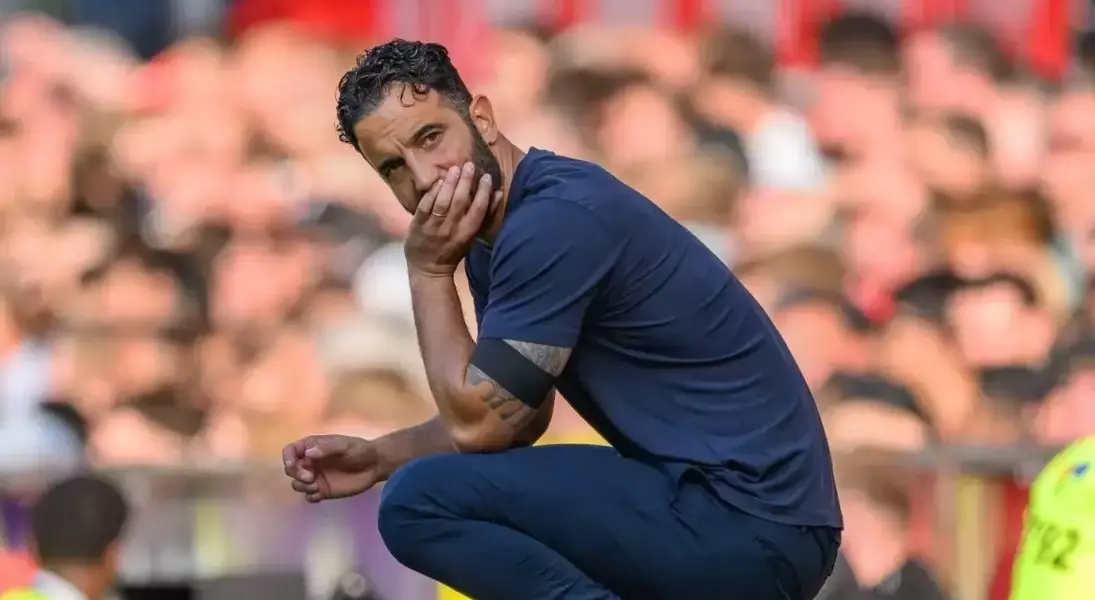
Manchester United's managerial landscape has seen a significant strategic move as head coach Ruben Amorim orchestrated the loan of goalkeeper Andre Onana to Turkish club Trabzonspor. This decision, as confirmed by transfer expert Fabrizio Romano, was crucial in streamlining the team's internal dynamics, particularly in the wake of the recent acquisition of Senne Lammens.
Details of the Goalkeeper's Transfer
The transfer of Andre Onana to Trabzonspor is structured as a temporary loan arrangement, devoid of any clauses for a permanent transfer. According to reports from Fabrizio Romano, Onana is slated to join Trabzonspor without a transfer fee, with the Turkish club covering a portion of his salary. Interestingly, Onana's earnings are expected to be marginally higher at Trabzonspor compared to his current Manchester United remuneration, accompanied by an additional signing bonus. Onana has already given his consent to the terms, and the official announcement is anticipated once all necessary documentation is finalized between the clubs. He is reportedly set to travel to Turkey on Thursday to complete the signing process. The strategic rationale behind this move, as articulated by Amorim, was to avert potential friction arising from having four senior goalkeepers, with Onana potentially relegated to the bench. This proactive step ensures that Senne Lammens, a recent acquisition for €21 million, can seamlessly assume the primary goalkeeping role without undue pressure. Manchester United's goalkeeping roster now includes Lammens, Altay Bayindir, and Tom Heaton, who recently extended his contract.
This calculated decision by Ruben Amorim underscores a forward-thinking approach to squad management, prioritizing team cohesion and individual player development. By proactively addressing potential internal challenges, Manchester United aims to foster a more stable and focused environment, allowing new talents like Lammens to thrive and the team to concentrate on its performance objectives. This strategic move may well be a blueprint for managing complex team dynamics in the competitive world of professional football.
