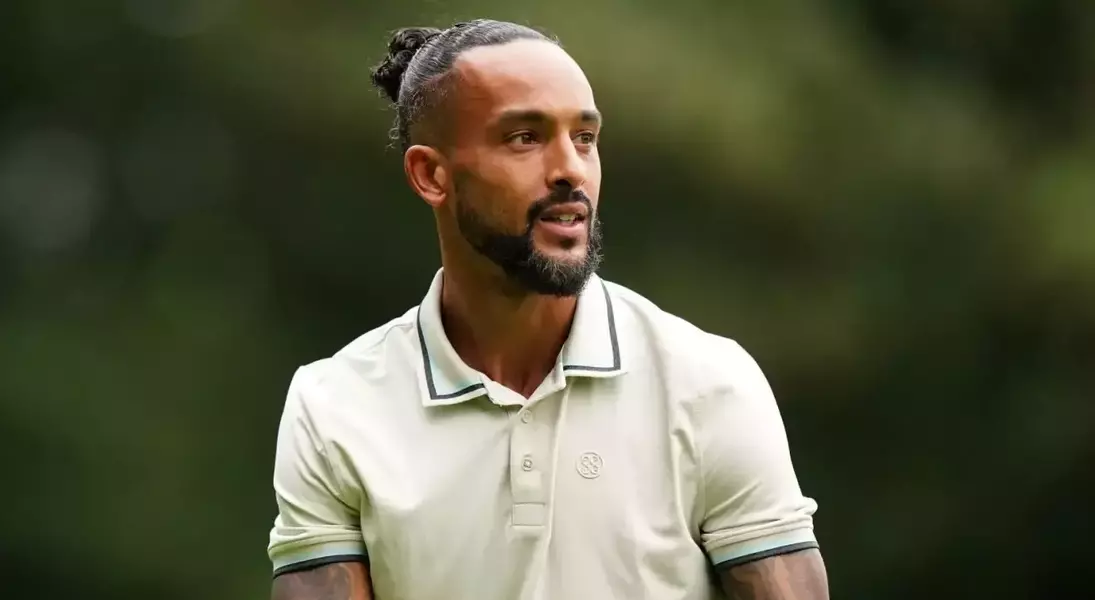
Former Arsenal player Theo Walcott has raised questions about the tactical setup of his old team's midfield, particularly after their recent match against Manchester City. He argued that the inclusion of both Mikel Merino and Martin Zubimendi in the starting lineup created an imbalance, as their playing styles are too similar to complement each other effectively. This commentary follows a tense encounter where Arsenal managed a late equalizer against City, a result that nonetheless sparked debate among football analysts about the team's strategic choices.
The match saw Manchester City take an early lead through Erling Haaland in the ninth minute, setting the tone for a challenging game for Arsenal. Despite several opportunities for both sides to alter the scoreline, it was Gabriel Martinelli who ultimately secured a draw for the Gunners with a crucial goal in the dying moments of second-half injury time. This outcome allowed Arsenal to maintain their second-place position in the Premier League, though they remain under pressure from Tottenham, while Manchester City sits in ninth place.
Arsenal's starting midfield featured a distinctly defensive trio: Merino, Zubimendi, and Declan Rice, with Eberechi Eze notably left on the bench. Walcott, speaking on Match of the Day, highlighted this selection as problematic. He specifically pointed out that Merino is not a traditional No. 10 and suggested that a more creative player like Eze would have been better suited to the role. Walcott elaborated on his critique, noting the redundancy in having two similar players, Merino and Zubimendi, often occupying the same spaces, which he believes disrupted the team's overall balance.
Walcott further questioned why Arsenal only shifted to an offensive mindset in the final minutes of the game, rather than adopting it from the beginning. While generally supportive of manager Mikel Arteta, Walcott felt that Arteta narrowly escaped scrutiny in this instance, suggesting that the manager's half-time substitutions implicitly acknowledged an initial error in team selection. These tactical adjustments were made, but other changes were introduced very late in the game, reinforcing the perception of a cautious approach.
Arsenal legend Ian Wright echoed Walcott's sentiments, asserting that Martinelli and Eze should have been in the starting XI. Wright criticized Arteta's overly cautious strategy, particularly against a Manchester City side that, in his view, adopted an uncharacteristically defensive posture. He emphasized Martinelli's ability to energize the crowd and Eze's knack for incisive passes, arguing that such dynamic elements were needed from the outset.
Discussing Arteta's characterization of Martinelli as a 'finisher' rather than a starter, Wright expressed concern that Martinelli might become pigeonholed as a super-sub. He argued that despite Martinelli's impressive contributions off the bench in major games, he deserves the opportunity to prove himself as a consistent starter. Wright stressed that players want to begin games and demonstrate their capabilities from the first whistle, not merely be brought on to rescue situations. He believes Martinelli's impact as a substitute only underscores his readiness for a more prominent role, challenging the notion that he is solely an 'impact player.'
Another former Arsenal and Manchester City forward, Emmanuel Adebayor, drew parallels between Arteta's current predicament and Pep Guardiola's early days at Barcelona, where Guardiola faced the challenge of managing a squad rich with talent like Deco, Samuel Eto’o, and Ronaldinho. Adebayor suggested that Arteta is now in a similar position, dealing with a roster of international players who constantly demand playing time. He noted the difficulty in managing these expectations, especially when players aspire to represent their national teams, which often requires consistent club appearances. Adebayor concluded that how Arteta navigates this complex situation will be crucial for the club, as it has the potential to become problematic.
