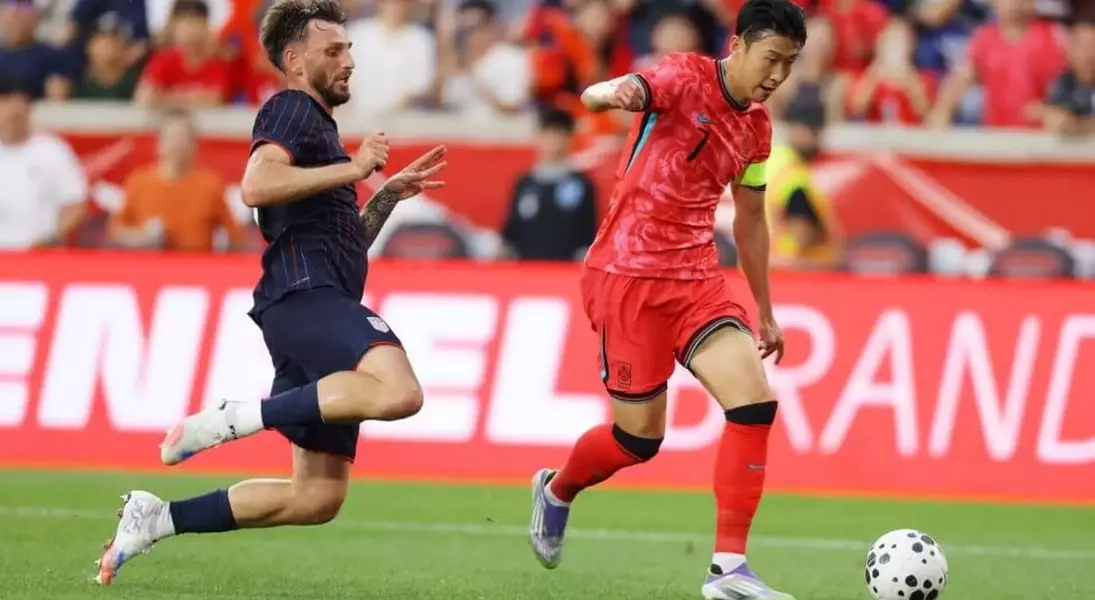
The United States Men's National Team (USMNT) currently holds its lowest Elo rating of the 21st century, now ranking 48th among national teams worldwide. This significant downturn comes after a recent defeat to South Korea, a result that further underscores the team's struggles. Despite previous periods of success where the team climbed into the top 15 globally, their current trajectory indicates a challenging phase, prompting questions about strategic direction and future prospects.
Declining Performance Reflected in Elo Rankings
The U.S. Men's National Team has experienced a notable dip in its Elo rating, falling to 1680 after a 2-0 loss to South Korea. This marks the team's lowest point since 1997, positioning them at 48th globally according to the Elo system. The Elo rating, originally designed for chess, is widely considered a more accurate measure of team strength in international soccer compared to the official FIFA rankings. It assesses teams based on match outcomes against expected results, with points gained or lost depending on performance relative to opponent strength. Historical highs for the USMNT include reaching 15th after beating Portugal in 2002, 12th after defeating Mexico in 2005, and briefly 9th in 2009. However, the team's failure to qualify for the 2018 World Cup saw their rating drop to 32nd. Under former coach Gregg Berhalter, the team initially recovered, climbing to 15th, but a group-stage exit from the 2024 Copa América led to coaching changes and a continued slide in rankings.
Following the Copa América exit and Berhalter's departure, Mauricio Pochettino took over with the USMNT ranked 37th in Elo. Since then, the team has struggled to defeat higher-ranked opponents, losing six out of 11 matches in FIFA windows this calendar year. Despite minor gains from victories against Venezuela and Costa Rica, subsequent losses to Panama, Canada, and Switzerland pushed their ranking down to 39th and then 45th. The recent defeat to South Korea at Sports Illustrated Stadium further cemented their lowest modern-era Elo rating. While the Elo system is robust, it doesn't account for factors like player availability, which has impacted the USMNT in recent tournaments. However, it does appropriately weigh match types, with World Cup games holding more significance than continental tournaments or friendlies. Despite the team's current standing, players and coaches remain optimistic, emphasizing ongoing progress as they prepare for upcoming matches against strong opponents like Japan.
Challenges and Future Outlook
The USMNT's current standing at 48th in the Elo ratings reflects a period of significant challenge, especially under the new coaching tenure of Mauricio Pochettino. Since his appointment when the team was ranked 37th, the USMNT has struggled to overcome higher-ranked teams, experiencing a series of defeats that have contributed to their continued decline. This downturn contrasts sharply with previous periods of ascendancy, such as their peak at 9th in 2009, highlighting the extent of the current performance gap. The team's inability to consistently secure wins against formidable opponents has been a major factor in their plummeting Elo score, leading to a critical examination of their strategies and player development pathways. Despite these setbacks, the team continues to engage in competitive fixtures, with upcoming matches serving as crucial tests for their recovery and future trajectory.
The Elo ratings, while not accounting for all variables like player injuries or specific match contexts, provide a clear, results-driven snapshot of team strength. Their model, which was partially adopted by FIFA in 2018, offers a more dynamic and responsive view of recent performance. For the USMNT, this means the current 48th position is a stark indicator of their struggles, regardless of internal optimism from players and staff. Upcoming matches, such as the one against Japan, will be pivotal in demonstrating any progress. Despite recent assurances from figures like defender Tim Ream and coach Pochettino about positive evolution, the objective data suggests a formidable task ahead. Rebuilding the team's standing will require not only strategic adjustments but also consistent, high-level performances to climb back up the global rankings and regain the competitive edge they once held.
