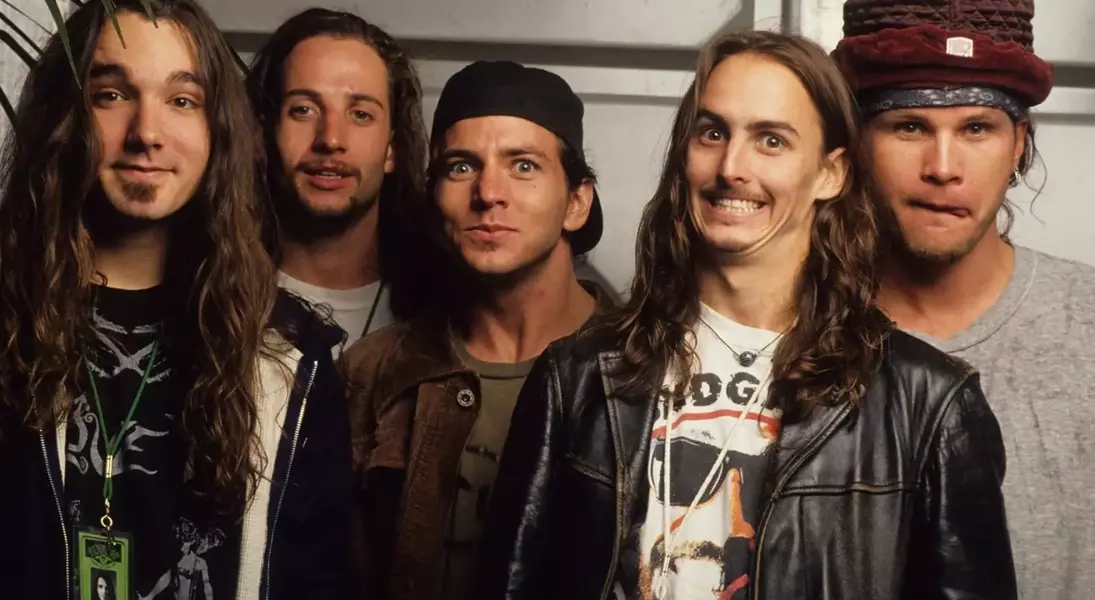
For years, the true story behind the iconic band Pearl Jam's name remained a subject of intrigue and debate, fueled by the band members themselves with playful, often misleading anecdotes. What began as an innocent attempt to deflect persistent questions evolved into a captivating myth, leaving many to wonder about the genuine inspiration behind one of grunge's most influential groups. This exploration uncovers the surprising and definitive moment that ultimately shaped their enduring identity.
The Genesis of a Name: From Basketball to Concert Inspiration
In the vibrant music scene of the early 1990s, Pearl Jam initially adopted the less-than-glamorous name Mookie Blaylock, a tribute to the celebrated NBA player. This temporary moniker served them during their formative months, but as their star ascended and a major record label contract beckoned, the pragmatic need for a more fitting and legally sound name became undeniable.
A pivotal moment arrived in the brisk February of 1991, as the band journeyed to New York to formalize their deal with Epic Records. Amidst their busy schedule, a decision was made to attend a monumental concert on Long Island, at the esteemed Nassau Coliseum. Here, they were treated to a mesmerizing performance featuring the legendary Neil Young and Crazy Horse, alongside Sonic Youth and Social Distortion.
During Neil Young's set, characterized by expansive, prolonged improvisations, bassist Jeff Ament found inspiration. He had already been contemplating the word “Pearl,” and witnessing Young's extended musical explorations provided the missing piece. The lengthy, immersive nature of the performance, where each song unfolded into a substantial 'jam,' cemented the second part of their future name. Though technical records indicate Young played 13 songs over 110 minutes, with several tracks, including \"Love to Burn,\" \"Like a Hurricane,\" and \"Love and Only Love,\" exceeding ten minutes, the feeling of an endless 'jam' was palpable and left a profound impact.
Thus, the name \"Pearl Jam\" was born, a fusion of Ament's initial idea and the raw, uninhibited musical energy witnessed that evening. This true origin dispelled earlier, fanciful tales, such as Eddie Vedder's often-repeated story of his grandmother Pearl's hallucinogenic preserves, a narrative now openly acknowledged as fabrication.
This revelation also directly addresses the more recent, albeit erroneous, theory suggested by actress Zoë Kravitz during a Nineties trivia game with Austin Butler and David Fear of Rolling Stone. Her playful, yet mistaken, assertion that the name referred to a crude term was a testament to how deeply the band's early misdirections had permeated public understanding. While the band admittedly spun tales, their ultimate choice was rooted in a genuine musical experience, forever linking them to a pivotal moment in live music history.
The story of Pearl Jam's name serves as a fascinating reminder that even seemingly whimsical band names can carry a deeper, more personal significance. It highlights the often-unpredictable sources of creative inspiration, demonstrating how a simple live concert experience can solidify a band's identity. From a fan's perspective, it adds another layer to the rich tapestry of rock history, emphasizing the organic evolution of art and the enduring legacy of musical giants like Neil Young, whose influence extends far beyond their own discography. This narrative underscores the idea that sometimes, the most authentic stories are the ones that take a little longer to uncover, proving that truth, much like a good jam, is often worth the wait.
