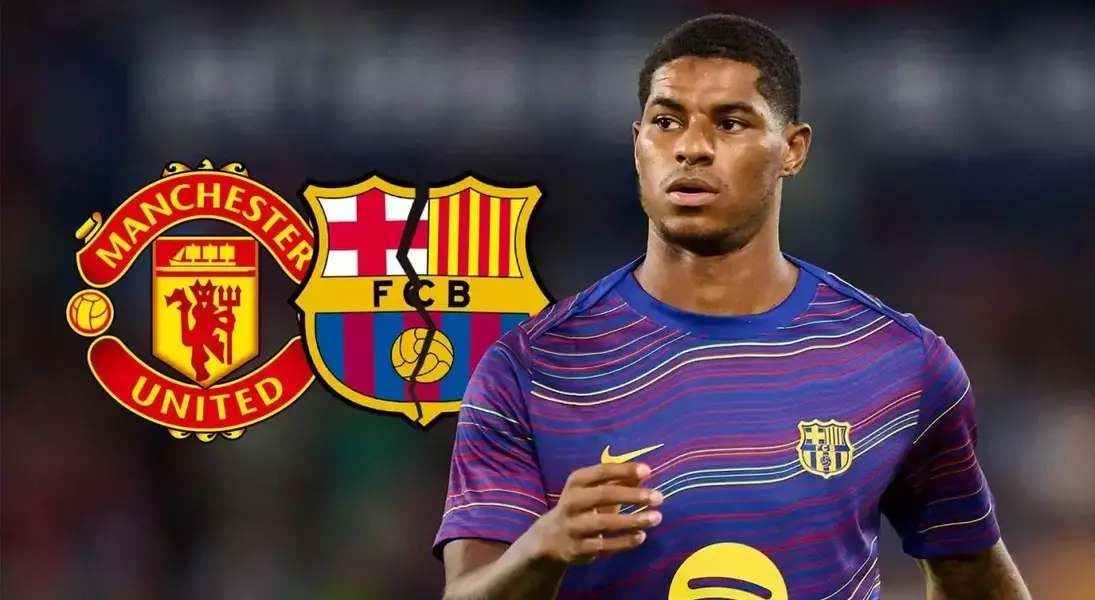
The recent tenure of Marcus Rashford at Barcelona, on loan from Manchester United, has been met with an immediate and pronounced wave of critical examination. Despite a mere handful of appearances for his new club without yet contributing a goal or assist, the narrative surrounding his performance has rapidly devolved into a debate about his suitability for a top-tier European team. This commentary aims to dissect the origins and implications of this intense focus, particularly how it intersects with his public persona and past endeavors, ultimately highlighting a pattern of relentless scrutiny that often overshadows a balanced assessment of his athletic journey.
Marcus Rashford's temporary relocation to Barcelona followed a productive loan period at Aston Villa, which he viewed as a stepping stone towards his \"dream\" move. This transfer, notably, involved no fee, allowing Manchester United to shed a high-earning player they no longer intended to utilize, while enabling Rashford to secure a significant career change. However, this fresh start was almost immediately shadowed by reports from certain media outlets, particularly in Spain, suggesting Barcelona's dissatisfaction and even a desire to return him to Manchester. These claims emerged after just three competitive matches, none of which saw him directly contribute to a goal or assist. It's crucial to acknowledge that while these specific reports, notably from El Nacional, may not stand as definitive truths—some even disappearing from their original sources—their very existence and widespread aggregation fueled a pre-emptive negative perception.
Beyond the pitch, Rashford's prominent activism, particularly his successful campaign for free school meals in the UK, has inadvertently positioned him under an even brighter spotlight. This crossing of the traditional boundary between sports and societal issues has meant that every action, whether on the field or off, is subjected to magnified public and media scrutiny. Consequently, minor disciplinary issues or perceived lapses in effort, which might otherwise be overlooked for other athletes, are amplified into major headlines when they involve him. This heightened visibility, while born from commendable actions, has created an environment where any perceived misstep, no matter how small, is seized upon and interpreted as further evidence of failure. The suggestion that Barcelona would \"send him home\" after such a brief period is illustrative of this instant, often harsh, judgment. While the long-term future remains uncertain, such pronouncements, so early in his spell, appear to be more about crafting a dramatic storyline than reflecting a realistic immediate outcome.
This ongoing narrative of negativity, fueled by rapid judgments and an insatiable appetite for dramatic sports stories, unfortunately, overshadows the full picture of Marcus Rashford's time at Barcelona. It is a testament to the persistent desire by some to see him fail, transforming every action and performance into fodder for criticism, regardless of context or early indicators. Until his career concludes, it appears Rashford will remain a central figure in these highly charged media narratives, constantly navigating a landscape where his every move is under intense examination.
