
In football, the elusive concept of 'tempo' is often cited as a crucial element in captivating matches, yet its precise definition remains a subject of ongoing discussion. While frequently discussed in musical terms, denoting the speed of a composition, applying this idea to football allows for a deeper understanding of game dynamics. The pace of play, often observed in the most engaging encounters, is intrinsically linked to how effectively a team dictates its rhythm, a quality highly valued in top-tier players. Understanding this concept is key to appreciating the subtle yet significant shifts in energy and creativity that define a team's performance on the field.
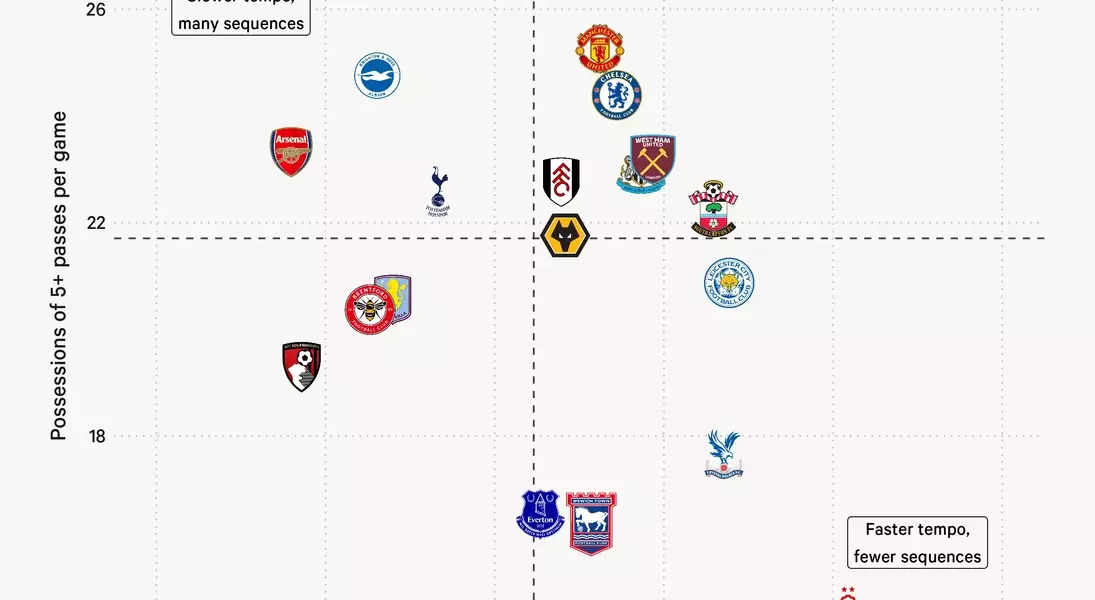
Quantifying tempo in football reveals intriguing insights into team strategies. One method involves analyzing the volume of possessions, where a higher number suggests a more chaotic game, as seen with Bournemouth's aggressive, transitional style. Conversely, teams like Manchester City, under Pep Guardiola, aim to minimize uncertainty by maintaining lower possession volumes. However, this metric alone doesn't fully capture the essence of tempo, which is more accurately reflected in the rhythm of ball circulation. By measuring the duration of a move relative to the number of passes, we can identify how quickly possession is moved, separating cautious play from chaotic. This analytical approach highlights the distinct stylistic differences between teams, illustrating how various managerial philosophies influence the speed and purpose of a team's play, particularly in the Premier League.
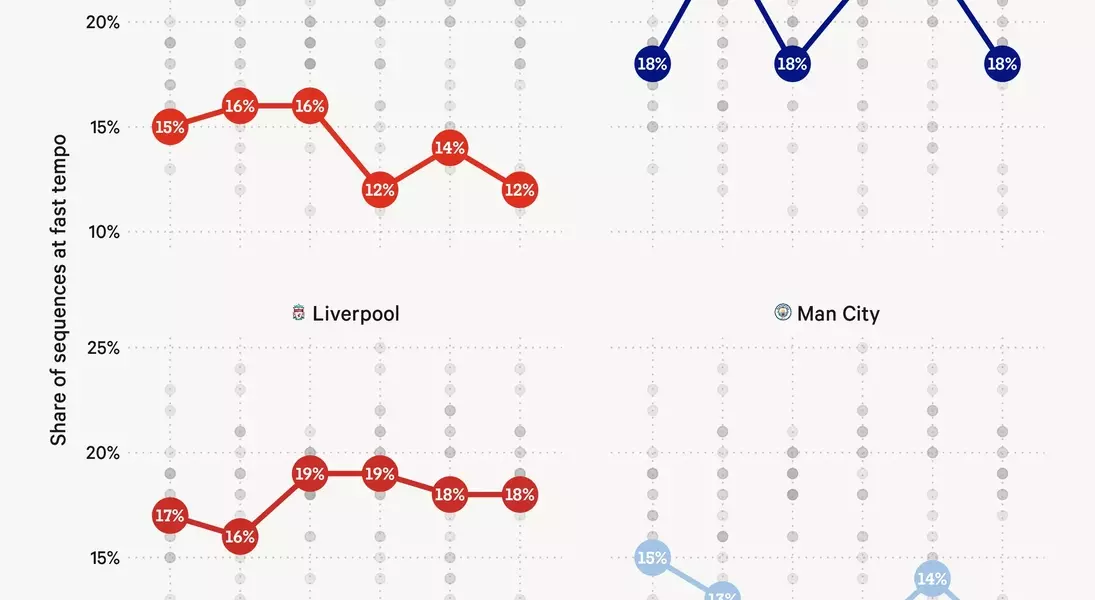
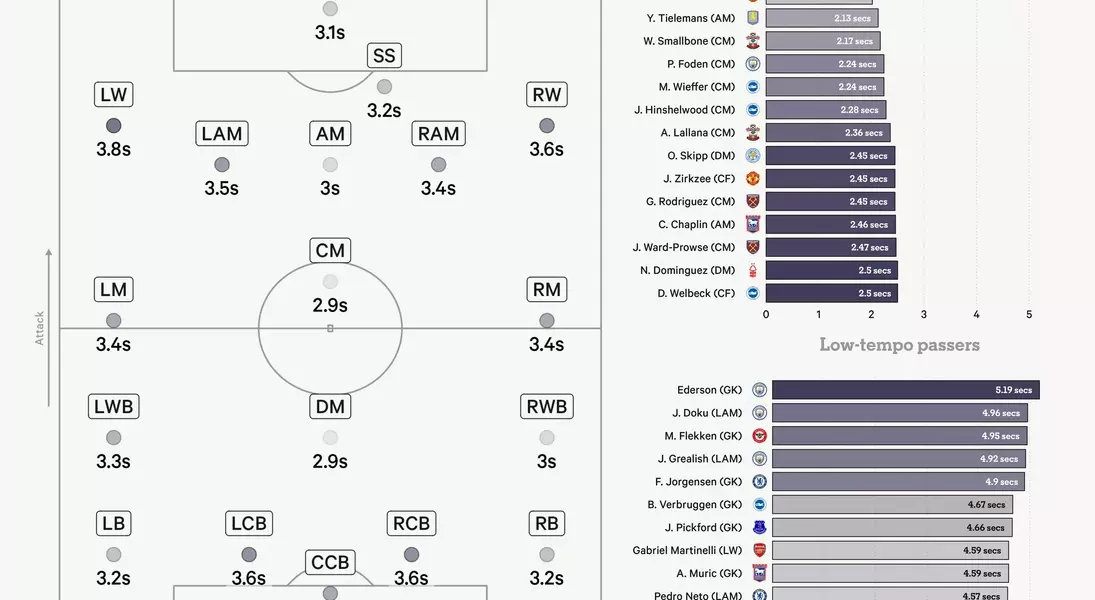
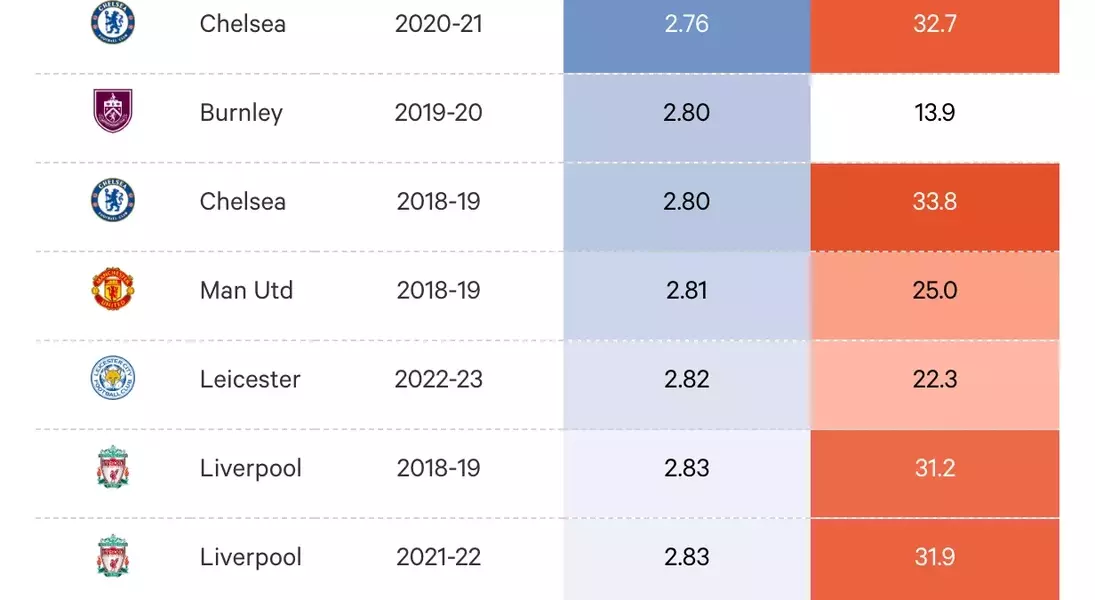
The role of individual players and historical trends further illuminates the complexities of tempo. Players in central midfield positions typically exhibit the quickest passing tempos, acting as conduits to maintain fluidity. In contrast, goalkeepers and wingers often hold onto the ball longer, albeit for different tactical reasons, to manipulate opposition positioning. Managerial styles, such as Jurgen Klopp's high-octane approach at Liverpool or Pep Guardiola's controlled possession game, directly influence a team's overall tempo. Examining historical data, we see how teams like Fulham and Chelsea have varied their pace over seasons, often reflecting changes in coaching or player personnel. The evolution of modern football suggests a growing emphasis on adaptability, with some top teams, including Manchester City, now exploring ways to increase their tempo to break down defenses more effectively, aligning with a broader shift towards a more dynamic and energetic style of play.
Ultimately, tempo and rhythm are inseparable in football, forming the backbone of a team's energy and overall dynamism. As the sport continues to evolve, understanding and mastering the manipulation of game pace will be paramount for teams aspiring to achieve championship success. The strategic deployment of players who can effortlessly control or accelerate the tempo becomes a critical differentiator, shaping not just individual matches but also long-term league dominance. This ongoing evolution underscores the importance of analytical insights in deciphering the intricate dance of modern football, where the speed of thought and action often dictates the outcome.
