In the early 1980s, the Texas punk scene was a crucible of raw energy and unconventional sounds, but no act pushed the boundaries quite like the Butthole Surfers. This legendary band, originating in San Antonio before making their mark in Austin, famously blended the aggressive edge of shock rock with experimental art-punk and a touch of junk food culture, creating a truly unique sonic landscape. Their audacious choice of name, a deliberate challenge to mainstream sensibilities, underscored their commitment to an uncompromising artistic vision. Despite the initial expectation that their name would prevent radio play, the band embarked on an extraordinary journey, cultivating a reputation for wild, unforgettable live performances and an unconventional approach to music that left an indelible mark on the landscape of alternative rock.
The band's distinctive style and provocative performances were vividly captured in a 1984 cable-access program, "The Scott and Gary Show," where their eccentric stage presence—from two drummers delivering primal beats to the singer's bizarre antics and the guitarist's disorienting movements—left New York audiences both repulsed and fascinated. This early appearance solidified their image as an untamed force from the South, a perception they masterfully manipulated. Far from being mere "hillbillies," the Butthole Surfers, particularly founders Paul Leary Walthall and Gibby Haynes, were astute artists who understood and subverted the prevailing notions of punk authenticity. Their philosophy embraced artifice, allowing them to explore a vast "black universe" of sound, incorporating elements from psychedelic noise to warped country and beyond, demonstrating a profound conceptual depth beneath their anarchic exterior.
Formed in 1981, Leary and Haynes initially launched a fanzine before deciding to form a band whose name would ensure they were never played on commercial radio. This deliberate defiance of norms continued throughout their career. They deliberately shunned the concept of punk rock 'authenticity' embraced by many of their contemporaries, instead opting for a theatrical and often shocking presentation that constantly questioned reality. This artistic approach permeated their exhaustive recording sessions, producing albums like 'Rembrandt Pussyhorse,' renowned for its surreal and unsettling qualities. Their musical explorations spanned disparate genres, encompassing nightmarish psychedelia, distorted country, Asian folk influences, and the eerie ambiance of horror film soundtracks. This eclectic mix was a testament to their rigorous, conceptual approach, setting them apart from other bands who merely replicated existing hardcore punk formulas.
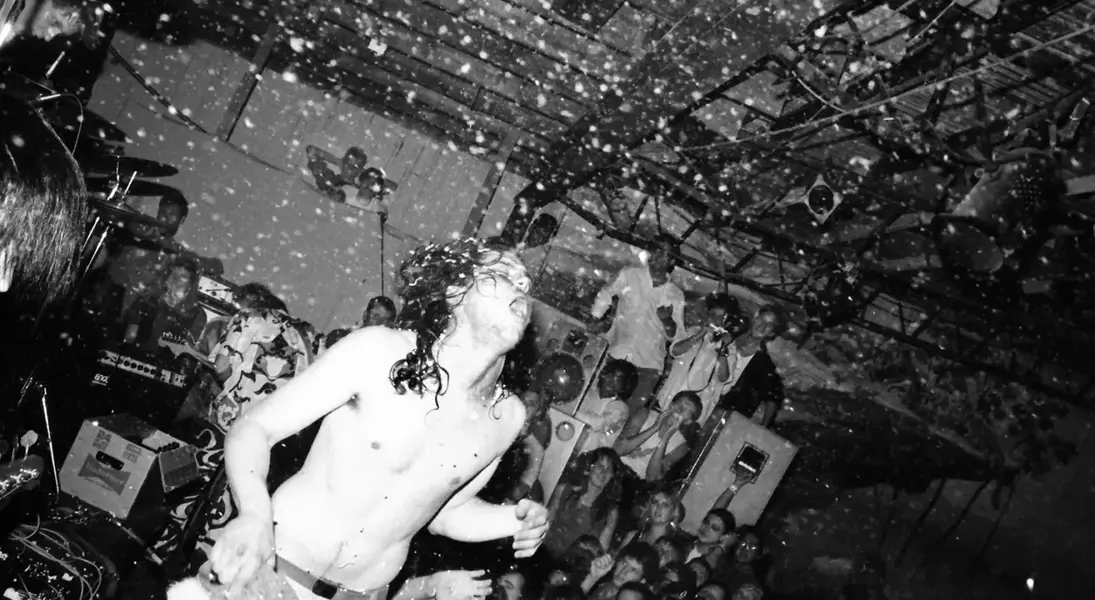
The Butthole Surfers became a formidable live act, their performances often escalating into spectacles of controlled chaos. Early shows were characterized by improvisational instrument changes, unusual vocalizations (Gibby Haynes' untutored saxophone playing, for instance), and a general embrace of unconventional sound. Photographer and filmmaker Bill Daniel noted their "theatrically goofy" and "arty" approach, emphasizing that for the band, "the whole show was the piece." Their move to California in 1982, fueled by meager resources, saw them leveraging their chaotic reputation to secure gigs, even opening for established acts like the Dead Kennedys, which led to a record deal with Alternative Tentacles. They meticulously crafted their material, as evidenced by their early recordings, and their ability to blend abrasive noise with surprisingly melodic elements, such as on "The Shah Sleeps in Lee Harvey's Grave," showcased their unique aesthetic.
The band's evolving lineup saw the addition of drummer King Coffey and later Teresa "Nervosa" Taylor, whose synchronized drumming created a sinister, ritualistic groove that became a hallmark of their sound. Despite being perceived as crude and unrefined, Coffey highlighted that Haynes and Leary were essentially art students who fearlessly embraced experimentation over rigid adherence to punk's increasingly codified rules. Their live shows incorporated elements like driver's education films with unsettling imagery, adding another layer to their performance art. Their willingness to shock and provoke was legendary, from staged incidents involving sugar glass bottles to frontman Gibby Haynes' often-outrageous behavior, which occasionally led to real-life confrontations, like being stabbed in Canada during a performance.
The band's relentless touring schedule, spanning nearly seven years of grueling travel and financial hardship, transformed them into international ambassadors of Texas punk. They pushed boundaries not just musically but personally, enduring difficult conditions and bizarre encounters. Despite their outlandish antics, the band members, particularly Paul Leary and Gibby Haynes, were deeply committed to their craft, continuously striving for musical excellence. This dedication, coupled with their unique marketing of themselves as a product—their distinct Texas drawls, wild backstories, and stage personae—allowed them to break through into the mainstream. Their integration of "Texas drag" into their performances, a deep-seated connection to their roots, resonated with audiences globally.
By the mid-1990s, the Butthole Surfers achieved unexpected mainstream success with their album 'Electriclarryland' and the hit single "Pepper," appearing on major talk shows. This shift, however, came with a noticeable change in their performance style, moving away from the wild, chaotic shows of their earlier years. Despite this commercial breakthrough, their major label deal eventually dissolved, and the band's core members retreated to Texas. The Butthole Surfers, initially outliers who defied categorization, ultimately became a testament to the adaptability and enduring impact of a truly unique artistic vision. Their journey from underground provocateurs to brief commercial success encapsulates their willingness to experiment, adapt, and always, in their own words, prioritize their artistic exploration above all else.
Ultimately, the Butthole Surfers transcended the conventional definitions of a punk band, becoming a cultural phenomenon that reflected the complex, often contradictory, spirit of Texas itself. Their legacy is not just in their music, but in their daring performances and their unapologetic embrace of the bizarre. They were innovators who proved that art could thrive in the most unexpected and provocative forms, leaving audiences forever changed by their unique blend of sonic and visual extremism.
