

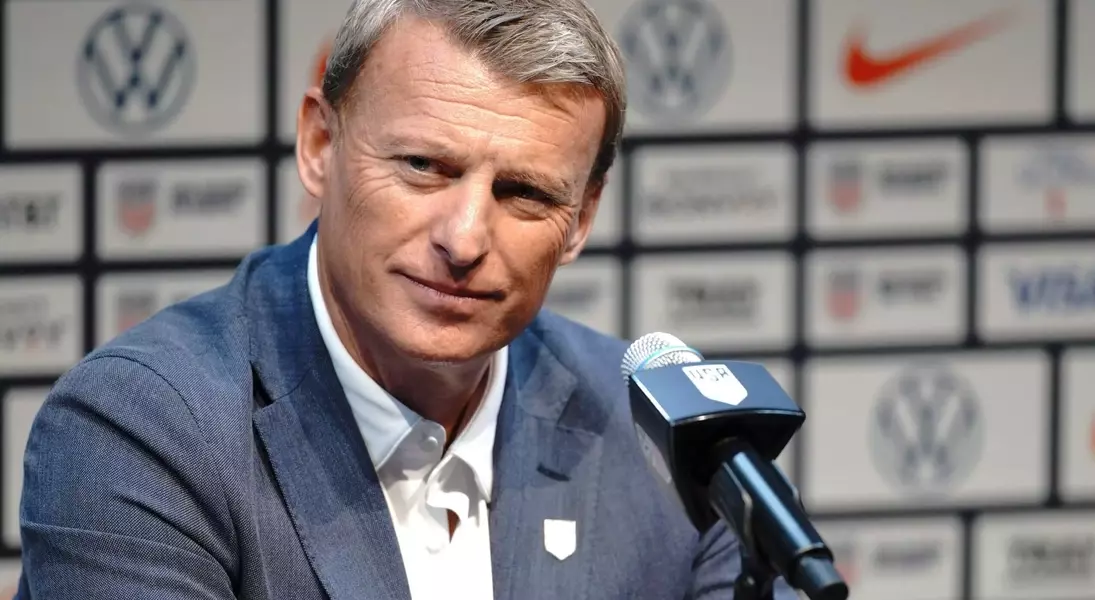

U.S. Soccer is embarking on an ambitious journey to redefine youth development, led by sporting director Matt Crocker. This initiative, dubbed \"the U.S. Way,\" seeks to move beyond the traditional emphasis on winning, instead prioritizing the holistic growth of individual players. Crocker's vision, however, confronts the formidable task of harmonizing thousands of disparate, independently operated clubs across a vast nation. The core of this challenge lies in fostering a unified philosophy and implementing robust coaching education programs that empower coaches to cultivate talent from the earliest ages, ensuring every child has the opportunity to develop their full potential in a supportive and engaging environment.
U.S. Soccer Unveils Transformative Youth Development Strategy Amidst Systemic Challenges
Upon his arrival in the United States, U.S. Soccer's sporting director, Matt Crocker, quickly identified a critical need for reform in youth soccer development. His analysis, supported by data from the sport data firm Twenty First Group, revealed a concerning stagnation in producing top-tier American players over the past decade. Specifically, there was a noticeable decline in the number of U.S. women ranking in the global top 50 and top 250, while the men's side had produced virtually no top 50 players.
Motivated by the adage, \"do what you've always done, and you will get what you've always got,\" Crocker recognized that U.S. Soccer alone could not instigate this change. He understood that the vast majority of player development occurs at the grassroots level, within the myriad of amateur clubs that dot the American landscape. Thus, he embarked on an extensive listening tour throughout his first year, engaging with stakeholders across the fragmented, dollar-driven U.S. soccer ecosystem.
The culmination of this extensive consultation is \"the U.S. Way,\" a comprehensive blueprint designed to transform player development. This vision emphasizes putting the player's individual needs above the sole pursuit of victory, a significant departure from previous, more authoritarian approaches. Crocker frequently highlights that 95% of player development happens at the club level, making it imperative to influence and educate these coaches and organizations.
Historically, U.S. Soccer's attempts to standardize development, such as the Development Academy, often met with resistance due to their top-down, mandate-driven nature. Crocker, however, is charting a different course. He aims to \"help and influence\" rather than dictate, seeking to inspire adoption and alignment through education and collaboration. This collaborative approach is vital, especially given the complex landscape of youth leagues and sanctioning bodies, which can feel akin to navigating the diverse interests of the European soccer confederation, UEFA, as Crocker himself noted.
The practical implementation of \"the U.S. Way\" involves several key initiatives. For elite teenage prospects, U.S. Soccer is piloting a digital platform to facilitate shared individual development plans, performance data, and training programs between youth national team and club coaches. For younger players, the focus is on creating fun, safe environments that maximize ball touches and prioritize individual growth over winning. Crocker envisions easily accessible online resources for volunteer coaches, providing guidance on these fundamental principles.
Addressing the inherent tension between winning and development in youth sports is a central challenge. While some argue that the drive to win is crucial for development, Crocker believes that an overemphasis on victory can impede technical skill acquisition. He aims to walk a delicate tightrope, encouraging a shift in mentality without alienating coaches who have valid concerns about the balance. A critical component of this shift will be the monumental undertaking of expanding and enhancing coaching education. Crocker dreams of establishing USSF coaching education hubs in every state, acknowledging this as an \"absolutely unbelievable gigantic project\" requiring substantial resources and a long-term commitment. Despite the immense scale, he remains enthusiastic, seeing it as the most powerful lever to elevate American soccer.
As Crocker enters his second year, the \"U.S. Way\" has garnered significant enthusiasm, but questions persist regarding its concrete implementation. Critics and observers, familiar with past initiatives that faded, emphasize the need for operationalization and broad buy-in beyond just presentations. Nevertheless, there's a palpable sense of renewed energy and collaboration from U.S. Soccer, with leaders from various leagues and associations praising the federation's proactive approach. Tangible steps include coordinating a unified youth calendar and developing digital platforms. While the journey is long and complex, Crocker is steadfast in his belief that this \"astronomical ask\" is essential for the future of American soccer.
From a journalist's perspective, this ambitious undertaking by U.S. Soccer presents a compelling narrative of systemic change. It's a stark acknowledgment that the current decentralized, often profit-driven, youth sports model in America may not be optimally serving the long-term development of its athletes. Crocker's shift from a mandate-driven approach to one of influence and education is particularly noteworthy, recognizing the deeply ingrained independence of local clubs. The success of \"the U.S. Way\" will hinge not just on the brilliance of its strategy, but on its ability to foster genuine collaboration and shared purpose across a famously fractured landscape. It’s a testament to the idea that true transformation requires not just vision, but an immense capacity for empathy, persuasion, and sustained effort in the face of deeply entrenched habits. The challenge is monumental, but the potential rewards for American soccer are equally vast.
