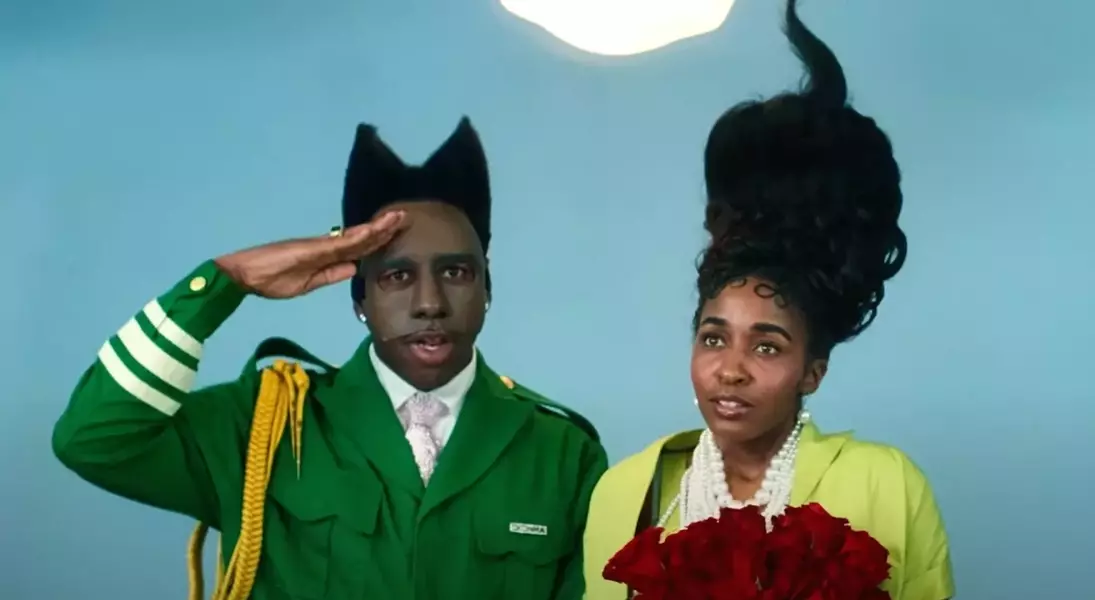
The latest visual offering from Tyler, the Creator provides a profound look into the artist's personal philosophy on relationships and his unwavering dedication to his craft. Through a series of compelling cinematic vignettes, the video for \"Darling, I\" intricately weaves together themes of romantic exploration and the unparalleled solace found in creative expression.
Unraveling Affections: A Journey Through Love and Artistry
A Multitude of Muses in a Cinematic Display
Tyler, the Creator, steps into the director's chair once more to bring to life the narrative of his track \"Darling, I.\" This captivating short film, set within the rich tapestry of his album 'Chromakopia,' showcases his character engaging with various potential romantic partners. Notable appearances by Willow, Nia Long, Ayo Edebiri, Lauren London, and Chase Infiniti add star power to this exploration of modern love. Each interaction is a fleeting moment of connection, painting a vivid picture of diverse emotional landscapes.
The Rejection of Monogamy and the Pursuit of Varied Connections
The core theme of the song, and vividly portrayed in its accompanying video, is Tyler's frank dismissal of traditional monogamous relationships. His lyrics, "See, monogamy, that shit is not for me (Nah)/One option for everybody? Don't you lie to me," underscore his belief in a more fluid approach to romance. The video illustrates this by depicting a sequence of dates, each special in its own way, yet none leading to a singular, lasting commitment. Teezo Touchdown, who features on the 'Chromakopia' track, makes an appearance not only as a date for Lauren London but also later in a poignant scene as a bus driver, symbolizing the transient nature of these connections.
The Artist's Heart: A Symbol of Fleeting Attachment
As Tyler moves from one encounter to the next, a striking visual motif emerges: he presents each woman with his own literal, still-beating heart, visibly stained with blood. This powerful, albeit unsettling, gesture symbolizes his inability to offer a complete, enduring emotional bond in romantic partnerships. It suggests that while he experiences moments of deep infatuation, his ultimate, profound connection remains reserved for his artistic endeavors.
Artistic Devotion and the Cost of Emotional Independence
The lyrics further illuminate Tyler's internal conflict and ultimate priorities. He acknowledges moments of intense attraction, stating, "I love this girl, though, I hit the gold mine/I'm thinkin' new crib, I'm thinkin' two kids/Until I get infatuated with a new bitch." Yet, this quickly gives way to a deeper revelation: \"But when that grey hair finally come (Uh-huh)/At least I felt somethin’ if I ain’t find the one/Nobody could fulfill me like this music shit does/So I’ll be lonely with these Grammys when it’s all said and done.\" This introspective passage highlights his acceptance of potential solitude, knowing that his creative passion provides an unmatched sense of fulfillment that no single human connection can replicate.
Divergent Musical Paths: From 'Chromakopia' to 'Don't Tap the Glass'
This release follows Tyler’s recent venture into a more upbeat musical direction with his album 'Don’t Tap the Glass.' He had temporarily stepped away from the deeper, more introspective themes of 'Chromakopia' to explore lighter, dance-oriented sounds. Videos for tracks like \"Sugar on My Tongue\" and \"Stop Playing With Me\" featured collaborations with artists such as Clipse and even sports icon LeBron James, demonstrating his versatility and willingness to experiment with different stylistic approaches.
The Introspective Journey Behind the Artistry
Discussing the contrast between his two recent albums, Tyler explained to Apple Music's Zane Lowe the deeply personal nature of 'Chromakopia.' He described it as a dive into significant life experiences, including his relationship with his hair, a near-fatherhood experience, and his evolving connection with his own father. This contrasts with 'Don't Tap the Glass,' which he characterized as simply "being silly, just fun again." This insight underscores that while both albums are expressions of his artistry, 'Chromakopia' and its accompanying visuals like \"Darling, I\" offer a more profound and vulnerable glimpse into his personal growth and emotional landscape.
