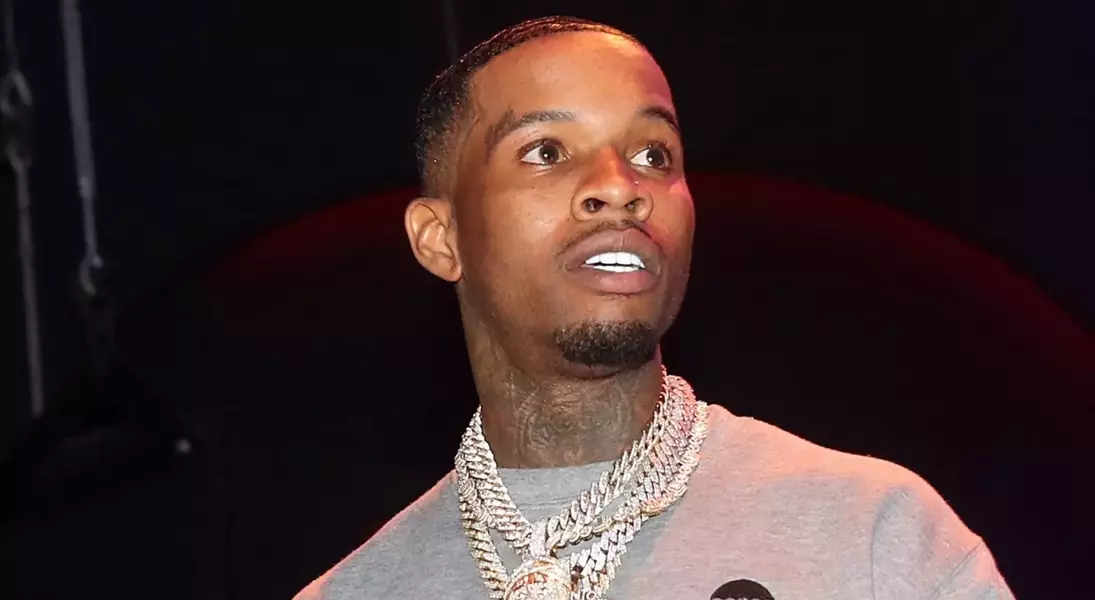
Rapper Tory Lanez's continued efforts to challenge his conviction for the 2020 shooting of Megan Thee Stallion have faced a significant setback. A California appellate court has decisively denied his recent attempts to invalidate the jury's verdict. This decision underscores the legal system's rigorous standards for introducing new evidence post-trial and highlights the challenges faced by defendants seeking to overturn established rulings. Meanwhile, Lanez continues to serve his 10-year prison sentence, with further direct appeals still pending.
The appellate court's rejection of Lanez's 'writ of habeas corpus' petitions, filed in 2023 and 2024, signals a firm stance against what it described as 'piecemeal' claims. These petitions aimed to introduce issues and evidence not presented during his initial trial, a strategy often employed to argue for wrongful imprisonment. The court's detailed response meticulously dismantled each of Lanez's arguments, emphasizing procedural missteps and a lack of substantive new information. This development marks a critical juncture in the ongoing legal saga, leaving fewer avenues for Lanez to pursue his freedom through judicial means.
Appellate Court Rejects Lanez's Habeas Petitions
A California appellate court has recently dismissed Tory Lanez's attempts to overturn his conviction for the shooting of Megan Thee Stallion. The court's decision specifically targeted his 'writ of habeas corpus' petitions, which sought to challenge the jury's verdict based on new evidence and alleged irregularities not presented during the initial trial proceedings. This ruling maintains the integrity of the original judgment and reinforces the legal burden on defendants seeking to introduce post-conviction evidence.
In its detailed justification, the three-judge panel of California's Second District Court of Appeal highlighted that Lanez's claims were presented in a 'piecemeal' fashion and failed to meet the necessary criteria for habeas relief. The court specifically addressed Lanez's assertion that the firearm used in the incident was missing, confirming through sworn police statements that the weapon, its magazine, and all related evidence remained securely in custody. Furthermore, the judges pointed out that Lanez had not requested additional DNA testing during his trial and could not demonstrate how such testing would prove his innocence. They also noted the unlikelihood of finding usable DNA or fingerprints on bullet fragments. This comprehensive dismissal underscores the court's view that Lanez's petitions lacked the compelling new information required to reopen the case.
New Testimony and Alleged Misconduct Claims Dismissed
Beyond the firearm-related claims, the appellate court also rejected Tory Lanez's habeas petition concerning alleged new testimony, including an affidavit from his driver, Jauquan Smith, and claims from a bodyguard, Bradlie James. These new pieces of testimony were intended to suggest alternative scenarios or challenge the original trial's narrative. However, the court found these arguments to be without merit, citing procedural omissions and a lack of timely presentation.
The judges emphasized that Lanez's legal team had "affirmatively decided not to call Mr. Smith as a witness at trial" and had "forfeited" their right to invoke his statements by not raising them at sentencing. Regarding Bradlie James's affidavit, the court deemed it "untimely" due to a significant delay between its dating and its submission. In his separate direct appeal, Lanez further contends that the trial judge made errors in allowing certain evidence, such as Megan Thee Stallion's emotional testimony, and that his trial lawyer provided "ineffective counsel." He also alleges prosecutorial misconduct. These broad claims of unfair trial practices will be the subject of upcoming oral arguments, as Lanez continues to exhaust all available legal avenues to challenge his imprisonment, which recently saw him transferred to a new facility after a prison incident.
