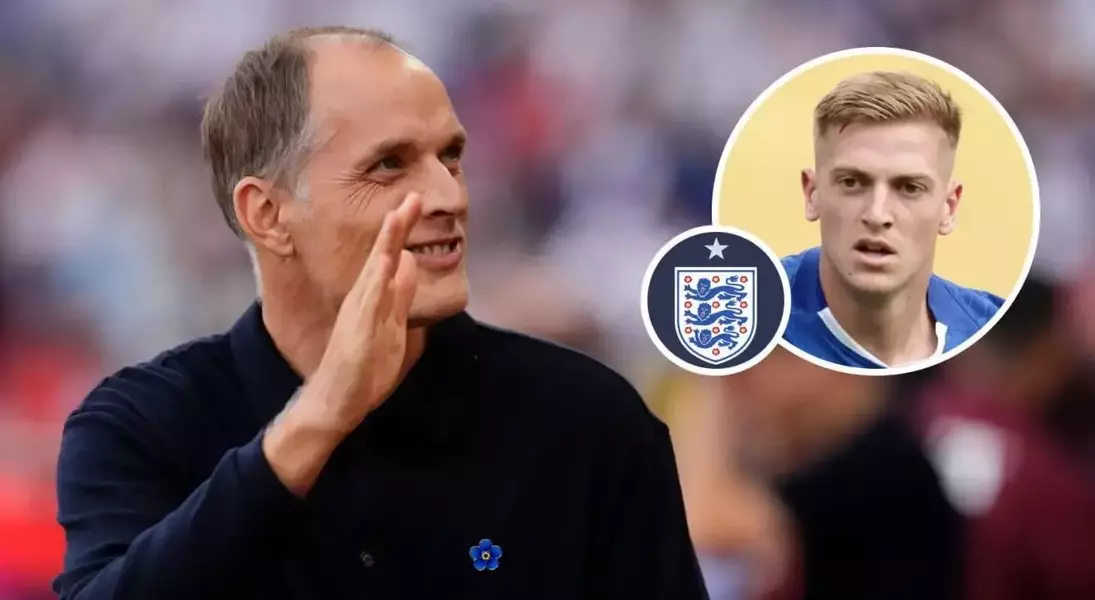
England's national football team, under the guidance of coach Thomas Tuchel, is set to adopt a more pragmatic and direct style of play. This strategic pivot, focusing on long throw-ins and powerful clearances from the goalkeeper, signals a departure from intricate short-passing sequences. The aim is clear: to get the ball into dangerous areas more frequently and create higher-percentage scoring chances. This evolution in tactics could particularly favor physically strong players, enhancing their role within the squad.
England's Evolving Strategy Under Tuchel
In a significant tactical announcement, England's head coach Thomas Tuchel revealed plans to reintroduce long throw-ins and direct goalkeeper kicks as primary attacking tools for the upcoming 2026 World Cup. Speaking recently, Tuchel emphasized that while this direct approach may not always be aesthetically pleasing, its effectiveness in generating scoring opportunities is undeniable. He noted the increased prevalence of such tactics in recent Premier League matches, where teams have found success by delivering the ball directly into the penalty area, forcing defenders into difficult situations and creating second ball chances. Tuchel articulated that football is ultimately about scoring, and all goals, regardless of their origin, hold equal value. This direct methodology, he believes, will be crucial when facing top-tier opposition in major tournaments. England, currently in the midst of their World Cup qualifying campaign, needs just one point from their remaining four fixtures against Serbia (away), Latvia (away), Serbia (home), and Albania (away) to secure their spot. Tuchel's assistant, Anthony Barry, who has conducted extensive research into Premier League throw-ins, has significantly influenced this strategic shift. Barry's analysis of over 16,000 throw-ins from the 2018/19 season concluded that backward or lateral throws can increase success rates compared to forward throws. This research underscores the meticulous detail going into England's new approach. This change in strategy could open doors for players whose attributes align with a more direct style. While traditional playmakers might see reduced roles, powerful forwards and robust defenders could thrive. One such player is Liam Delap, who recently joined Chelsea from Ipswich Town for £30 million. As the son of former long-throw specialist Rory Delap, Liam possesses exceptional strength, hold-up play, and aerial ability, making him an ideal candidate to lead the line in a direct system. Although captain Harry Kane's position remains undisputed due to his world-class hold-up play, a two-striker formation with Delap alongside Kane could be explored. Other players like Ivan Toney and Newcastle United defender Dan Burn, known for their physical presence and ability to win aerial duels, could also see their prospects improve under this new tactical philosophy. Injuries to key defenders such as John Stones and Levi Colwill further highlight the need for physically dominant players like Burn. Moreover, young talents like Myles Lewis-Skelly and Trent Alexander-Arnold are now reportedly focusing on honing their long throw-in techniques, suggesting a widespread adoption of this approach throughout the squad.
This strategic pivot by England's coaching staff highlights a pragmatic understanding of modern football. While possession-based, intricate play often garners praise for its aesthetic appeal, the emphasis on directness acknowledges that efficiency and goal-scoring opportunities are paramount. It's a reminder that sometimes, the simplest routes to goal are the most effective. This shift could inspire other national teams to re-evaluate their tactical frameworks, proving that adaptability and a willingness to embrace diverse playing styles can be key to success on the international stage. It also underscores the importance of utilizing individual player strengths to their fullest potential, even if it means deviating from conventional wisdom.
