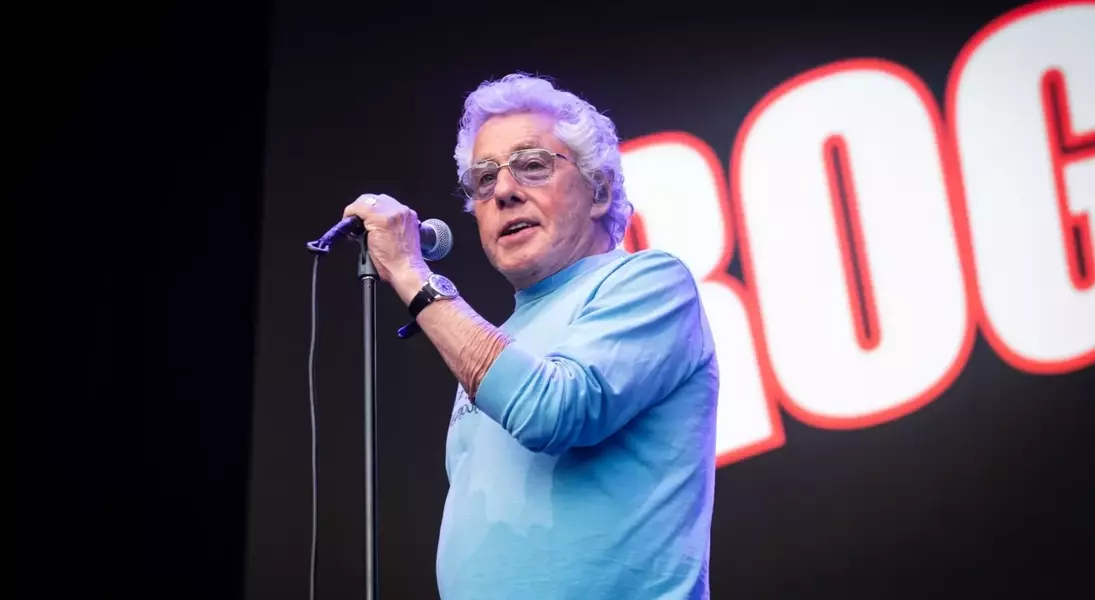
The recent public discord between Roger Daltrey, the iconic voice of The Who, and former drummer Zak Starkey has drawn significant attention. Daltrey recently spoke out about the “incredibly upsetting” nature of Starkey's remarks subsequent to his departure from the legendary band. This contentious split, which saw Starkey initially dismissed, then briefly reinstated, before a final termination, stemmed from a charity performance at London's Royal Albert Hall in March. The incident has ignited a media debate, with both musicians offering conflicting accounts of what transpired on stage.
Starkey, the son of Beatles drummer Ringo Starr, had been an integral part of The Who for almost three decades. However, his tenure abruptly concluded earlier this year following the aforementioned Royal Albert Hall show. Daltrey's primary accusation centered on Starkey's excessively loud drumming and alleged errors during the performance. Conversely, Starkey contended that Daltrey was the one who faltered, specifically claiming he missed his cue during a rendition of “The Song Is Over.” This stark difference in narratives has fueled a heated public exchange.
In the aftermath, both musicians have openly voiced their frustrations through various media outlets. Starkey, in an interview, asserted that Daltrey simply “lost his way” on stage. He further elaborated in another discussion that he, Starkey, performed correctly while Daltrey made the errors. These public pronouncements, direct and unreserved, illustrate the depth of the disagreement.
Responding to these allegations, Daltrey characterized Starkey’s comments as a “character assassination” during a recent interview, emphasizing how debilitating they were to him. Daltrey clarified that the core issue at the Royal Albert Hall was not a personal performance flaw but rather a technical sound problem. He explained that during live shows, The Who utilizes electronic drums that feed into his in-ear monitors. He experienced an overwhelming amount of sub-bass, hindering his ability to maintain pitch and feel disoriented, likening it to piloting an aircraft without a horizon. Daltrey stressed that his frustration was directed at the sound issues, not at Starkey himself, despite Starkey's misinterpretation.
Despite the technical explanation, Daltrey affirmed the band's decision to part ways with Starkey. He underlined the fundamental right of Pete Townshend and himself to define The Who, implying that other musicians are essentially session players. Daltrey concluded by stating that replacing the original drummer, Keith Moon, is impossible, and their decision reflected a desire to explore new musical directions.
The protracted dispute between Roger Daltrey and Zak Starkey underscores the complexities inherent in long-standing musical collaborations. While Daltrey attributes the contentious on-stage incident to technical sound difficulties that affected his performance, and Starkey points to Daltrey's perceived errors, the outcome remains definitive. Daltrey's assertion of artistic ownership with Pete Townshend highlights the unique dynamic within The Who and their prerogative to guide the band's future course.
