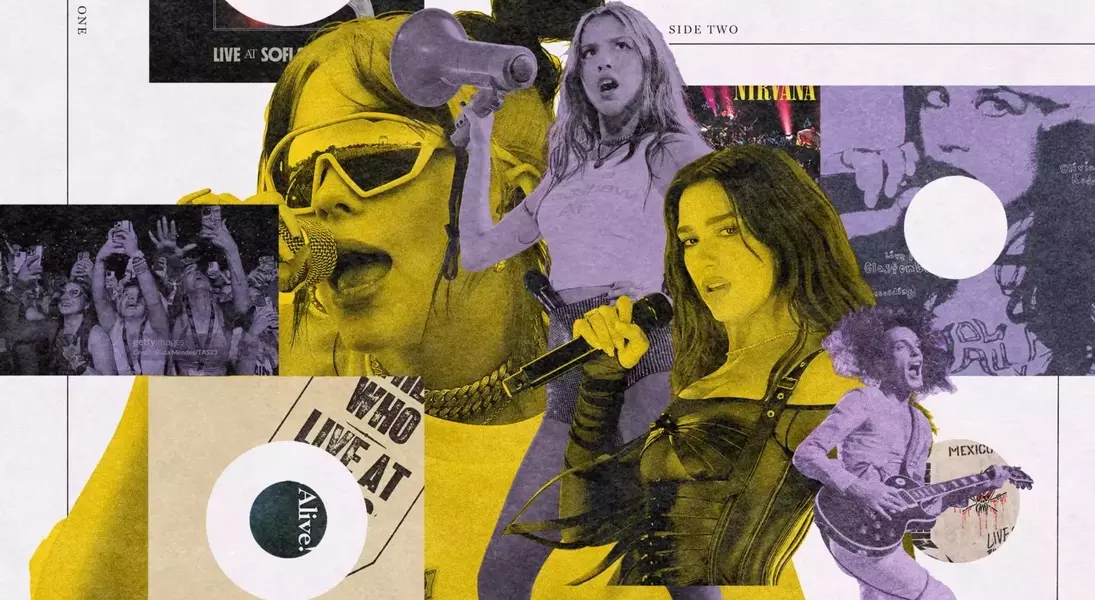
The music industry is currently experiencing a fascinating shift, with the resurgence of live albums taking center stage. This development, spearheaded by contemporary artists like Olivia Rodrigo, is prompting a reevaluation of how live performances are captured and consumed. Once a foundational element of an artist's discography, live recordings have faced a decline in recent decades, largely due to the pervasive influence of digital streaming and readily accessible online concert footage. However, a new wave of artists is embracing the format, recognizing its unique ability to convey the raw energy and distinct interpretive qualities of a live show. This movement not only seeks to revitalize a cherished musical tradition but also aims to offer audiences an authentic connection to their favorite performers, transcending the polished perfection of studio productions.
Reclaiming the Stage: The Live Album's Timeless Appeal
A New Era for Live Recordings: Olivia Rodrigo's Bold Move
Olivia Rodrigo recently surprised the music world with the announcement of her upcoming live album, \"Live at Glastonbury (A BBC Recording),\" slated for release in December. This unexpected move, featuring her complete festival performance and a special collaboration with Robert Smith of The Cure, has ignited discussions about the current state and future of live albums. In an age dominated by instant access to concert footage through platforms like YouTube and various streaming services, the traditional live album has largely faded from prominence. Rodrigo's decision suggests a potential shift, hinting at a renewed appreciation for curated, high-quality audio recordings of live performances.
Echoes of the Past: The Golden Age of Live Albums
For several decades, live albums were indispensable for music enthusiasts, offering a visceral \"you-are-there\" listening experience that often unveiled new dimensions of an artist's work. Iconic records such as The Rolling Stones' \"Get Yer Ya-Ya's Out!,\" The Who's \"Live at Leeds,\" and James Brown's \"Live at the Apollo\" were cornerstones of many music collections. These albums served multiple functions: they could launch emerging artists into the mainstream, help fulfill contractual obligations, or bridge the gap between studio releases, keeping fans engaged during longer production cycles. From the electric energy of Deep Purple's \"Made in Japan\" to the raw emotion of Nirvana's \"MTV Unplugged,\" these recordings captured the essence of an era and provided enduring musical touchstones.
The Digital Shift: Why Live Albums Faded
In the 21st century, the landscape for live albums has drastically changed. The market has largely been sustained by archival releases from legendary acts, like the continuous stream of rare material from the Grateful Dead or extensive Bob Dylan box sets. Contemporary artists, with a few exceptions like Dua Lipa, The Weeknd, and Florence + the Machine, have found it challenging to make a significant impact with new live recordings. The primary culprit appears to be the proliferation of digital platforms where fans can freely access full concert performances, diminishing the perceived need to purchase official releases. Furthermore, a growing cynicism about the authenticity of live performances, fueled by the prevalence of pre-recorded elements, might also contribute to the format's diminished appeal.
The Enduring Authenticity of Live Performance
Historically, a major draw of live albums was the opportunity to hear artists perform beyond the controlled environment of a studio. These recordings offered a glimpse into the unfiltered dynamics of a performance, showcasing improvisation, audience interaction, and the raw, often imperfect, energy of a live show. While some live albums, such as Led Zeppelin's \"The Song Remains the Same,\" occasionally disappointed, others, like The Roots' transformative collaboration with Jay-Z on \"MTV Unplugged\" or Dua Lipa's opulent \"Live from the Royal Albert Hall,\" demonstrated how live settings could elevate and redefine an artist's musical narrative. These instances underscore the unique artistic value that a well-produced live album can bring.
The Future Is Live: A Call for Revival
For artists like Dua Lipa and Olivia Rodrigo, live albums represent a natural progression in their careers, reflecting their status as headliners of major festivals and arenas. Rodrigo's recent \"Guts\" tour, celebrated for its vibrant energy and the amplified, more spontaneous versions of her studio tracks, exemplifies the potential of live performances. While it remains to be seen how her Glastonbury recording will translate to an audio-only format, her venture into the live album sphere is a commendable effort. After a prolonged period of decline, there is a clear opportunity for artists to revitalize the cherished art of the live album, bringing its unique magic back to music lovers worldwide.
