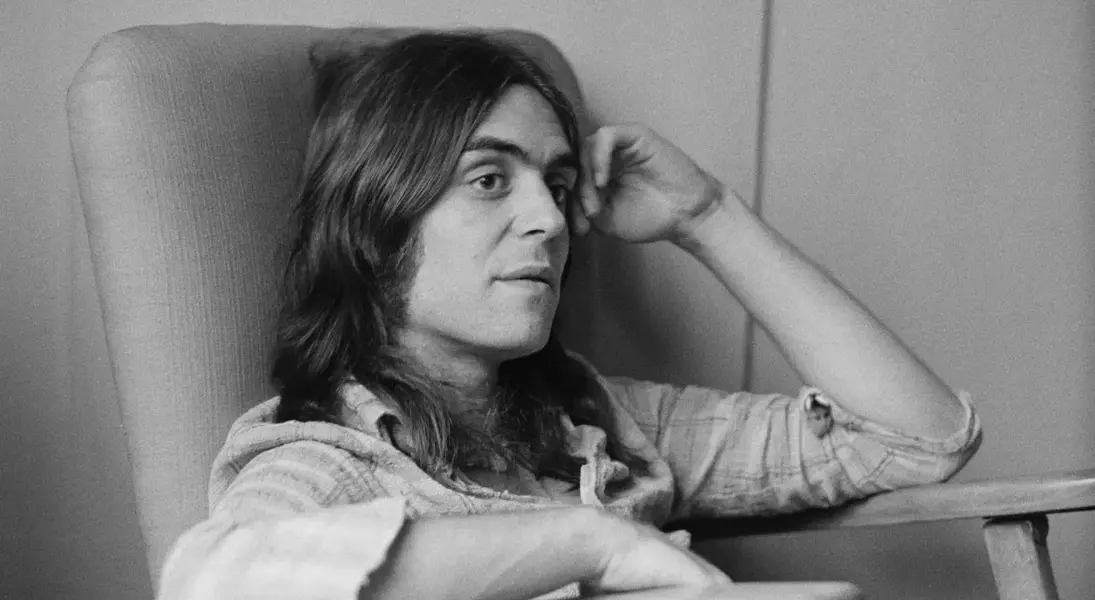
Terry Reid, a British musical icon whose profound artistry garnered respect from luminaries such as Aretha Franklin and Mick Jagger, has passed away at the age of 75. Though not a household name for chart-topping hits, Reid commanded immense admiration within the music community, notably being a strong contender for the lead vocalist position in the legendary band Led Zeppelin. His distinctive, soaring vocal capabilities earned him the fitting moniker 'Superlungs'. His discography, spanning five albums from 1968 to 1978, resonated deeply with critics and fellow artists, solidifying his status as a musician of rare talent and integrity. His enduring influence extended far beyond commercial success, touching the lives and work of many.
Born in Cambridgeshire, England, Terry Reid's musical journey began early, as he picked up the guitar and started composing in his teenage years. His initial breakthrough occurred in 1965 when his band, the Redbeats, had the opportunity to open for Peter Jay and the Jaywalkers. Jay was so impressed that he invited Reid to join his own group. This led to Reid performing across London and touring alongside iconic acts like the Rolling Stones, Ike and Tina Turner, and the Yardbirds. By 1967, encouraged by his friend Jimi Hendrix and under the guidance of producer Mickie Most, Reid embarked on a solo career, marking the beginning of his unique artistic path.
A pivotal moment in rock history saw Jimmy Page, then of the Yardbirds, approach Reid in 1968 with an offer to front his new band. Despite considering the proposal, Reid ultimately declined, instead famously suggesting Page look into Robert Plant and John Bonham from Band of Joy. This decision, which paved the way for the formation of Led Zeppelin, was often downplayed by Reid, who simply stated his commitment to his own artistic vision and frequently received invitations to join other bands, including an offer from Ritchie Blackmore for Deep Purple. He wryly noted his contribution to Zeppelin by stating, \"I contributed half the band — that’s enough on my part.\"
Reid's debut album, 'Bang, Bang You’re Terry Reid,' released in 1968 when he was just 18, showcased his prodigious talent. Following his 1969 self-titled album, a contractual dispute with Mickie Most led to a several-year hiatus before he could release 'River' in 1973. This album, a blend of progressive folk, R&B, funk, pop, and samba, became a cult classic despite its initial lack of commercial traction. He released two more albums, 'Seed of Memory' (1976) and 'Rogue Waves' (1978), before largely stepping back from his solo recording career. He relocated to California and began working as a session musician for prominent artists such as Don Henley, Bonnie Raitt, and Jackson Browne in the 1980s.
In 1991, Reid attempted a comeback with 'The Driver,' collaborating with Trevor Horn. The album featured a cover of “Gimme Some Lovin’” which was included in the soundtrack for the film 'Days of Thunder,' but the album struggled to gain significant attention, and Reid himself later expressed dissatisfaction with it. While he released no further studio albums, Reid continued to tour and release live recordings. His back catalog experienced a resurgence in interest, leading to collaborations with artists like DJ Shadow and Alabama 3. His compositions were also covered by new generations of musicians, including The Raconteurs’ rendition of “Rich Kid Blues” and Chris Cornell’s version of “To Be Treated Rite.” Even Dr. Dre, a noted admirer of 'Seed of Memory,' invited Reid to collaborate on unreleased material, an experience Reid described as \"fascinating.\"
Terry Reid's enduring passion for music remained unwavering throughout his life. He consistently emphasized his dedication to the creative process over the pursuit of fame and fortune, viewing himself as an integral part of the broader musical community. His primary desire was simply to perform, a testament to his profound love for the art form. Despite the health challenges he faced, which led to hospitalizations and the cancellation of a planned tour, Reid's spirit as a performer and his impact on those who knew and admired his work are indelible. His legacy will continue to resonate through the unique soundscapes he crafted and the profound respect he earned from his peers.
