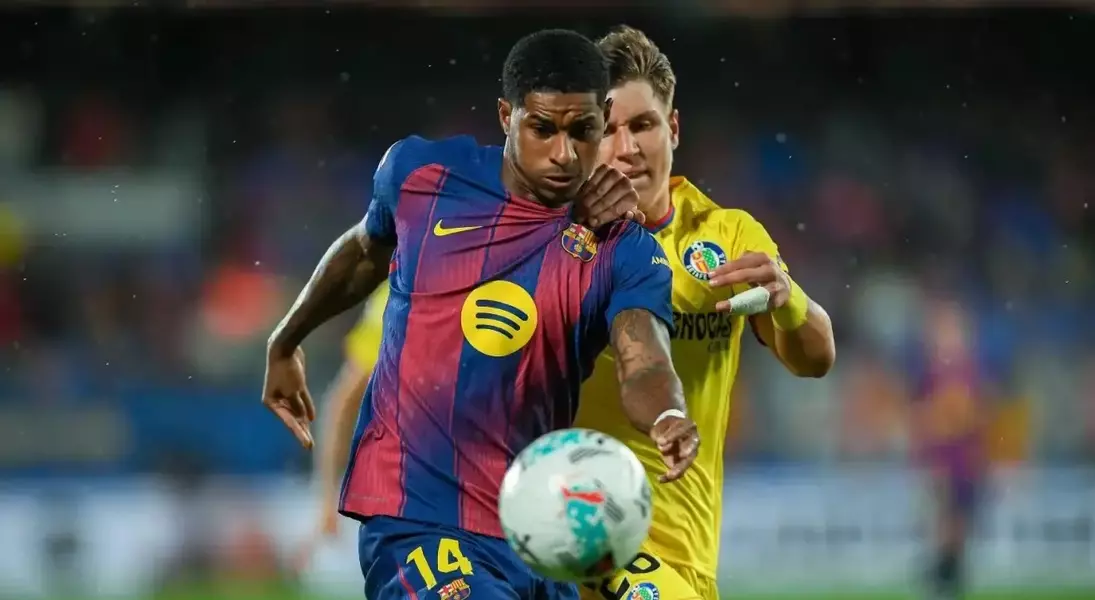
Marcus Rashford, currently on loan from Manchester United to Barcelona, found himself on the bench for a recent La Liga fixture. This disciplinary measure reportedly followed his late arrival to a team meeting, an incident that occurred just days after his stellar performance in the Champions League against Newcastle. This event highlights the strict professionalism expected in top-tier football, even for players capable of game-changing heroics. The incident also sheds light on the challenges players face when adapting to new club cultures and management styles, particularly when moving between leagues with differing approaches to player conduct and discipline.
The forward's journey at Barcelona has been a mixed bag since his summer move. While there were initial murmurs of a potential early termination of his loan, his impactful two-goal performance against Newcastle in the Champions League clearly demonstrated his significant talent and potential. However, this recent benching for tardiness echoes a similar incident during his time at Manchester United under manager Erik ten Hag, where he was also dropped for oversleeping, only to come on and score a winning goal. This pattern suggests a recurring issue with punctuality that transcends club boundaries.
According to reports from the Spanish publication Mundo Deportivo, Rashford's late arrival to a crucial team meeting, held an hour before a morning activation session on match days, led to Barcelona coach Hansi Flick's decision to exclude him from the starting XI. Flick maintains a clear policy: any player arriving late on a match day will not start, regardless of their planned inclusion. Even though the delay was reportedly only two minutes and attributed to an electronic information submission, the coach's adherence to his rule remained firm. This strict enforcement underscores a commitment to discipline and team cohesion within the squad, valuing collective responsibility over individual exceptions.
Despite the media's focus on the disciplinary aspect, Coach Flick publicly framed his decision as a matter of rotation. He explained to reporters that with matches occurring every three to four days, it's essential to manage players' minutes to ensure their optimal performance and prevent burnout. He cited other players, such as Fermin, who have also experienced minute management. Flick emphasized the team's successful 3-0 victory, redirecting attention to the positive outcome and the importance of focusing on their game plan rather than dwelling on individual selection choices. This approach by the coach aimed to downplay any internal discord and reinforce the idea of a unified team effort.
The incident serves as a pertinent reminder that even highly talented athletes are subject to stringent professional standards. While Rashford's skill is undeniable, as evidenced by his recent brace, consistent adherence to team protocols is equally crucial for maintaining a cohesive and successful squad. This event, therefore, underscores the delicate balance between individual brilliance and team discipline in professional football, illustrating how even minor infractions can lead to significant consequences within a rigorous sporting environment.
