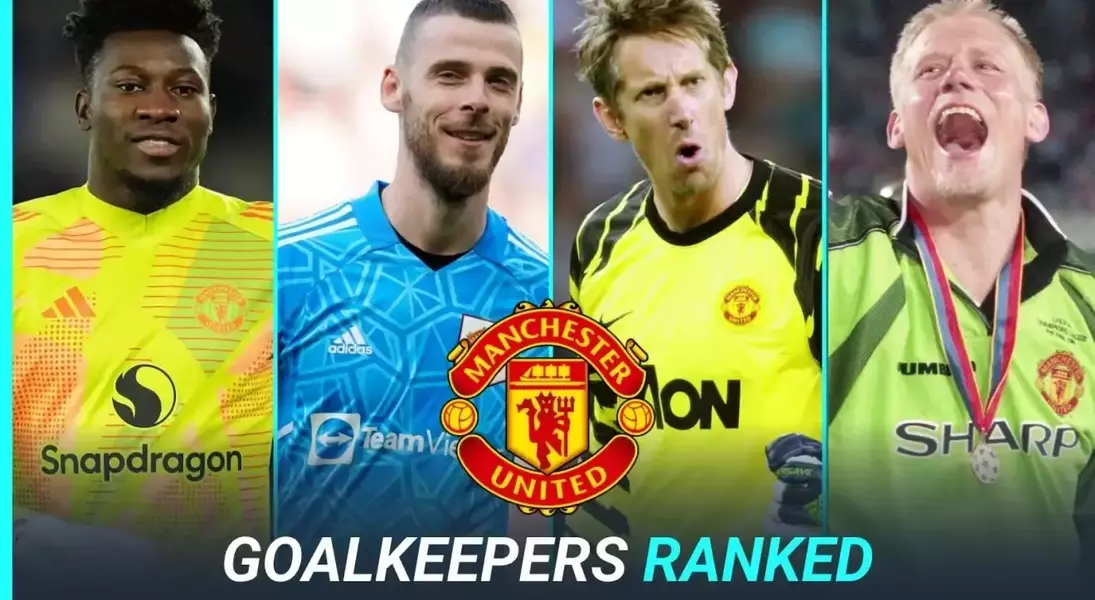
This analysis delves into the history of Manchester United's goalkeepers, focusing on those who have made significant contributions since Sir Alex Ferguson took the helm in 1986. It provides a comprehensive ranking, from promising talents who struggled to adapt, to the revered legends who solidified their place in the club's illustrious past. The article explores the unique challenges and pressures faced by each custodian of the net at Old Trafford, offering insights into their performances, pivotal moments, and ultimate standing in the team's history. It highlights how different eras demanded varying attributes from the No.1, and how some rose to the occasion while others faltered.
A Detailed Review of Old Trafford's Guardians
Manchester United has seen a succession of goalkeepers grace its field since the late 20th century, each leaving a distinct mark. Among those who served as understudies, figures like Tomas Kuszczak and Sergio Romero, while not always in the spotlight, proved reliable backups. Kuszczak, arriving in 2006, secured three Premier League titles and a Champions League medal, despite limited first-team action. Romero, joining in 2015, became a dependable cup goalkeeper, notably featuring in the 2017 Europa League final. However, more recently, the signing of Andre Onana raised expectations for a modern, ball-playing goalkeeper. Despite initial optimism, Onana's tenure has been marked by inconsistencies, leading to questions about his suitability for the demanding role at United. His recent move to Trabzonspor suggests a recognition of these challenges.
Tracing back further, Jim Leighton, Ferguson's first goalkeeping acquisition in 1988, initially showed promise but ultimately faced a decline in form, leading to his notable exclusion from the 1990 FA Cup final replay. Similarly, Roy Carroll and Tim Howard, who both arrived in the early 2000s, shared the No.1 spot for a period, yet neither consistently secured the position, ultimately paving the way for the arrival of more established names. Gary Walsh, a homegrown talent from the 1980s, demonstrated early potential, but injuries hampered his progress, preventing him from solidifying his place. Raimond Van der Gouw, a versatile and reliable presence in the late 1990s, admirably filled the void during transitional periods for the club, particularly after Peter Schmeichel's initial departure.
The discussion then pivots to the more celebrated figures. Fabien Barthez, signed in 2000, brought an unconventional yet brilliant style, becoming an immediate fan favorite, though his propensity for errors eventually led to his departure. Les Sealey, despite a relatively brief stint as the primary goalkeeper in the early 1990s, left an indelible mark with his fearless and determined performances, notably in the 1990 FA Cup replay and the 1991 Cup Winners' Cup final. David de Gea, who joined in 2011, enjoyed a long and distinguished career, earning multiple Player of the Season awards and becoming one of the club's most capped players. However, his later years were marked by questions about his suitability for a modern, high-pressing system, ultimately leading to his departure in 2023.
Finally, the top two spots are reserved for goalkeeping titans. Edwin van der Sar, arriving in 2005 at the age of 34, proved to be a masterful acquisition. His six seasons at Old Trafford were characterized by unwavering consistency, four Premier League titles, and a crucial role in the 2008 Champions League triumph. He provided the stability and leadership that had been missing since the departure of the club's undeniable best: Peter Schmeichel. The Danish legend, who guarded United's net from 1991 to 1999, is widely regarded as not only United's finest but also one of the greatest goalkeepers in football history. His imposing presence, unique technique, and remarkable distribution were instrumental in United's dominance throughout the 1990s, culminating in the historic treble in 1999.
This historical journey through Manchester United's goalkeeping lineage underscores the immense pressure and unique demands of the position. It highlights that beyond raw talent, qualities such as mental fortitude, consistent performance under pressure, and the ability to command the defense are paramount. The contrasts between the fleeting impacts of some and the enduring legacies of others serve as a powerful reminder of the fine margins that define success in elite football. Ultimately, the story of United's goalkeepers is a microcosm of the club's broader journey: a relentless pursuit of excellence, marked by moments of brilliance, periods of transition, and the unwavering dedication of those entrusted with guarding the goal.
