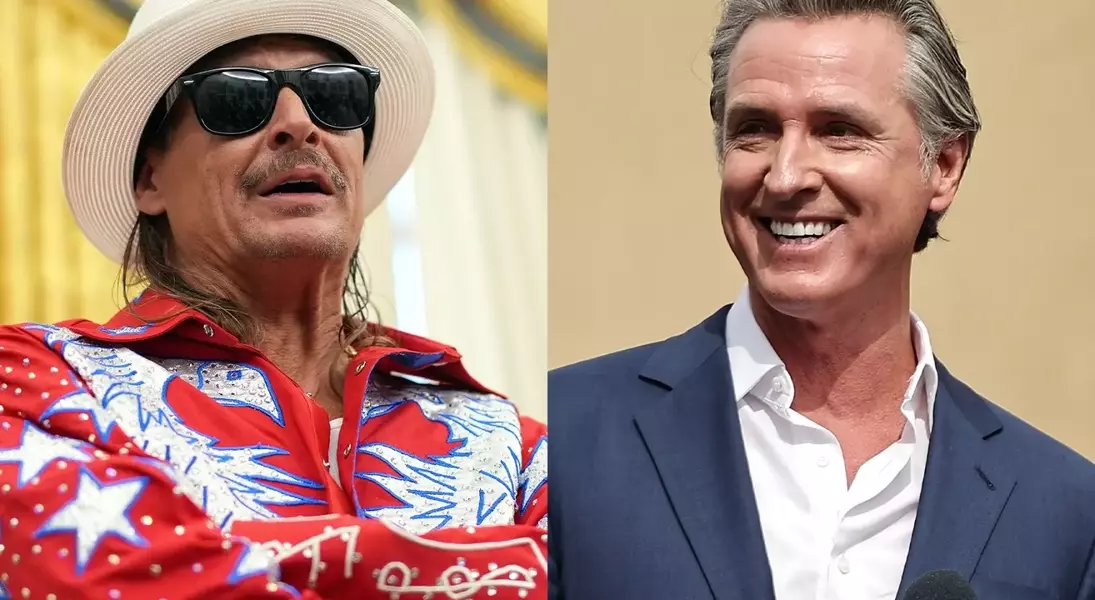
In an unusual display of political banter, the press office of California Governor Gavin Newsom recently adopted a social media strategy reminiscent of former President Donald Trump’s online presence. This calculated move involved posting content with a similar tone and stylistic quirks, including exaggerated capitalization and pointed remarks, designed to provoke a reaction from opposing figures. A notable instance of this was a fabricated image circulating on social media, depicting staunch Trump supporter and musician Kid Rock as 'Uncle Sam,' endorsing Newsom. The image was accompanied by a mock acceptance message from the Governor, 'I ACCEPT! — GCN,' clearly intended as a satirical jab.
The bait was successfully taken by Kid Rock, who responded with a crude and indignant message, directly addressing the Governor with strong language. This reaction, rather than defusing the situation, further fueled Newsom's press office, leading to subsequent posts that continued the satirical attack, such as 'I HATE KID ROCK !!! — GCN,' and another questioning Kid Rock's relevance since the initial exchange. This entire episode bears a striking resemblance to a past incident where Donald Trump himself shared AI-generated images, including one of Taylor Swift as 'Uncle Sam' endorsing him, illustrating a growing trend of political figures utilizing manufactured or exaggerated content for engagement, regardless of its authenticity.
The intentional timing of Newsom's post, precisely one year after Trump's similar 'Swifties for Trump' social media activity, underscores the deliberate and calculated nature of this political trolling. Such exchanges reflect a shift in contemporary political communication, where digital platforms are increasingly used for theatrical performances and strategic provocations, often overshadowing substantive policy discussions. This evolving landscape of political engagement often transforms serious discourse into a spectacle, where public figures leverage online interactions for visibility and to energize their bases.
This ongoing spectacle in the political arena serves as a reminder of the power of media, highlighting how quickly information, whether authentic or fabricated, can disseminate and shape public perception. It also calls into question the responsibility of public figures in their online interactions, and how their actions contribute to the overall tone and quality of public discourse. Ultimately, such incidents challenge us to be more discerning consumers of information, fostering a critical perspective on the content shared and the motivations behind it, as we navigate an increasingly complex digital landscape.
