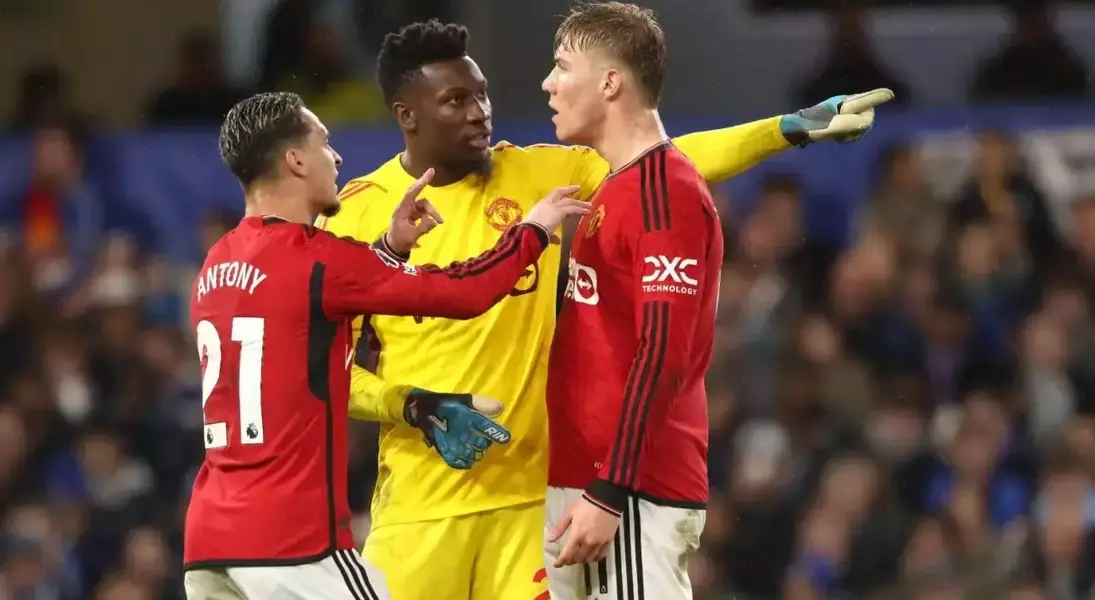
Former Manchester United defender Paul Parker has delivered a scathing assessment of Andre Onana's time as the club's goalkeeper, asserting that the team's defensive stability would be vastly superior had David De Gea remained their primary shot-stopper. Onana's recent loan transfer to Trabzonspor marks the conclusion of a tumultuous period at Old Trafford, characterized by numerous costly errors. His departure follows a string of performances that failed to inspire confidence, ultimately leading to a significant downturn in his reputation. The acquisition of Altay Bayindir and Senne Lammens in the transfer window further solidified the club's decision to move on from Onana, who struggled to meet the high expectations placed upon him as De Gea's successor.
Goalkeeping Critique: Onana's Exit and United's Defensive Woes
The saga of Andre Onana's brief and ill-fated tenure at Manchester United reached its nadir with his recent loan departure to Trabzonspor. Following a calamitous display in a Carabao Cup defeat against League Two side Grimsby earlier this month, where a critical mistake directly led to a goal, Onana's position became untenable. This final error encapsulated a period marred by inconsistency and poor judgment since his arrival in the summer of 2023. Paul Parker, a former Manchester United stalwart, did not mince words in his critique, labeling Onana's spell a \"disaster.\" Parker contended that despite defensive shortcomings across the team, the decision to replace De Gea with Onana was fundamentally flawed. He emphatically stated that with De Gea in goal, Manchester United's defensive solidity would be at least 60% better. Parker, who played alongside the legendary Peter Schmeichel, emphasized that a goalkeeper's primary role is shot-stopping, an area where Onana frequently faltered. He dismissed the modern emphasis on goalkeepers' footwork, arguing that a defender's trust in their keeper's ability to prevent goals is paramount. As manager Ruben Amorim prepares the team for the upcoming Manchester derby, the battle for the starting goalkeeper spot between Bayindir and Lammens will be a focal point, as both vie to avoid the tarnished legacy left by Onana.
The critical evaluation of Onana's performance by a former player like Paul Parker offers a significant lesson on the evolving role of a goalkeeper in modern football. While the game increasingly demands versatile players capable of contributing to build-up play, Parker's comments serve as a powerful reminder that fundamental goalkeeping skills—shot-stopping and commanding the penalty area—remain the bedrock of defensive strength. This situation highlights the fine balance clubs must strike between embracing new tactical trends and prioritizing traditional competencies. For Manchester United, the decision to move on from a proven shot-stopper like De Gea in favor of a keeper with perceived better footwork has, according to this analysis, come at a considerable cost. The immediate aftermath suggests that, at least in this instance, the pursuit of a modern archetype led to a regression in defensive solidity. This prompts reflection on whether certain innovations, when applied to critical positions, might inadvertently undermine core strengths. Ultimately, the emphasis on a goalkeeper's primary duty – keeping the ball out of the net – continues to resonate deeply within the footballing community, regardless of tactical evolution.
