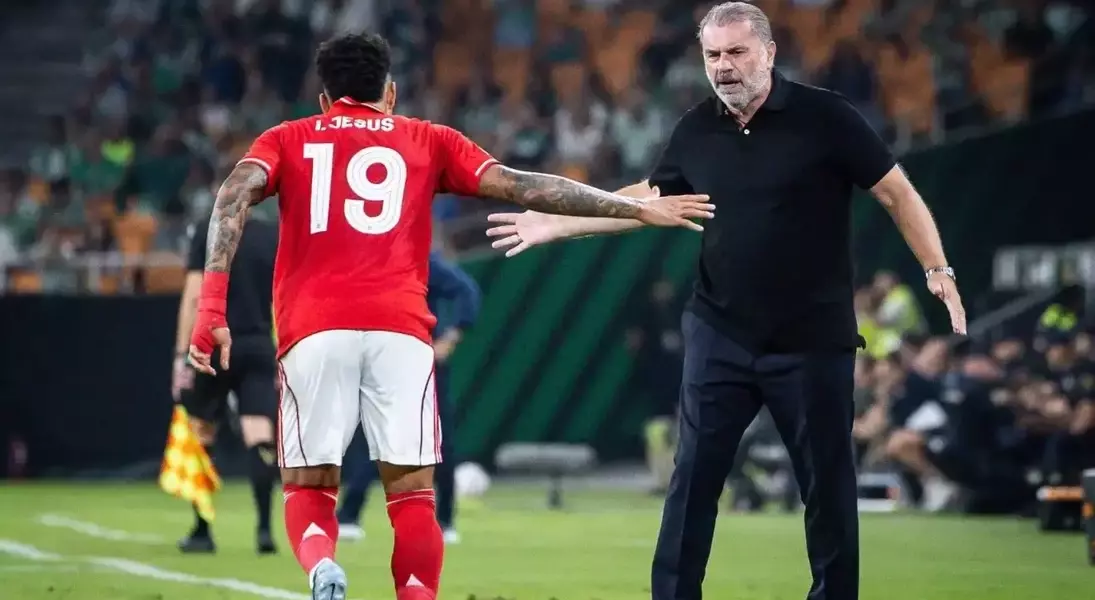
Nottingham Forest's recent Europa League encounter against Real Betis, marking their return to European competition since 1996, concluded in a 2-2 stalemate. While fans found positives in the team's performance, the match underscored a persistent challenge for the club under manager Ange Postecoglou: the difficulty of holding onto winning positions. Postecoglou's \"Angeball\" philosophy, emphasizing an aggressive, passing game, demonstrated its potential in the first half with exceptional fluid play, leading to two quick goals by Igor Jesus. However, a familiar pattern emerged as the team conceded late, raising concerns about their mental fortitude and tactical sustainability, echoing issues encountered during Postecoglou's tenure at Tottenham.
The Wednesday evening fixture saw Nottingham Forest engage in their first European match in decades, facing Real Betis. Manager Ange Postecoglou, post-match, expressed immense pride in his players' efforts, acknowledging the challenging conditions, particularly the humidity and pitch, which added to the physical demands. He lauded the team's exceptional football in the initial half, where the fluid execution of his attacking system was evident. The early goal from Igor Jesus exemplified this style, a beautifully orchestrated, swift passing move culminating in a simple finish. Jesus quickly added a second, a header from a corner, giving Forest a commanding lead after Cedric Bakambu had initially put the hosts ahead.
Individual performances also shone, with Elliot Anderson continuing his excellent form and Douglas Luiz, despite an injury forcing his withdrawal at halftime, demonstrating why he was considered a smart summer acquisition. However, the dynamics of the game shifted considerably in the second half. The team struggled to maintain their initial intensity and control, allowing Real Betis to claw their way back into the match. This downturn prompted pundit Joe Cole to observe a \"mental block\" affecting Forest, suggesting that past setbacks, such as dropping points from winning positions and an early exit from the League Cup, were weighing on the players.
This \"mental block\" is a recurring theme that appears to have followed Postecoglou from his previous club, Tottenham. Last season, no Premier League team squandered more points from winning positions than Spurs, who dropped 29 points, losing seven and drawing four of the 22 games where they held the lead. Forest, under Postecoglou, has already shown similar vulnerabilities this season, surrendering a two-goal advantage against Swansea in a defeat and losing one-goal leads against both Burnley and Real Betis, resulting in draws.
Commentator Lucy Ward also pointed out the impact of substitutions, noting that Real Betis's changes seemed to strengthen them, while Forest's substitutions, including Dan Ndoye and Arnaud Kalimuendo replacing Callum Hudson-Odoi and Jesus, appeared to diminish their performance compared to the first half. This raises questions about squad depth and the effectiveness of tactical adjustments during the game. The increased intensity demanded by Postecoglou's system, compared to the more conservative approach under former manager Nuno Espírito Santo, could be contributing to player fatigue and a higher risk of injuries, as seen with Douglas Luiz and Nikola Milenkovic joining the injury list during the match.
Despite these challenges, Joe Cole remained optimistic about Forest's prospects in the tournament, stating that they had outperformed Real Betis, a tournament favorite, for significant portions of the game. He believes that with time, Forest will emerge as a much stronger side. However, the fundamental question remains whether the issue lies with player fitness and adaptability to the high-pressing \"Angeball\" system, or if the system itself, while entertaining, contributes to these late-game collapses. Addressing this pattern will be crucial for Nottingham Forest as they navigate the remainder of their European campaign and the domestic league season.
