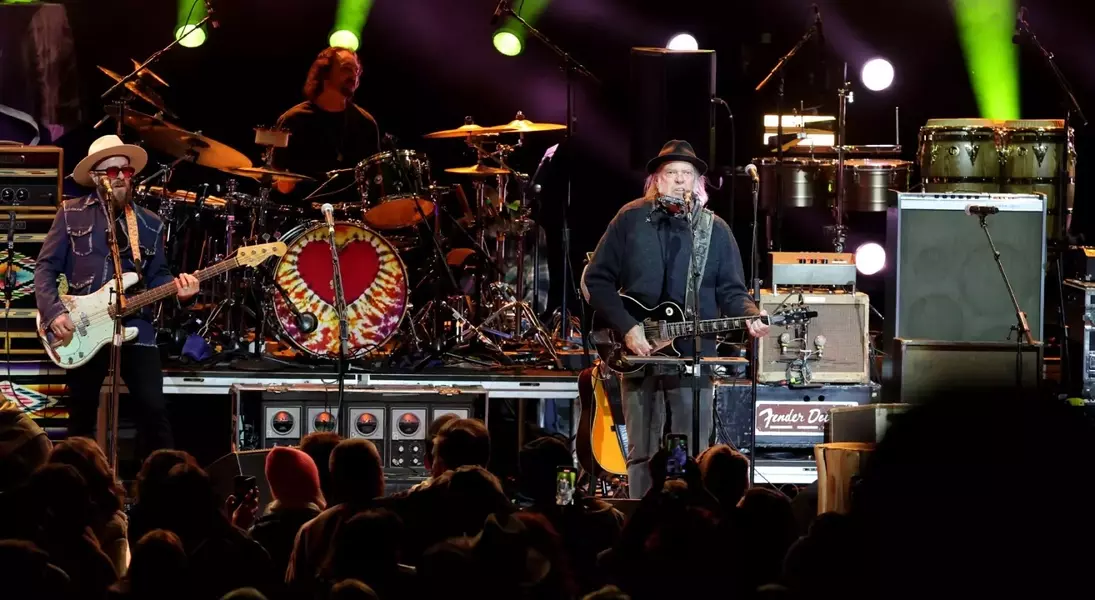
A prominent luxury brand, Chrome Hearts, has initiated legal proceedings against the acclaimed musician Neil Young and his accompanying ensemble, also named the Chrome Hearts. The lawsuit centers on allegations of trademark infringement, asserting that the band's use of the name and subsequent sale of merchandise bearing the moniker exploit the established reputation of the luxury goods company.
The luxury brand, with a history dating back to the late 1980s, is recognized for its high-end fashion, jewelry, and accessories. In contrast, Neil Young's band, formed late last year, recently released an album titled Talkin' to the Trees and has been actively touring across North America throughout the summer. The legal complaint explicitly states that the luxury brand never granted any form of authorization or license to Young's group for the use of its intellectual property. Furthermore, the lawsuit highlights the existence of third-party apparel vendors who have mistakenly promoted a connection between the band and the luxury brand, citing examples of merchandise featuring Young alongside Chrome Hearts-style logos and marketing copy that intertwines the two entities' aesthetics.
Despite attempts by the luxury brand to address the issue through communication with Young's representatives, the band has reportedly continued its touring activities under the contested name, including an upcoming performance in Los Angeles, where the luxury brand is based. Consequently, Chrome Hearts is seeking a court injunction to immediately halt Young's band from using the name, in addition to demanding unspecified financial compensation for damages incurred.
This legal dispute underscores the critical importance of intellectual property rights and the potential for confusion when similar names or branding are adopted across different industries. It serves as a reminder to artists and businesses alike to conduct thorough due diligence when naming their ventures and products, ensuring that they do not inadvertently infringe upon existing trademarks. Upholding these rights is essential for fostering fair competition and protecting the distinct identities that brands and artists cultivate over time.
