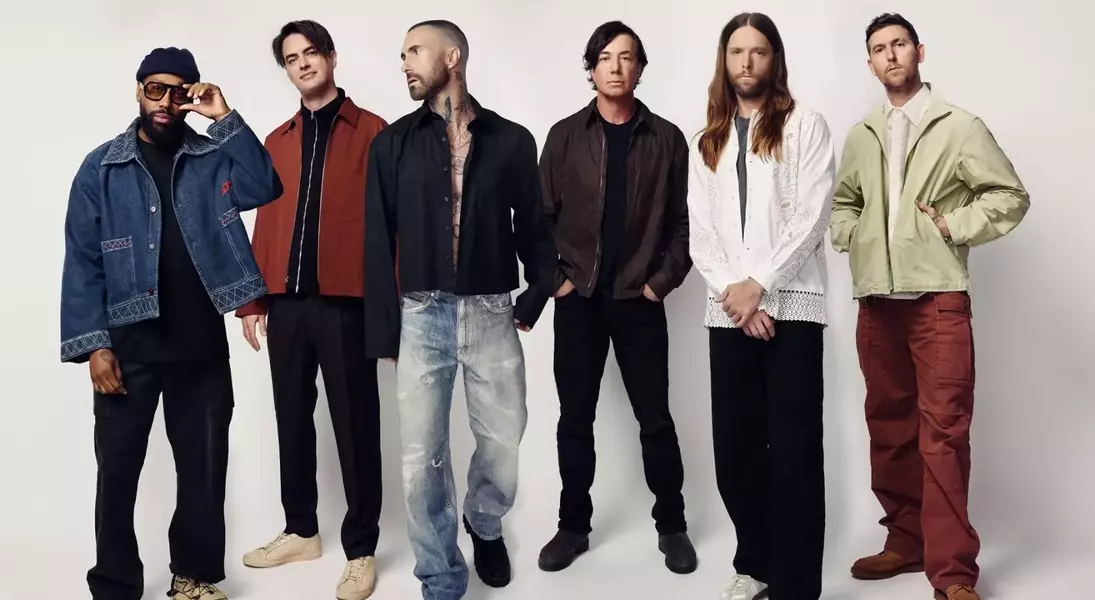
Maroon 5's recent release, \"Love Is Like,\" marks a significant moment in their two-decade-long career, as they venture into a nostalgic yet fresh soundscape. This album is a testament to their continuous evolution, boldly incorporating vintage funk and R&B elements into their polished pop aesthetic. While the band successfully navigates this fusion, certain aspects of the album, particularly some guest appearances, do not fully capitalize on their potential. Nevertheless, the record manages to deliver captivating moments, revealing both the band's inherent musicality and the emotive depth of its lead vocalist.
Maroon 5's "Love Is Like" Unveils a Blend of Classic Influences and Contemporary Sounds
On August 19, 2025, the critically acclaimed band Maroon 5 released their eighth studio album, “Love Is Like,” showcasing a surprising depth in their musical exploration. This new offering delves into the rich archives of Seventies funk, soul, and R&B, featuring samples from often-overlooked classics such as Barbara Stant’s “You Know I Love You” (1972), Loleatta Holloway’s vibrant “I Know Where You’re Coming From,” and the obscure B-side “Take Your Time” by the Festivals. These selections are not merely decorative but serve as heartfelt tributes, underscoring the group's deep-seated blue-eyed soul influences. However, the album’s meticulous approach to integrating these “unruly” sounds into a “radio-ready” format sometimes feels overly cautious, preventing a full, uninhibited embrace of the raw energy these samples offer.
The album commences with the inviting piano melody of “Hideaway,” immediately setting a relaxed tone with Adam Levine’s characteristic effortless delivery. Tracks like the sax-infused “All Night” and the confidently swaggering “Yes I Did” maintain this sleek, sophisticated vibe. “Jealousy Problems” brilliantly utilizes the groovy funk of Black Heat’s 1975 track “Zimba Ku,” allowing Levine to playfully embody a “summer scoundrel” persona, exuding charm as he admits, “I know this behavior is beneath us both… I kinda like this dysfunction.” The title track, “Love Is Like,” receives a vital injection of charisma from Lil Wayne, whose endearingly straightforward “marriage proposal” verse, “Your love is like dope/Got me twisted like a rope/Let’s elope,” skillfully rides atop Valerie Simpson’s timeless “Silly Wasn’t I.”
The album truly shines when its commercial sheen momentarily fades, revealing a more unrefined authenticity. Guitarist James Valentine delivers spirited and unconstrained solos on the prominent single “Priceless,” which is built on a captivating, gritty guitar riff reportedly originating from one of Levine’s iPhone voice memos. This track also features Blackpink’s Lisa, though her contribution, along with other high-profile collaborations (such as with Rihanna, Christina Aguilera, and Cardi B in the past), surprisingly falls short of expectations. Despite being a natural fit, Lisa’s vocals are subtly integrated into the background, missing an opportunity for a more impactful presence. In contrast, Sexyy Red leaves a stronger impression on “I Like It,” injecting the track with a powerful personality that commands attention, propelled by dynamic disco strings. One might even wish for a simplified, joint cover of “Summer Breeze” from Lisa and Sexyy Red, allowing their distinct talents to fully converge.
While a “yacht-rock” phase for Maroon 5 is not inherently problematic, the band’s insistence on “immaculate control” occasionally results in songs that feel tethered, “five feet from the dock.” However, the inclusion of bonus tracks “Cigarettes” (produced by Ryan Tedder) and “Closer” (a buoyant collaboration with Marshmello) reassures listeners that Maroon 5 still possesses the ability to craft mainstream hits when all elements align. The album’s true gem remains “California,” the original closing track. Here, the band discards any pretense or “retro affectations,” offering an “unadorned and honest” performance. Levine’s poignant line, “I’m paralyzed and weak here on my own,” underscores the vulnerability that truly elevates the song. Maroon 5 has consistently demonstrated their versatility, but their fundamental artistic essence has always resided in Levine’s voice—a distinctive instrument capable of shifting from detached coolness to profound emotional exposure. It is in these moments of candid vulnerability that his voice, and by extension the band’s music, resonates most deeply and genuinely.
As a listener, “Love Is Like” prompts a reflection on the delicate balance between artistic ambition and commercial viability. While it’s commendable for a long-established band like Maroon 5 to explore new sonic territories and pay homage to their musical roots, there’s an inherent tension when this exploration is too tightly reined in by the pursuit of “radio-ready” perfection. The album’s strength lies in its moments of unbridled expression, particularly when Adam Levine’s unique vocal capabilities are allowed to convey raw emotion. It serves as a reminder that true artistry often thrives when the boundaries of control are relaxed, allowing for a more authentic and impactful connection with the audience. Perhaps, for future endeavors, a less “gloves-on” approach might truly unearth the “buried treasure” within their innovative fusions.
