Manchester United is currently enduring a period of significant underperformance, finding themselves near the bottom of the Premier League table. This alarming decline is largely attributed to manager Ruben Amorim's inflexible tactical approach, specifically his unwavering commitment to a 3-4-2-1 formation. Despite possessing a squad with considerable talent, the team's results suggest a fundamental disconnect between the system and the players' capabilities. The ongoing struggles highlight the urgent need for a more adaptable strategy that can leverage the strengths of individual players and provide greater stability on the field, particularly in defense and midfield.
Since Ruben Amorim's arrival at Old Trafford last November, Manchester United's league position has plummeted to 14th, with the team languishing at the bottom among consistently present clubs. This dire situation has sparked a debate about whether the club has reached its true level or if this is merely a prolonged period of underachievement. While some players may be performing above their natural ability due to recruitment issues, the collective talent within the squad undeniably suggests that the team should be achieving far better results. The recent derby loss to Manchester City starkly illustrated the chasm in performance levels, particularly in crucial moments within both penalty boxes.
The core of the issue, according to observers, lies with Amorim's rigid adherence to his tactical blueprint. His unwavering commitment to the 3-4-2-1 formation has become his defining characteristic as a coach, to the point where it appears he would rather risk his job than compromise his tactical principles. While such conviction can be seen as brave, it has led to questions about its practicality and effectiveness in the current context. This stubbornness was known to the club upon his appointment from Sporting Lisbon, yet its consequences are now openly evident, with opposing teams easily anticipating United's play.
The primary flaw of this system is its apparent inability to maximize the potential of the current squad. Players struggle to adapt, recruitment choices are questioned, and the predictability of their play makes them easy targets. Critics argue that Amorim's fundamental responsibility is to extract the best from his available players, a task his beloved system is demonstrably failing to achieve. The likelihood of this situation improving rapidly is considered slim, given the manager's firm stance on his tactical methodology.
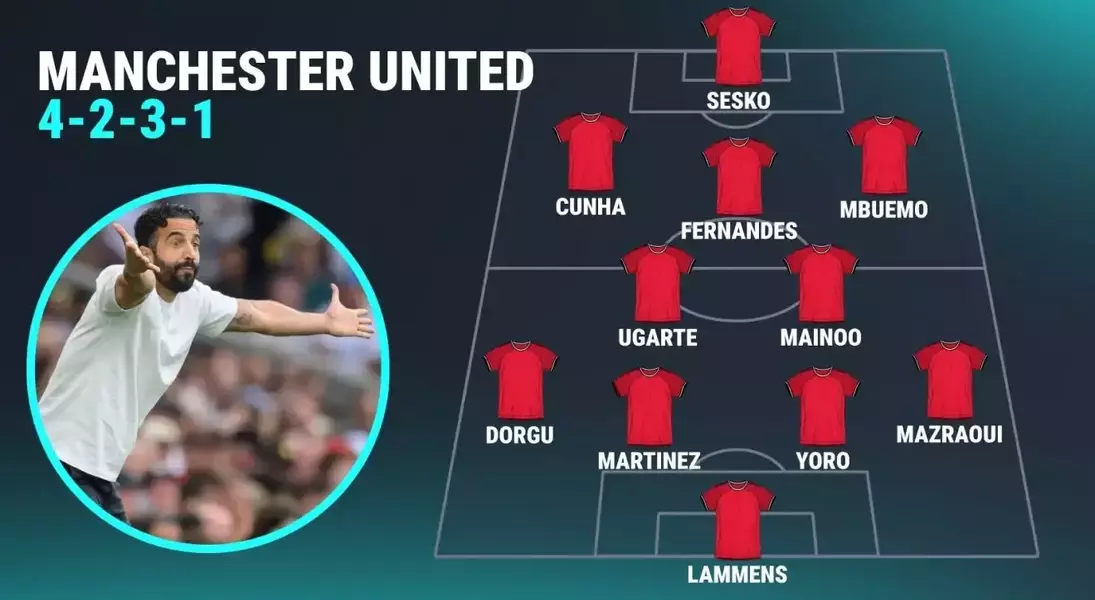
A potential solution lies in adopting a more familiar 4-2-3-1 formation, which many believe would better suit the players' existing skill sets and collective understanding. This shift would allow key figures like Bruno Fernandes to operate in his preferred number 10 role, rather than being shunted to the flanks or forced into a double pivot. With attacking talents such as Matheus Cunha and Bryan Mbuemo alongside him, and Benjamin Sesko leading the line, the offensive output could significantly improve. Furthermore, a return to a four-man defense would provide much-needed stability and comfort, as most United defenders have spent the majority of their careers in such a setup, excelling in it before.
Statistical evidence supports the efficacy of a back four, with the top 13 Premier League teams in the 2023/24 season primarily utilizing this defensive structure. Conversely, more than half of the bottom seven teams, including two relegated clubs, employed a back three. Last season, 83% of top-flight formations were built on a back four, with Manchester United accounting for a disproportionately large share of back-three usage. These trends suggest that a four-man defense is generally more effective, especially when there's no clear indication that a back three benefits the current United squad.
The midfield also remains a persistent problem, regardless of the formation, largely due to the absence of a dynamic defensive midfielder. This is a known deficiency that the club has yet to adequately address. While hopes may linger for players like Manuel Ugarte to develop or for Casemiro to sustain another season, the long-term solution to the midfield conundrum seems distant, likely not before the next summer transfer window. Without tactical concessions from Amorim or a sudden, dramatic improvement in his current system's output, it is widely believed that his tenure at Manchester United will be short-lived.
In summary, Manchester United's current predicament under Ruben Amorim is deeply rooted in his rigid tactical philosophy, which has led to a noticeable decline in performance and player effectiveness. The insistence on a 3-4-2-1 formation, despite its apparent unsuitability for the squad, has created a predictable and often ineffective playing style. A re-evaluation of the tactical approach, possibly a return to a more traditional 4-2-3-1, appears necessary to unlock the team's potential, improve defensive solidity, and allow key creative players to thrive. The current trajectory suggests that without significant changes in strategy or leadership, Manchester United's struggles are set to continue.
