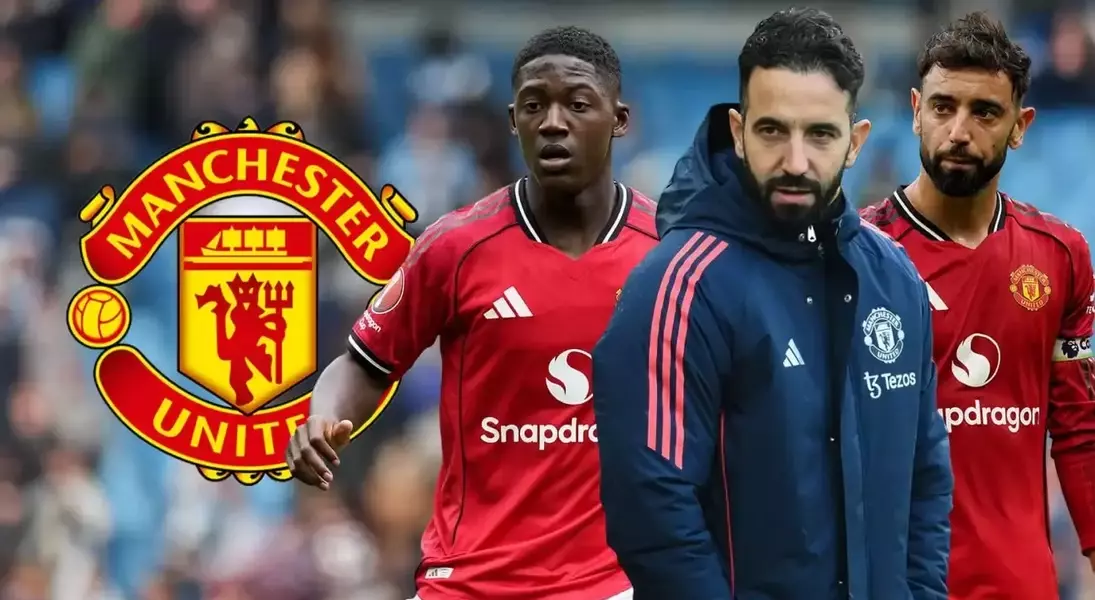
Manchester United's current season is unfolding with considerable challenges for manager Ruben Amorim, whose decisions in team selection and tactical approach are drawing widespread criticism. The club's substantial investment in new players during the summer transfer window has yet to yield desired improvements, leaving many to question the efficacy of the team's strategic direction. A central point of contention is Amorim's adherence to his preferred 3-4-3 formation and the perceived marginalization of promising young talents, most notably Kobbie Mainoo. This situation is fostering an environment of pressure and internal dispute, pointing to potential regrets regarding significant transfer market choices and the overall management philosophy.
The pressure on Ruben Amorim at Manchester United has reached a critical point, with signs suggesting that his lack of experience in such a high-profile role is becoming increasingly apparent. Despite a summer transfer window that was anticipated to bring about a transformation, the team continues to struggle with familiar issues, including a notable lack of attacking prowess and defensive vulnerability. This comes despite an expenditure exceeding £230 million on new acquisitions and the departure of several underperforming players. Amorim's steadfast commitment to his 3-4-3 system, coupled with his apparent reluctance to adapt his strategies—a stark contrast to the flexible approach seen in other successful managers—is widely considered a significant factor that could hasten his departure.
The impact of Amorim's tenure on individual player performance is a growing concern. There is little indication that any Manchester United player is thriving under his current tactical setup when compared to previous team structures. Kobbie Mainoo, once hailed as one of the most promising young talents globally, now finds himself frequently sidelined, serving as a benchwarmer for a team underperforming significantly. Many attribute this decline in Mainoo's standing to Amorim's managerial decisions, which have seemingly prevented the England international from reaching his full potential for an extended period.
Adding to the complexity, the club's transfer dealings have revealed underlying tensions. Recent reports indicate a 'significant reversal' in Manchester United's stance regarding Mainoo, suggesting a newfound confidence within the club that he will become an integral part of Amorim's future plans. This shift is particularly noteworthy given earlier indications that the club might have been open to selling Bruno Fernandes. This internal discussion and the club's decision to retain Mainoo, even at the cost of missing out on potential late-window targets like Conor Gallagher, reportedly left Amorim 'furious.' Such a reaction underscores the deep divisions within the club regarding player valuations and strategic priorities.
The club's decision-making in the transfer market has been particularly scrutinized, especially concerning Bruno Fernandes. The opportunity to secure a substantial £100 million from the Saudi Pro League for Fernandes was foregone, with the club opting to retain their captain. While Fernandes's quality is undeniable and he was a standout performer last season, his current struggles in a deeper midfield role under Amorim highlight the missed opportunity to utilize that significant transfer fee. Such funds could have been reinvested into acquiring a top-tier defensive midfielder, a crucial area of need that continues to hinder the team's balance and progression, effectively setting back their development by at least another year.
Ultimately, the current predicament at Manchester United under Ruben Amorim is a complex web of unfulfilled potential, strategic missteps, and internal discord. The ongoing struggles on the field, the perceived underutilization of key young talents like Kobbie Mainoo, and the questionable decisions in the transfer market collectively paint a picture of a club in need of significant re-evaluation. The reluctance to adapt tactical formations and the tension surrounding player retention and acquisition suggest a deeper systemic issue that extends beyond mere on-field performance, profoundly affecting both team morale and future prospects.
