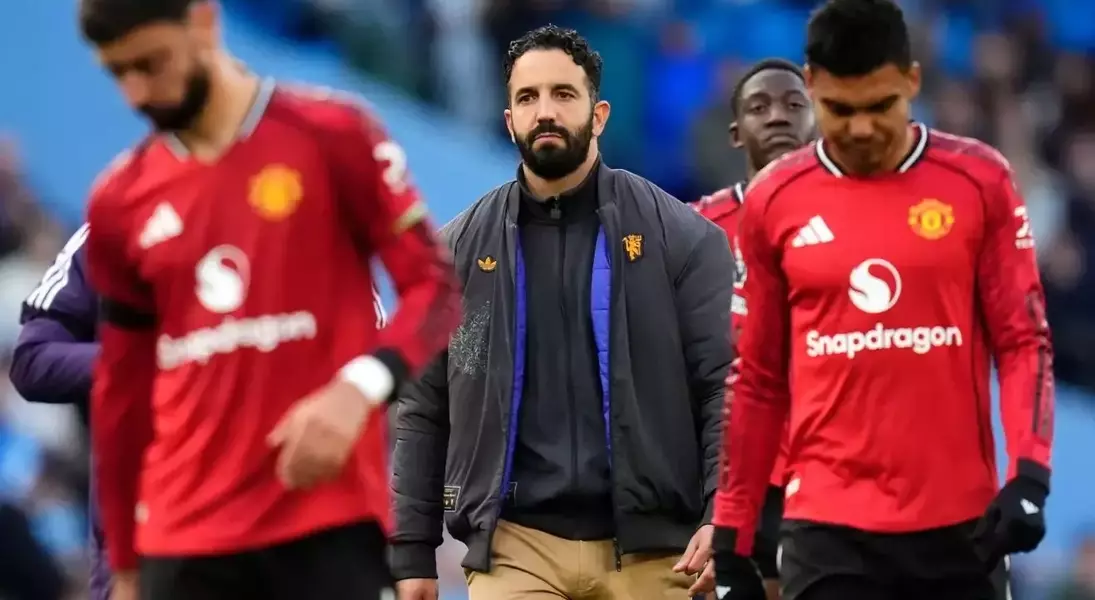
Manchester United's current season has ignited fervent discussions among its supporters and football analysts alike, focusing intensely on the team's struggles and the managerial capabilities of Ruben Amorim. While some attribute the club's performance to a series of unfortunate events, including poor finishing and defensive errors, others question Amorim's suitability for the demanding Premier League environment. The team's statistical performance, particularly in creating high-quality chances, presents a paradox against their inability to convert these into victories, leading to a complex narrative of hope, frustration, and a yearning for past glories.
Manchester United's Current Predicament: Analysis and Fan Sentiments
The current state of Manchester United under Ruben Amorim has become a focal point of discussion within the football community. A significant portion of the debate revolves around the team's tactical approach and its practical outcomes on the field. Despite statistics showing a high generation of scoring opportunities, actual goal conversion remains a persistent issue, leading to mounting pressure on the team and its manager. Defensive vulnerabilities have also been highlighted, with specific instances from recent matches against Arsenal, Fulham, Burnley, and Manchester City being cited as evidence of individual errors rather than systemic failures, according to some analyses. These incidents underscore a recurring theme of missed chances and defensive lapses contributing to unfavorable results, irrespective of the team's statistical efforts. The impending fixtures against Chelsea, Brentford, and Sunderland are viewed as crucial tests for Amorim to demonstrate tangible progress and secure vital points, potentially shifting the narrative surrounding his tenure.
Beyond the immediate on-field performance, fan sentiment is deeply divided. Some loyal supporters express weariness with the club's cyclical struggles since Sir Alex Ferguson's departure, viewing the current period as a necessary, albeit painful, phase of 'chemotherapy' under a new ownership committed to a long-term vision. This perspective acknowledges the discomfort of the unknown but hopes for a future where United reclaims its status. Conversely, a vocal group asserts that Amorim is simply out of his depth, pointing to the team's low league standing since his arrival as irrefutable proof. They argue that advanced metrics, while showing potential, fail to mask the fundamental problem of losing matches. This stark contrast in opinions highlights the emotional investment of the fanbase and the profound impact of the team's fortunes on their collective psyche.
Reflections on Manchester United's Journey: A Fan's Perspective
The ongoing saga at Manchester United provides a rich tapestry for reflection on the nature of sports, loyalty, and the complex relationship between a club, its management, and its fanbase. It highlights how objective statistics can sometimes clash with the visceral reality of game outcomes, prompting a deeper look into what truly constitutes success in football. The unwavering hope of supporters, even in the face of prolonged adversity, is a testament to the enduring power of sports fandom. It also underscores the immense pressure on managers in an era where immediate results are often prioritized over long-term strategic development. Ultimately, Manchester United's journey under Amorim serves as a poignant reminder that the path to glory is rarely straightforward, often fraught with challenges, and requires a blend of resilience, strategic foresight, and perhaps, a touch of luck.
