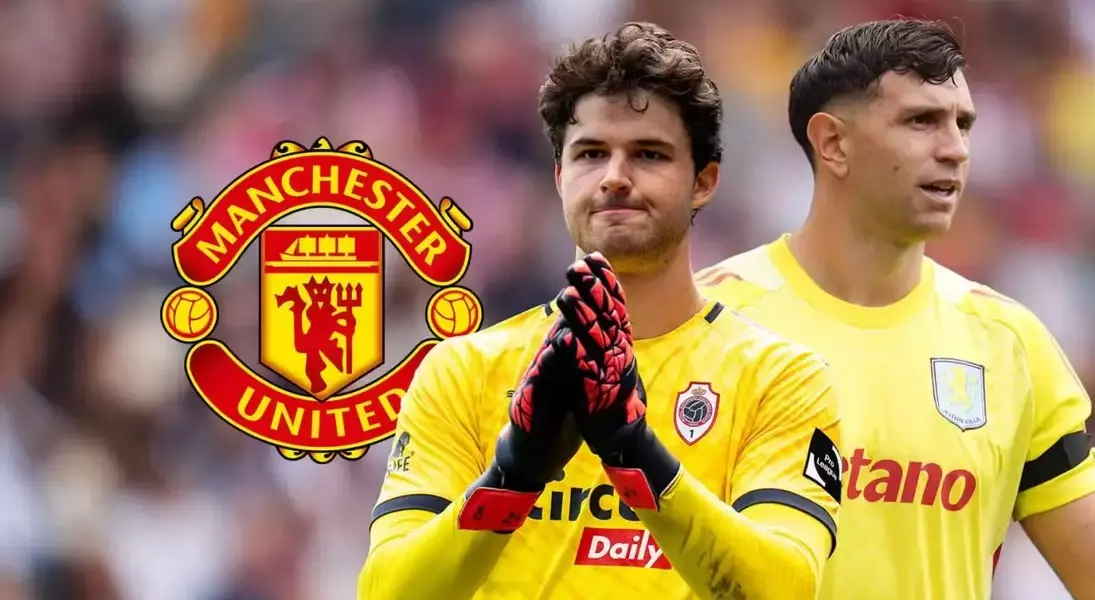
This report delves into the surprising acquisition of Senne Lammens by Manchester United and the preceding events involving other Premier League clubs. It examines the perceived value of the young goalkeeper, the contrasting opinions on his potential, and the strategic implications of his arrival for the Red Devils' goalkeeping situation. The narrative highlights the shifting dynamics of top-flight football transfers and the inherent risks associated with high-stakes decisions.
Manchester United Secures Senne Lammens Amidst Goalkeeping Conundrum
In a significant move on transfer deadline day, Manchester United officially announced the signing of Senne Lammens, a promising goalkeeper from Royal Antwerp, in a deal valued at €21 million. This acquisition unfolded as manager Ruben Amorim sought to reinforce the club's goalkeeping department, which has experienced a period of instability. The decision to bring Lammens to Old Trafford notably followed earlier considerations for Aston Villa's acclaimed goalkeeper, Emiliano Martinez, indicating a shift in the club's priorities.
The urgency for a new custodian at the venerable Manchester club became evident after André Onana's recent performances. His struggles, particularly during a League Cup fixture against Grimsby Town where Manchester United suffered a penalty shootout defeat, highlighted the critical need for a reliable presence between the posts. This challenging period had already seen Altay Bayindir deputize for Onana in the Premier League, signaling a clear lack of consistent first-choice form.
Adding an intriguing layer to this transfer saga, reports from the Daily Mail revealed that Lammens had been on the radar of Premier League outfits Leeds and Sunderland earlier in the summer window. However, both clubs reportedly opted against pursuing the young Belgian. Their reservations stemmed from concerns regarding his suitability for the rigorous demands of English football and the substantial asking price set by Royal Antwerp, suggesting a cautious approach from these teams.
Manchester United legend Gary Neville weighed in on the situation, suggesting that Lammens was initially envisioned as a number two goalkeeper, providing support and competition. Nevertheless, Neville emphasized the club's underlying need for a definitive first-choice goalkeeper, hinting at an accelerated path for Lammens to potentially claim the top spot. Lammens himself expressed immense pride and enthusiasm upon joining the iconic club, viewing it as a dream come true and an ideal environment for his continued development. He conveyed his eagerness to integrate with his new teammates and collaborate with the coaching staff, aspiring to make a substantial impact in the coming years and achieve his career ambitions at this prestigious destination.
From a journalist's perspective, this transfer saga underscores the inherent complexities and high stakes of professional football. The contrasting assessments of Lammens by different Premier League clubs, coupled with Manchester United's significant investment, highlight the subjective nature of talent evaluation and the pressures associated with recruitment decisions. The narrative prompts a deeper reflection on whether Lammens, despite his potential, is truly prepared to step into such a demanding role at one of the world's most scrutinized clubs. It also brings into question the long-term strategic vision for Manchester United's goalkeeping position and the impact of immediate performance pressures on player development. Only time will tell if this calculated risk by the Red Devils will yield the desired results and establish Lammens as a formidable presence in the Premier League.
