In a recent Premier League clash, Manchester City faced an unexpected setback against Brighton and Hove Albion, with manager Pep Guardiola attributing the defeat to his team's inability to maintain possession and overall subpar performance. This loss marks City's second in their initial three league fixtures, raising concerns about their early season form. Despite taking an early lead through Erling Haaland, the game dramatically shifted following tactical changes by Brighton's coach, Fabian Hurzeler. Timely substitutions, particularly those involving goal scorers James Milner and Brajan Gruda, proved decisive, turning the match in Brighton's favor and securing their first victory of the season.
Guardiola's post-match analysis centered on a loss of composure and tactical discipline after Brighton's equalizer, emphasizing that his players 'forgot to pass the ball' and resorted to long balls, ultimately compromising their performance. This sentiment echoes similar issues observed in a previous loss to Tottenham Hotspur. The manager, however, remains optimistic about his squad's potential, acknowledging the ongoing adaptation process for new players and the importance of veteran leadership. He highlighted Rodri's commendable performance as a positive note. Conversely, Brighton's coach, Hurzeler, credited his team's success not just to tactics but to their collective 'energy, intensity, and togetherness,' underlining the impact of his substitutions and the team's unwavering belief in securing a win.
Guardiola's Post-Match Reflection: Acknowledging Tactical Lapses
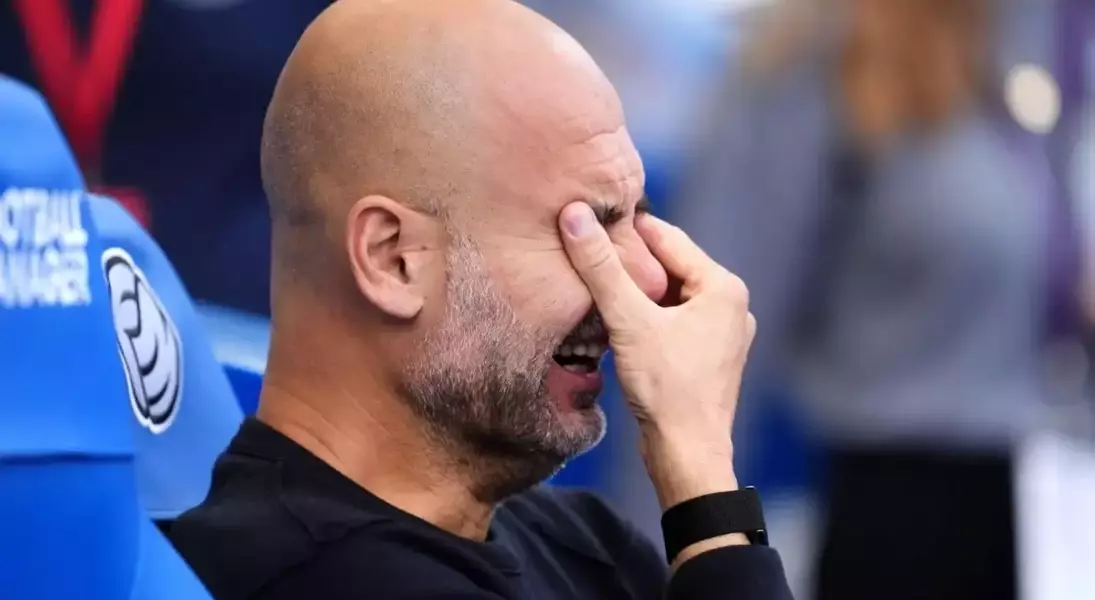
Manchester City's recent loss to Brighton left manager Pep Guardiola visibly frustrated, as he pinpointed a critical turning point in the game. According to Guardiola, his squad's performance deteriorated significantly after Brighton netted their equalizer. He observed that the initial hour of the match was highly effective, with his team demonstrating aggression and dynamism, creating numerous scoring opportunities. However, once parity was restored, City's play became disjointed, marked by an apparent forgetfulness in their passing game and an over-reliance on long balls, which ultimately undermined their tactical approach and overall effectiveness. This breakdown in cohesive play, particularly in the final half-hour, was a key factor in their inability to secure a favorable result.
Guardiola's assessment underscored a loss of control and strategic adherence post-equalizer. He noted a similar pattern in their prior defeat to Tottenham, where conceding a goal led to a departure from their established playing style. Despite acknowledging that setbacks are part of the Premier League's competitive nature, he stressed the importance of maintaining discipline and focus even when faced with adversity. The manager also alluded to the ongoing process of integrating new talent into the squad, emphasizing the need for both new and experienced players to adapt and support each other. He expressed satisfaction with Rodri's individual display, commending his character and ability to perform for the full 90 minutes. Guardiola remains confident in his team's potential and looks forward to refining their competitive edge upon their return to action, signaling a commitment to addressing the identified shortcomings.
Brighton's Triumph: Energy and Unity as Key Success Factors
In stark contrast to Manchester City's self-critique, Brighton's head coach, Fabian Hurzeler, offered a more holistic perspective on his team's victory. Hurzeler emphasized that the win was less about intricate tactical maneuvers and more about the fundamental attributes of 'energy, intensity, and togetherness.' This highlights a philosophy where collective spirit and sheer will can transcend purely strategic advantages. The impact of his substitutions was particularly notable; the players introduced brought a renewed vigor to the field, directly contributing to both goals and injecting a vital surge of momentum that permeated the entire squad and resonated with the home crowd, creating a powerful synergy.
Hurzeler elaborated on the psychological shift that occurred within his team after the equalizer. He noted that there was no sense of complacency or satisfaction with a drawn scoreline; instead, his players harbored a strong conviction to push for a second goal, demonstrating an unyielding belief in their ability to win. This proactive mindset, combined with their collective effort, ultimately earned them a deserved victory. He also paid homage to his managerial counterpart, Pep Guardiola, recognizing him as the world's best coach and acknowledging the inherent challenge in competing against his innovative ideas. However, Hurzeler was quick to stress that the triumph was not the result of individual brilliance but a collective team performance, proudly stating that his players committed to each other and endured challenges together, embodying the true spirit of football.
