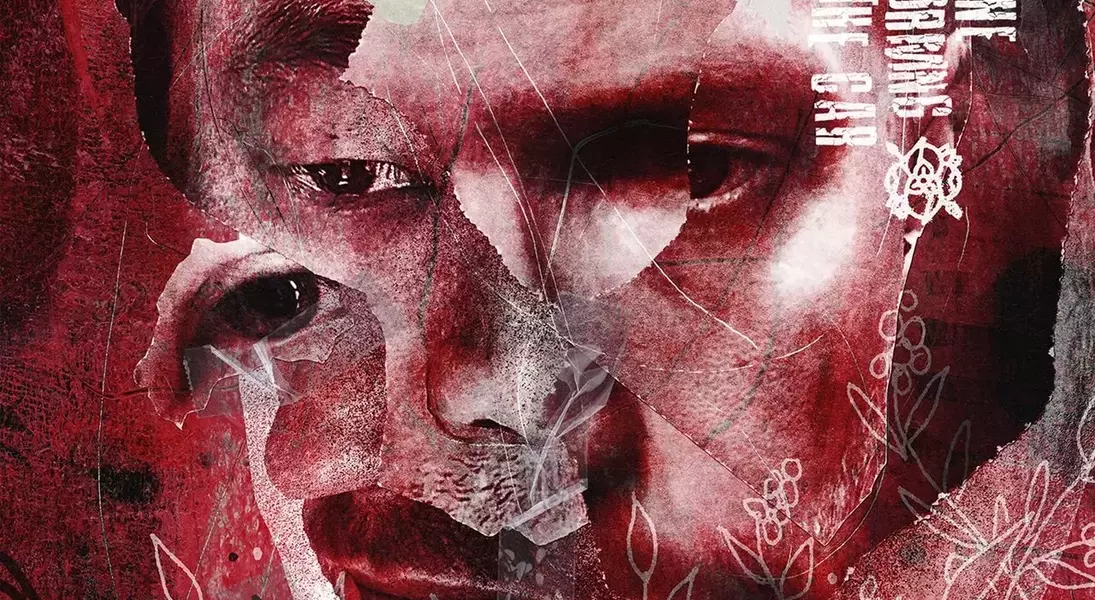
La Dispute's latest musical offering, titled 'No One Was Driving the Car,' emerges as a profound and introspective commentary on contemporary societal anxieties and existential queries. Drawing its evocative title from a tragic incident involving an autonomous vehicle, the album fearlessly confronts themes of technological advancement's double-edged sword, economic disparities, and moral erosion. This collection of songs, spanning 14 tracks divided into five distinct acts, serves as a mirror reflecting the unsettling realities of a world seemingly adrift without clear direction or leadership. The band's artistic evolution is evident not only in its thematic depth but also in its refined sound, moving towards a more organic, analog-driven production, recorded amidst the tranquil landscapes of New South Wales, Australia, enriching the auditory experience with subtle environmental textures.
The title of the album directly references a somber 2021 incident where two individuals perished in a Tesla crash, highlighting the chilling concept of a vehicle operating without a human at the controls. This unsettling notion is a central metaphor for lyricist and vocalist Jordan Dreyer, who perceives driverless cars as but one symbol of an impending societal breakdown. The band’s narrative weaves through various facets of decline, from widespread drug overdoses and deceptive pyramid schemes to the decay of post-industrial landscapes. The overarching question posed is whether anyone is truly steering the ship amidst these mounting challenges.
Originating from Grand Rapids, Michigan, over two decades ago, La Dispute has consistently channeled raw, anguished emotion through Dreyer’s distinctive vocal delivery. Their 2008 track, “Such Small Hands,” notably found a new surge of popularity on TikTok, resonating with listeners through its portrayal of romantic despair. While themes of relationship struggles persist in their new work, they have evolved into deeper, more philosophical inquiries about long-term commitment and fulfillment. Furthermore, 'No One Was Driving the Car' boldly ventures into political territory, launching sharp criticisms against systemic greed, corruption, and the insidious, often unseen forces that shape global society.
The band's hometown, Grand Rapids, serves as a poignant backdrop for much of the album's thematic content. Here, the concept of 'innovation' has frequently been met with a harsh reality: the disappearance of stable blue-collar employment at the whims of corporate executives, the tragic surge of opioid addiction fueled by deceptively marketed painkillers, and the predatory practices of multi-level marketing companies like Amway, which have exploited vulnerable individuals under the guise of Calvinist principles. The album's nearly nine-minute centerpiece, 'Environmental Catastrophe Film,' reflects on Grand Rapids’ industrial past as a furniture manufacturing hub, using the metaphor of a resilient wooden chair that outlasts the industrial boom from which it emerged. Dreyer’s lyrics, “Time goes and we change/Not what we made/But what can be,” underscore the fluidity of time, interwoven with family disputes, lost friends, and the enduring beauty of Lake Michigan.
In a deliberate embrace of traditionalism, 'No One Was Driving the Car' largely eschews the electronic elements present in their previous works, 'Panorama' and the 'Here, Hear' EP, opting instead for analog instrumentation. The band, comprising Dreyer, drummer Brad Vander Lugt, guitarists Chad Morgan-Sterenberg and Corey Stroffolino, and bassist Adam Vass, self-produced the record in the serene, forested environment of New South Wales, Australia. Field recordings from their tropical surroundings subtly integrate into the album's mix, adding to its immersive quality. Beyond its thematic depth, the album marks a significant artistic progression for La Dispute, showcasing ambitious and captivating compositions. Tracks like “I Shaved My Head” establish a discordant, bluesy tone, hinting at impending unease, while the gentle strumming on “Self-Portrait Backwards” and “Saturation Diver” provides a delicate counterpoint to Dreyer’s raw vocal delivery. The album subtly nods to the sonic legacies of bands like early Black Sabbath, Slint, and Orchid, positioning La Dispute within a lineage of artists who articulate alienation in the face of modern horrors.
Many band members, raised within the Christian Reform Church, infuse the album with moral reflections often conveyed through religious allegories. Narratives include a woman revived on Easter Sunday after an overdose and a figure appearing as an 'archangel' over a victim. The track 'Landlord Calls the Sheriff In' critiques the harsh realities faced by those ensnared in pyramid schemes, confronted with the demanding "try a little harder now" mentality. Yet, the album also promises a reckoning for the powerful, with Dreyer proclaiming, “No yachts will drift off when the rapture comes,” echoing themes of prophetic resurrection. This album represents a confident stride forward for La Dispute, moving beyond personal narratives to deliver incisive societal commentary in an unpredictable world.
The album's narrative gains additional layers of meaning when considering the fate of a specific Waymo factory. In 2019, Google, Waymo's parent company, announced a significant investment in Michigan to establish the world's first factory dedicated to autonomous vehicle mass production, promising numerous jobs in a region hit by General Motors' factory closures. However, these promises largely went unfulfilled; the plant ceased operations in early 2025, having employed only a fraction of the promised workforce. For La Dispute, such incidents of broken promises and unaddressed injustices exemplify the very essence of their new work. The album articulates a sense of disillusionment and frustration, capturing the feeling of being trapped in a system where the morally corrupt evade consequences, and even in the face of a metaphorical apocalypse, one remains stuck in the mundane, surrounded by the 'ghosts behind the wheel' of an unguided society.
