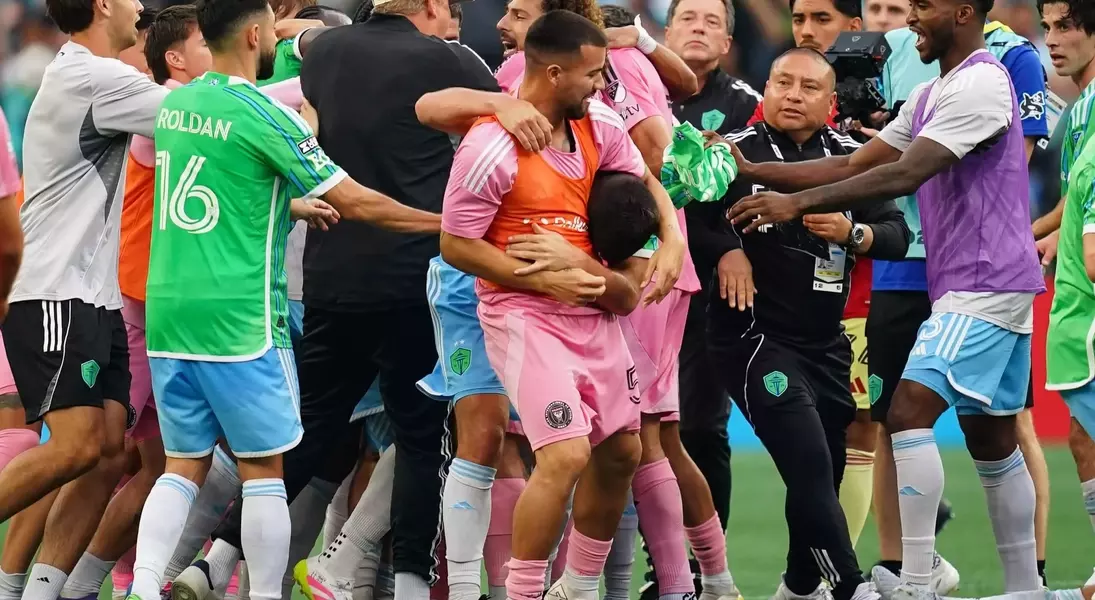


The narrative surrounding Inter Miami, once characterized by the positive influence of Lionel Messi, has dramatically shifted. Following a contentious Leagues Cup final, the team, alongside its star players, became embroiled in an incident that redefined their public perception, transforming them from admired figures to divisive antagonists within the league.
A Shocking Transformation: From Sporting Icons to League Antagonists
The Genesis of Miami's Transformation: A Bright Beginning Fades into Disarray
For over two years, Lionel Messi's tenure in Miami epitomized optimism, marked by spectacular football, incredible free kicks, and a surge in popularity for Major League Soccer. While injuries and a playoff defeat eventually tempered some of the initial excitement, the overall narrative remained positive, elevating the league's profile and captivating fans. The Messi era was largely seen as a successful and joyful endeavor, both on the field and in its broader impact.
The Unraveling: A Post-Match Altercation and the Emergence of Unsavory Behavior
The turning point arrived abruptly. Immediately following their 3-0 defeat in the Leagues Cup final against the Seattle Sounders, Inter Miami players, including Luis Suárez and Sergio Busquets, unleashed their frustration on their opponents. This escalated into a chaotic brawl, tarnishing Seattle's celebratory moment and firmly casting Inter Miami in the role of league villains. Luis Suárez, in particular, ignited widespread condemnation for his actions, which included spitting at a Sounders security official, an act widely captured and disseminated, serving as undeniable evidence of the team's unsportsmanlike conduct.
Undercurrents of Discontent: Pre-existing Resentments Surface
Even before this incident, a subtle undercurrent of animosity towards Inter Miami had been brewing among segments of the MLS fanbase. The initial 'Messi Mania' eventually gave way to feelings of envy and irritation. Fans of other clubs expressed annoyance at the perceived preferential treatment given to Miami by the media and league marketing. Many felt their own team cultures were being overshadowed by the Miami-centric narrative, and that their clubs were becoming mere background players in a league increasingly dominated by Messi's presence.
Growing Pains and Perceived Injustice: The Catalyst for Widespread Dislike
The arrival of Suárez, Busquets, and Jordi Alba, coupled with other South American talents, fueled suspicions among some about Miami's adherence to spending regulations, though concrete proof remained elusive. A significant portion of the fanbase resented the notion that the league felt indebted to Miami and its principal owner, Jorge Mas. There was a pervasive belief that officials, from referees to the commissioner, would unfairly favor Messi and Inter Miami. While some appreciated Miami's push for league improvement and self-reflection, others were repulsed by what they perceived as arrogance, evident in their stars' confrontations with referees and complaints about league rules. The team's lineups, often devoid of American players, and the replacement of respected MLS executives with Messi's associates, intensified the desire among many to dislike the club, despite a lack of specific, singular justifications.
The Point of No Return: Sunday's Confrontation Solidifies a New Identity
Despite these simmering resentments, Messi's on-field brilliance and Suárez's generally composed demeanor had, until recently, provided a counter-narrative. Inter Miami's dominant performance leading to the 2024 Supporters' Shield further complicated any clear-cut villainization. However, the events of Sunday in Seattle irrevocably altered this perception. Clashes between traveling Miami supporters and local fans, coupled with the on-field brawls post-match, eliminated any remaining ambiguity. As Sounders coach Brian Schmetzer diplomatically put it, "frustrations led to some things that shouldn't happen on the field." Inter Miami's coach, Javier Mascherano, conspicuously avoided accountability, offering only a vague suggestion of "provocation." This lack of remorse, particularly from Suárez, led to a unanimous public outcry, condemning the team's "childish" and "classless" behavior. Moving forward, Inter Miami will undoubtedly be viewed less as a phenomenon and more as a contentious force, chasing future successes under the shadow of its newfound reputation as the league's primary antagonist.
