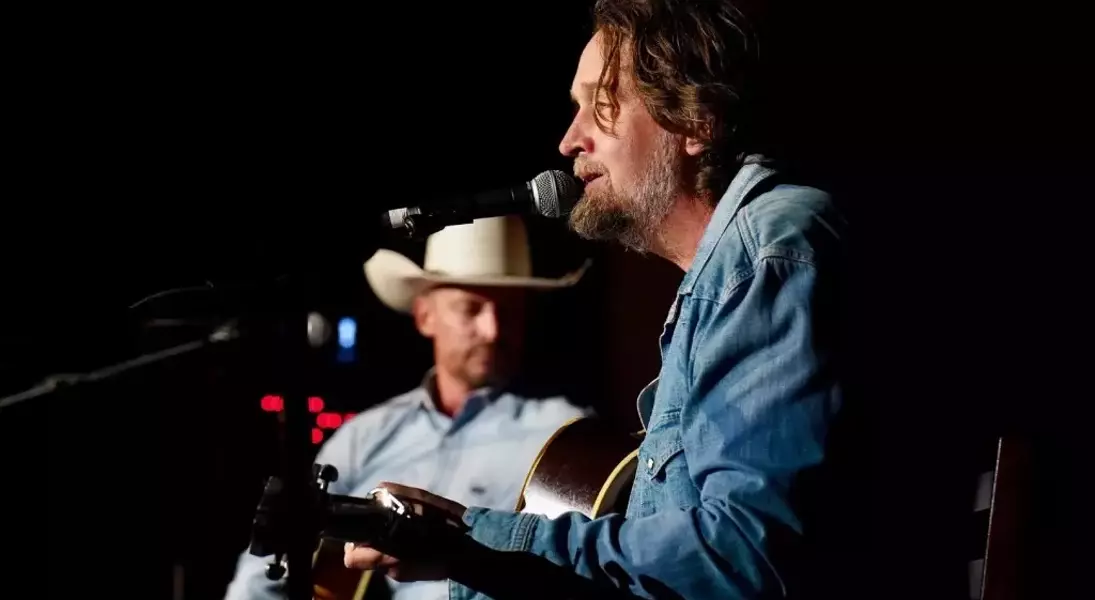

Hayes Carll, a celebrated figure in Americana music, unveils his latest album, 'We're Only Human,' marking a significant departure towards deeply personal songwriting. This new release explores his inner world, a stark contrast to his earlier narrative-driven compositions.
'We're Only Human': A Journey of Self-Discovery Through Song
The Evolution of a Songwriter: From External Narratives to Personal Truths
For years, Hayes Carll has captivated audiences with his keen observational humor and masterful storytelling, addressing societal nuances and human eccentricities through his music. Tracks like \"KMAG YOYO\" and \"Nice Things\" showcased his distinctive perspective on the world. However, his tenth studio album, \"We're Only Human,\" signals a profound pivot. This new collection of songs delves into his personal struggles and aspirations, a realm rarely touched upon in his extensive discography, with few exceptions such as \"Long Way Home\" from 2004.
Embracing Vulnerability: The Genesis of 'We're Only Human'
Carll admits to a long-standing apprehension about discussing his own creative process and the personal narratives within his work. This discomfort was palpable, but with \"We're Only Human,\" he confronts it head-on. The album is a direct result of his desire to use music as a tool for self-exploration and healing. He cites Todd Snider's philosophy of writing to ease one's own mind as a pivotal inspiration, realizing that his past approach to songwriting hadn't fully embraced this introspective function.
A Collaborative Rebirth: Crafting the New Sound
The album's creation was a collaborative effort, particularly with Gordy Quist of the Band of Heathens, who co-produced the record. Their previous successful collaboration on \"Hayes & the Heathens\" laid the groundwork for this new venture. Recorded in Austin with a roster of talented musicians including Brian Wright, Noah Jeffries, and Geoff Queen, the process fostered an environment of trust and openness. This collaborative spirit allowed Carll to navigate his internal landscapes, processing doubts and insecurities that had long remained unaddressed. He likens his mind to a snow globe, recognizing the need for stillness to gain clarity and understanding of his own emotions.
Lyrical Depth and Social Commentary: A Reflection of Self and Society
Carll penned or co-wrote every track on the album, including collaborations with artists like Aaron Raitiere and MC Taylor (Hiss Golden Messenger). The album features introspective pieces such as \"What I Will Be,\" co-written with Brothers Osborne. Even when employing his signature sharp wit, as in \"High,\" Carll explores themes of personal growth. \"The Progress of Man (Bitcoin & Cattle)\" stands out as a powerful commentary on societal issues, a raw expression of his frustration with perceived injustices and self-righteousness in the world. Yet, the overarching theme remains one of grace and inner peace, reflecting a conscious choice to confront life's upheavals with a calm and centered mindset.
Community and Connection: Finding Faith in Humanity
The album's themes extend to Carll's observations of humanity. A chance encounter in Okemah, Oklahoma, underscored his belief in the fundamental goodness of people, a stark contrast to the negativity often highlighted by media. This conviction is encapsulated in the song \"Good People,\" which celebrates acts of kindness and generosity. The collaboration on \"May I Never\" with friends and fellow artists like Ray Wylie Hubbard, Shovels & Rope, and Nicole Atkins further emphasizes the importance of community and mutual support in his journey.
Re-energized on the Road: A New Chapter in Performance
Beyond the recording studio, Carll finds renewed vigor in touring. He's embracing a busy schedule, performing for large audiences alongside artists like Tyler Childers and Robert Earl Keen, while also revisiting intimate club settings that harken back to his early career. This blend of experiences, coupled with the profound self-reflection embedded in \"We're Only Human,\" marks a significant turning point for Carll. His previous tendency to maintain a distance in his lyrics has given way to a raw honesty, transforming not only his music but also his personal interaction with his artistic output. This new chapter reveals an artist continually evolving, learning about himself as he articulates his experiences for the world to hear.
