Green Day's recent social media post playfully challenged Will Smith over suspicions of AI-generated crowds in his fan appreciation video, stirring debate within the entertainment community. While Smith's team remains silent, the incident highlights broader discussions about artificial intelligence's role in creative content and raises questions about authenticity in digital media.
The controversy surrounding Will Smith's video and Green Day's response underscores a growing conversation about transparency and the ethical use of technology in public-facing content. As AI capabilities advance, distinguishing between genuine and enhanced visuals becomes increasingly challenging, prompting closer scrutiny from both the public and industry peers.
The Artificial Crowd Controversy
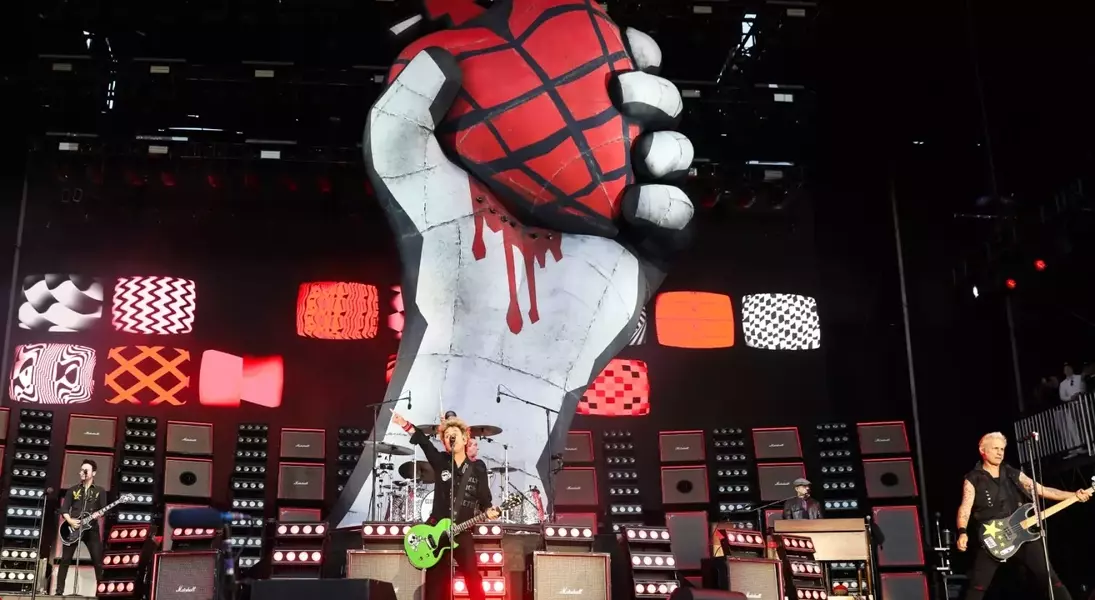
Green Day recently issued a playful, yet pointed, critique aimed at Will Smith concerning allegations of his use of artificial intelligence to digitally inflate crowd sizes in a promotional video. This public jesting by the punk rock band has ignited a broader discussion regarding the increasing prevalence of AI in entertainment and the ethical implications it presents. The band posted a video on TikTok featuring a visibly authentic and energetic crowd at one of their South American tour performances, deliberately contrasting it with the perceived artificiality of Smith's video. Their caption, "Don't need AI for our crowds 😜," was a clear and concise dig that quickly went viral.
The accusations against Will Smith arose approximately two weeks prior when he shared a video montage from his recent European tour, expressing gratitude to his fans. This seemingly innocuous post quickly drew scrutiny from online observers who noticed peculiar distortions in the crowd shots, including blurry faces, unusually formed hands, and hyper-realistic, overly polished appearances of some individuals. These visual anomalies led many to speculate that AI was employed to either generate or significantly alter the crowd imagery, giving the impression of larger, more enthusiastic audiences. Despite the widespread debate and criticism, Will Smith and his representatives have maintained silence on the matter, choosing not to address the swirling allegations. This lack of response has only fueled further speculation and continued the discussion about the authenticity of digital content in the music and entertainment industries.
The Blurring Lines of Digital Authenticity
While the uproar surrounding Will Smith's crowd video continues, a definitive answer regarding the extent of AI usage remains elusive. Expert analyses have yielded conflicting results, with some suggesting partial AI involvement. Tech blogger Andy Baio conducted a detailed investigation, unearthing that many of the questionable crowd shots, particularly those featuring fan-held signs, had previously appeared as unaltered still photographs on Smith's Instagram page before the video's release. This finding introduces the possibility that AI was not used to create entirely fake crowds, but rather to animate existing static images into dynamic video clips. This technique, involving image-to-video models, is a known application of AI and has been used in other creative projects, such as filmmaker Andrew Dominik's work on Nick Cave and the Bad Seeds' 'Tupelo' video, where old still photos of Elvis Presley were animated.
Adding another layer of complexity to the discussion, Baio and other analysts have also considered the role of platforms like YouTube in potentially altering video content without the creator's explicit knowledge. A YouTube spokesperson previously acknowledged that the platform is experimenting with "image enhancement technology" on selected YouTube Shorts, aimed at sharpening content through "traditional machine learning to unblur, denoise, and improve clarity in videos." A side-by-side comparison presented by Baio, showing disparities between the video's appearance on Instagram and YouTube Shorts, supports this theory, suggesting that some visual distortions might be a result of the platform's automated enhancement processes rather than deliberate AI manipulation by Smith's team. However, even with these insights, many experts conclude that some level of AI was likely used in Smith's video, not to fabricate entire audiences, but possibly to convert existing still images into animated segments for a concert montage. This incident highlights the rapidly evolving landscape of digital media and the challenges in discerning the true origin and integrity of visual content.
