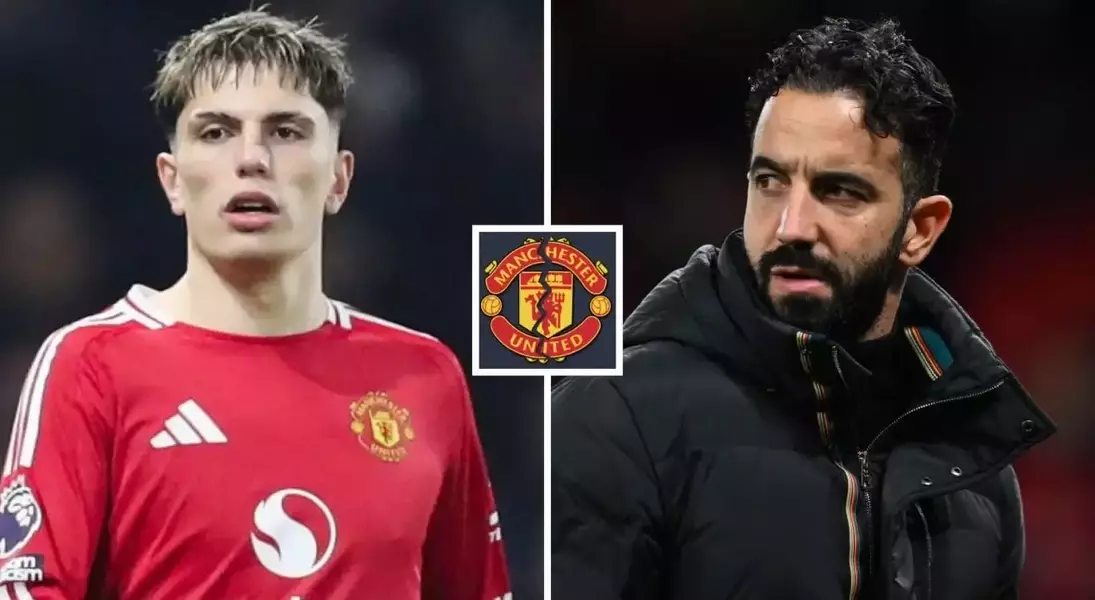
This report examines the intricate breakdown of the working dynamic between burgeoning football star Alejandro Garnacho and Manchester United's head coach, Ruben Amorim, leading to Garnacho's significant move to Premier League rivals, Chelsea. The narrative covers the young player's struggles with performance and demeanor, the managerial stance that prompted his transfer, and the unsuccessful attempts by teammates to mediate the situation. It also touches upon Garnacho's current status at Chelsea and the anticipation surrounding his potential appearance against his former team.
The Unraveling Bond: Garnacho's Exit from Old Trafford
The saga surrounding Alejandro Garnacho's departure from Manchester United has been brought into sharp focus following new revelations about his strained relationship with manager Ruben Amorim. The young winger, who recently completed a 40 million pound transfer to Chelsea, reportedly experienced a significant downturn in his performance during the 2024/25 season. This decline was attributed to his inability to adapt to Amorim's preferred 3-4-3 tactical setup and persistent issues concerning his attitude and mood.
The tension between Garnacho and Amorim escalated throughout the previous season. Garnacho found himself increasingly marginalized, culminating in a brief substitute appearance in the Europa League final loss to Tottenham. His subsequent public criticism of Manchester United's season prompted a direct response from Amorim, who reportedly advised the player to seek opportunities elsewhere.
Despite interest from several prominent European clubs, Chelsea emerged as the most likely destination, and a deal was finalized before the transfer window closed. Since joining the London club, Garnacho has made two substitute appearances, with Chelsea's head coach, Enzo Maresca, indicating that the player is now prepared for a starting role, potentially against his former club, Manchester United, this Saturday evening.
Maresca praised Garnacho's recent contributions, stating, \"He was very good in the last two games. He can be very effective in the second half. I explained to him against Bayern Munich that we are adapting our style, specifically what we expect from a winger. Now, I believe he's ready to start.\"
Conversely, Amorim remained reserved when asked about facing Garnacho, emphasizing his focus on his current squad. \"Garnacho is no longer our player; my attention is solely on our team. I am particularly pleased with the returns of Mason Mount and Matheus Cunha. For anything else, you should speak with the Chelsea manager,\" Amorim remarked.
A recent report from The Sun shed further light on the breakdown, suggesting that Garnacho's frequent social media outbursts and temperamental behavior significantly agitated the former Sporting Lisbon coach. Sources close to Amorim confirmed that he harbors no regrets about his firm stance. An internal attempt by senior United players, including Bruno Fernandes, Casemiro, and Harry Maguire, to encourage Garnacho to prioritize team objectives over individual concerns also proved unsuccessful. Ultimately, Amorim concluded that the young Argentine's presence was negatively impacting the dressing room atmosphere.
Reflecting on Talent, Temperament, and Team Dynamics
This episode serves as a powerful reminder of the delicate balance between individual talent and collective harmony within a high-performance sports environment. Garnacho's undeniable skill was overshadowed by his inability to conform to team philosophy and manage his personal conduct, leading to a premature departure from a club with immense potential. It underscores the critical role of a manager not just in tactical leadership, but also in fostering a disciplined and cohesive team culture. For young athletes, this story highlights the importance of humility, adaptability, and understanding that success in professional sports is as much about character and teamwork as it is about raw ability. It also prompts a discussion on how clubs manage prodigious talents who struggle with attitude, and whether a change of environment can truly unlock their full potential.
