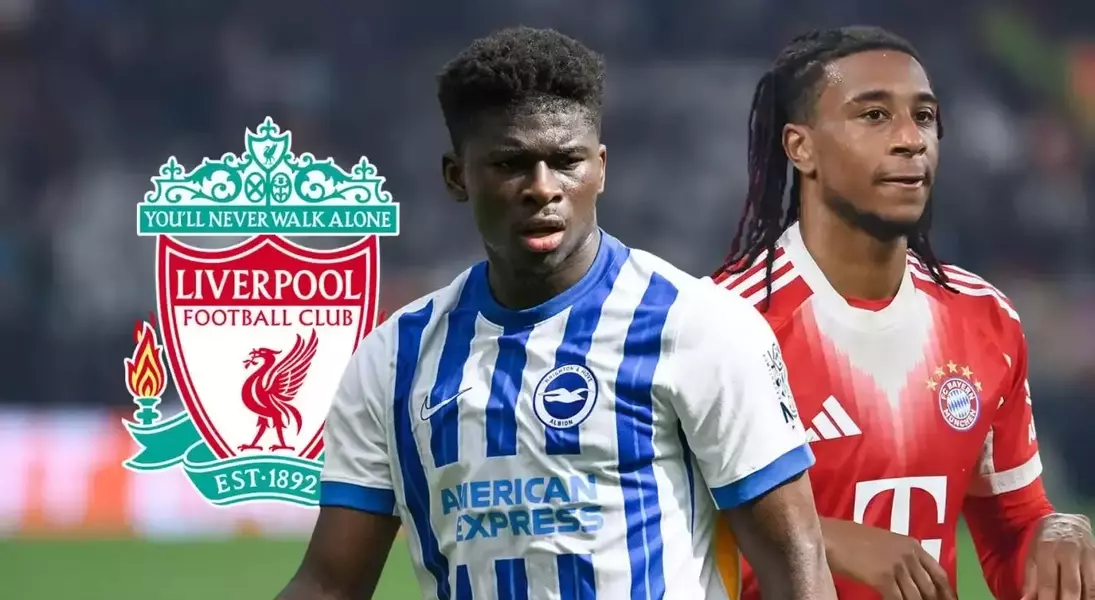
This report navigates the intricate and often speculative landscape of football transfers, centering on Liverpool's purported pursuit of midfield talents Carlos Baleba and Michael Olise. It dissects the prevalent practice of 'live' transfer updates, particularly when the transfer window is inactive, exposing the lack of substantive new information. The article scrutinizes the disparate player valuations presented by various news sources and analytical platforms like the CIES Football Observatory, revealing how these figures can be fluid and subject to interpretation. Furthermore, it highlights the competitive nature of securing top-tier players, where clubs vie not only on financial terms but also on historical prestige and future prospects.
Liverpool's Strategic Transfer Ambitions and Market Dynamics Under Scrutiny
In the dynamic realm of football transfers, Liverpool Football Club has found itself at the heart of recent speculation regarding potential acquisitions, notably midfielder Carlos Baleba and winger Michael Olise. Amidst a period when the transfer window remains firmly closed, the media landscape, particularly outlets such as the Liverpool Echo and the Manchester Evening News, has been awash with 'live' transfer updates. However, a closer examination reveals that much of this 'breaking' news often lacks immediate substance, with reports frequently citing past game performances or minor injury updates as significant transfer developments. For instance, the supposed 'latest' on Elliot Anderson and Adam Wharton from the Manchester Evening News merely recapped their recent match involvements or injury statuses, rather than actual transfer movements.
Liverpool's interest in Carlos Baleba has been a recurring theme, with some reports suggesting a potential 'swoop' for the player. Curiously, a significant portion of this narrative appears to stem from a single tweet by 'indykaila News' mentioning 'serious moves' by Liverpool for the Manchester United target. The Liverpool Echo, in turn, interpreted this as Liverpool 'preparing' a bid, despite no direct quote to that effect. Adding to the complexity are the fluctuating valuations. While some reports indicated Brighton valued Baleba at £115 million, the Liverpool Echo later discussed a £75 million price tag, attributed to calculations by the CIES Football Observatory. This discrepancy underscores a common challenge in transfer reporting: the variance between club asking prices, media speculation, and independent analytical valuations.
Similarly, the potential acquisition of Michael Olise has ignited discussions about his market worth. Despite an 'eye-watering' £100 million price tag, especially for a player who was part of the Bundesliga Team of the Year, some analyses imply that this figure aligns with contemporary football economics for a player of his caliber. The narrative surrounding player valuations extends to past transfers as well, with the article humorously pointing out how the perceived value of players like Alexander Isak, Hugo Ekitike, and Luis Diaz shifted significantly between initial media estimations and their eventual transfer fees or perceived market values.
Beyond individual player pursuits, the broader competitive landscape for talent remains intense. The article highlights Marc Guehi, a player attracting interest from European giants such as Barcelona, Real Madrid, Bayern Munich, Inter Milan, Juventus, Manchester City, and Chelsea, as he approaches free agency. Despite this formidable competition, the Liverpool Echo expressed a confident belief that Guehi would choose Liverpool, drawing a parallel to a past instance where he had agreed to join the Reds. This optimism, however, is tempered by the acknowledgment that agreeing to join a club when it's the sole bidder is vastly different from making a choice amidst offers from the world's elite clubs, especially given historical precedents of players opting for rival powerhouses like Real Madrid.
Ultimately, the transfer market is a blend of strategic ambition, financial maneuvering, media interpretation, and player preference. Clubs like Liverpool navigate this complex terrain, balancing their desire for top talent with economic realities and the fierce competition from global footballing giants.
This examination of football transfer news reveals a pervasive tendency towards sensationalism and speculation, especially when formal transfer windows are closed. It serves as a reminder for enthusiasts to critically assess news sources, recognizing that much of the 'live' reporting is often rehashed information or conjecture rather than concrete developments. The varying valuations of players, influenced by both media narratives and analytical bodies, highlight the subjective nature of market worth in football. For clubs, this underscores the importance of a clear strategy and robust negotiation skills in a highly competitive environment. For fans, it's a call to temper expectations and look beyond the headlines to understand the true complexities of player acquisitions.
