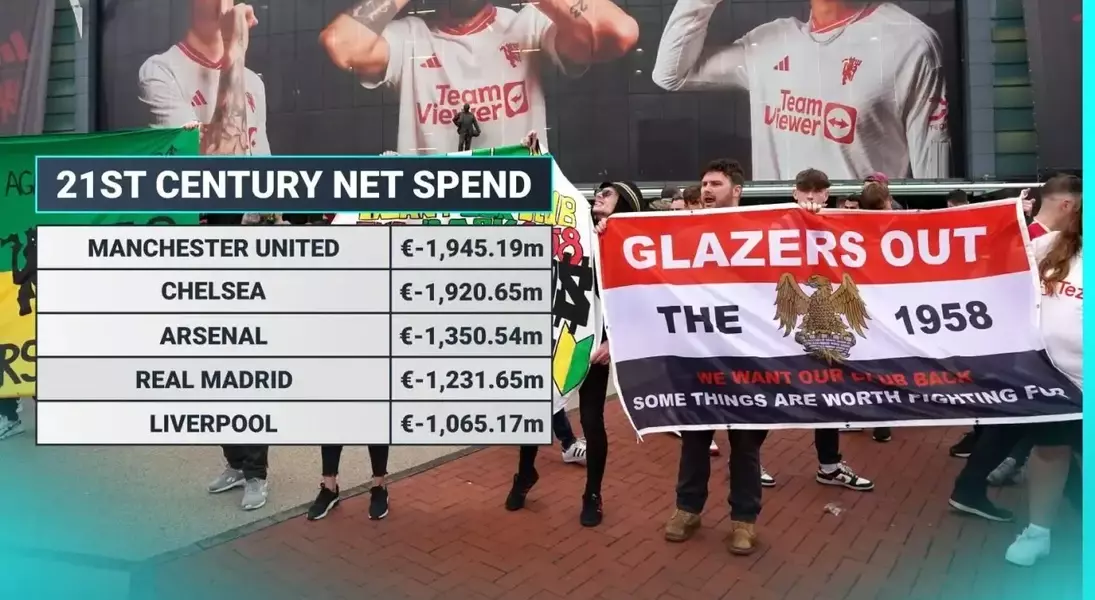
Since the turn of the millennium, football clubs globally have engaged in extensive player acquisition, leading to substantial financial outlays. An analysis of transfer data reveals the top 20 clubs that have incurred the most significant net spend, with a notable presence of Premier League teams among them. These figures, compiled from Transfermarkt, are presented in Euros, offering a consistent measure of financial activity.
Among the top spenders, Manchester United leads with a staggering net spend, indicative of their aggressive recruitment strategy and less successful player sales. Other English giants like Manchester City, Chelsea, Arsenal, Liverpool, Tottenham Hotspur, West Ham, and Aston Villa also feature prominently, underscoring the financial power of the Premier League. Beyond England, clubs such as Real Madrid, Paris Saint-Germain, Barcelona, Juventus, AC Milan, Inter, Napoli, and Bayern Munich demonstrate considerable investment in player markets. The emergence of Saudi Arabian clubs like Al Ittihad, Al Nassr, and Al-Hilal in these rankings highlights the growing financial influence of the Saudi Pro League, with their substantial expenditures and relatively low income from player sales.
The extensive net spends by these clubs reflect diverse strategies, from building formidable squads to seeking competitive edges in domestic and international competitions. While some clubs, like Bayern Munich, have achieved significant success with their investments, others, particularly those with less income from player sales, face scrutiny regarding the efficiency and long-term sustainability of their spending habits. The continuous flow of capital in the transfer market shapes team dynamics and league competitiveness, ultimately influencing the global football landscape.
This financial landscape of football underscores the ambition and strategic depth required to compete at the highest levels. It also reflects the evolving nature of the sport, where financial power plays an increasingly critical role in shaping team fortunes and dictating competitive hierarchies. These investments, while sometimes leading to immediate success, also carry inherent risks, necessitating careful financial management and strategic planning for sustained achievement and growth within the global football ecosystem.
