
Sports stand out as the ultimate form of entertainment due to their inherent unpredictability, offering raw, unscripted drama that even the most compelling Hollywood narratives cannot replicate. From Leicester City's astonishing Premier League victory in 2016 to Emma Raducanu's unexpected U.S. Open triumph in 2021 as a qualifier, these moments of pure, unscripted chaos captivate audiences globally. This analysis explores the underlying reasons behind varying levels of unpredictability across different sports, leveraging historical betting data to uncover which games are most prone to surprises and why.
Unraveling Sporting Surprises: A Deep Dive into Unpredictability
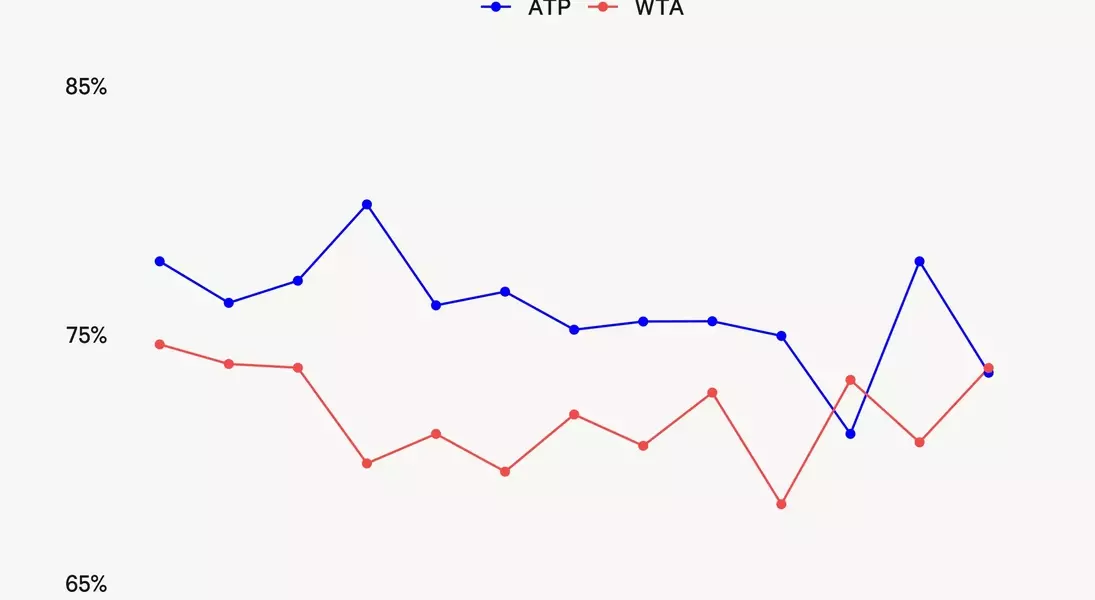
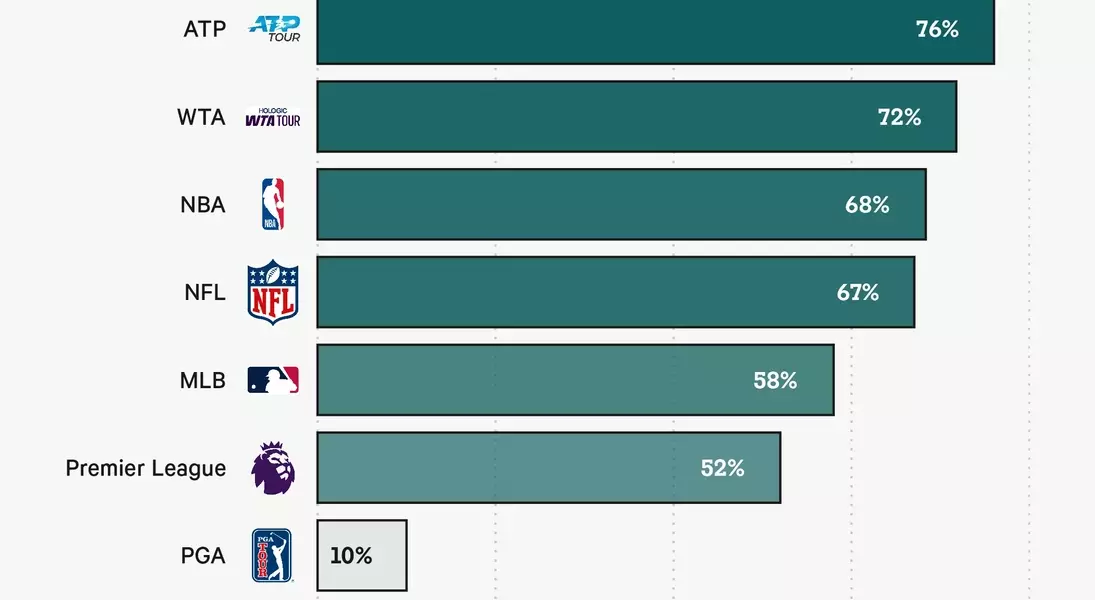
In a comprehensive study conducted by The Athletic, an examination of historical betting odds across six major sports—tennis, basketball, American football, baseball, soccer, and golf—revealed fascinating insights into their respective levels of unpredictability. The research indicated that men's Grand Slam tennis is the most predictable, with favorites securing victories in approximately 76% of matches. Women's tennis follows closely, demonstrating a similar pattern. In contrast, team sports like NFL and NBA see favorites win about two-thirds of their games. Baseball presents a unique case in North American team sports, with favorites winning only 58% of the time, suggesting a higher propensity for upsets.
However, soccer, particularly the Premier League, proved to be far more challenging for bookmakers, with favorites winning slightly over half of all matches since 2005. Golf takes unpredictability to an even greater extreme on the PGA Tour, where only about 10% of favorites manage to clinch tournament titles. This significant variance can be attributed to several key factors:
- Number of Outcomes: Most North American sports typically have two possible outcomes (win or loss), whereas soccer includes the possibility of a draw, offering underdogs an additional way to avoid defeat and thus increasing unpredictability.
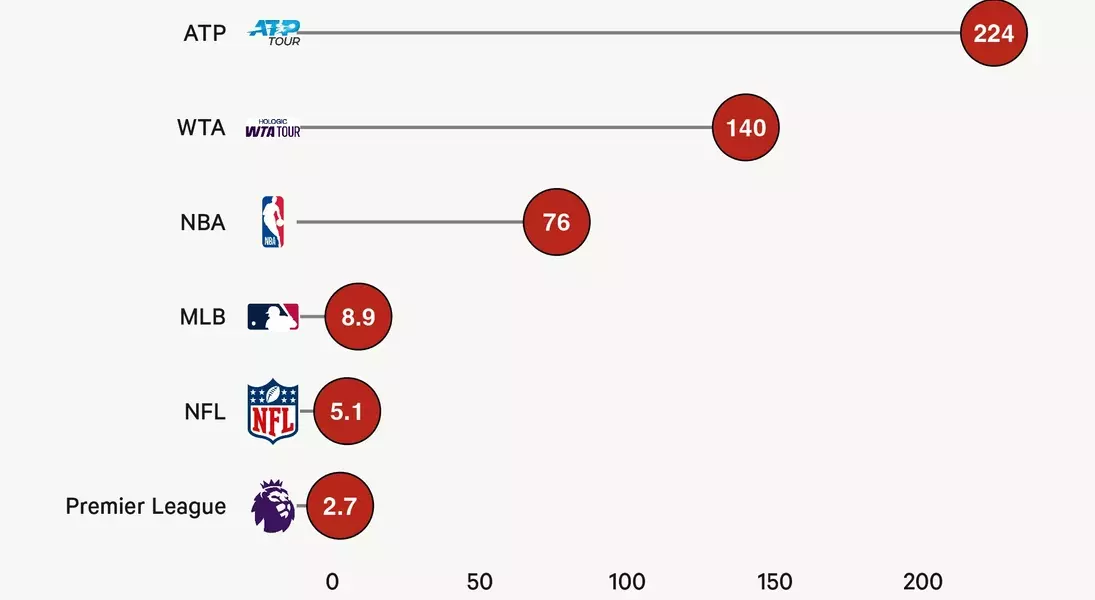
- Scoring Frequency: Low-scoring games, characteristic of soccer (averaging 2.7 goals per Premier League match since 1992), allow randomness to play a larger role. A single misstep or fortunate bounce can drastically alter the outcome. Conversely, high-scoring sports like basketball, with an average of 76 baskets per NBA game, dilute the impact of individual scores, giving stronger teams more opportunities to recover. Baseball, despite lower overall scoring than American football, exhibits more upsets due to the variable value of scores (e.g., a home run can yield one to four runs depending on base occupancy), leading to greater volatility.
- Match Length: Longer matches often favor stronger contenders. In men's Grand Slam tennis, which features best-of-five sets, top players like Novak Djokovic have demonstrated the ability to recover from two-set deficits, a feat impossible in best-of-three formats.
- Individual vs. Team Dynamics and Field Size: While individual sports like tennis might seem more predictable due to fewer variables, team sports introduce chaotic elements with multiple players needing to perform synchronously. Golf, an individual sport, paradoxically becomes highly unpredictable due to its massive field sizes (often over 100 players). The sheer number of competitors means that even rank outsiders can have career-defining performances, as demonstrated by Danny Willett's 2016 Masters victory. In team formats, like the Ryder Cup, predictability increases due to a limited number of participants.
Ultimately, the analysis points to golf as arguably the most unpredictable sport, mainly because of the vast number of competitors in regular tournaments, making it incredibly difficult to consistently pick a winner from a large field.
This insightful analysis underscores that unpredictability is the very essence of sports, setting it apart as a unique and captivating form of entertainment. Understanding the factors that contribute to this unpredictability not only enriches our appreciation for different games but also highlights the delicate balance between skill, strategy, and sheer chance. For fans and sports enthusiasts, it reaffirms that the beauty of sports lies in its capacity to constantly surprise us, keeping us on the edge of our seats, eagerly awaiting the next improbable triumph or dramatic turn of events. This inherent uncertainty is precisely what fosters such deep engagement and passionate following, ensuring that every game holds the potential for a truly memorable outcome.
