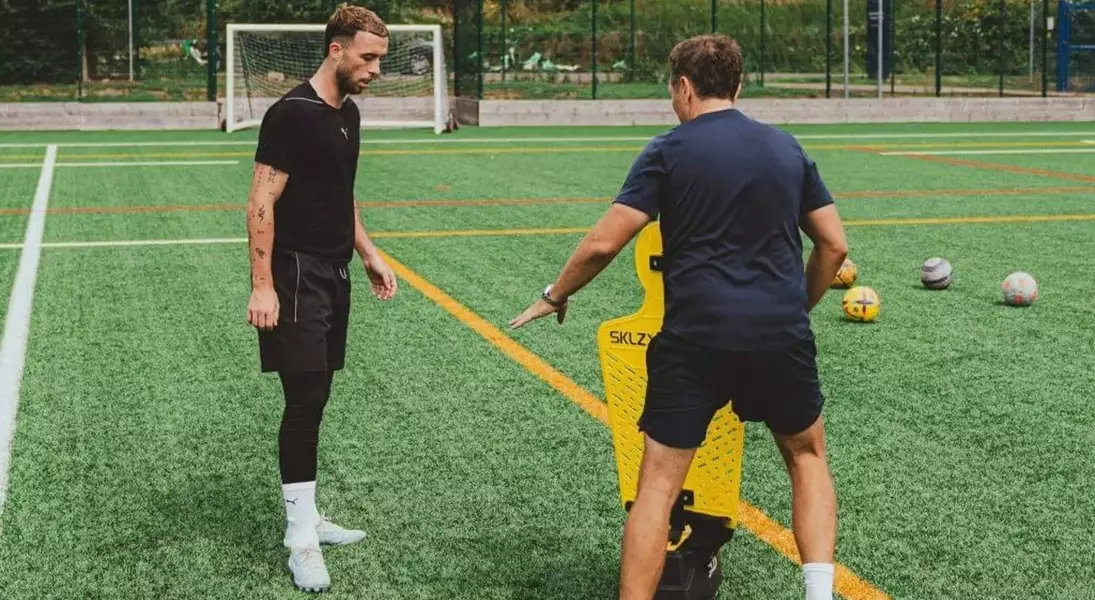
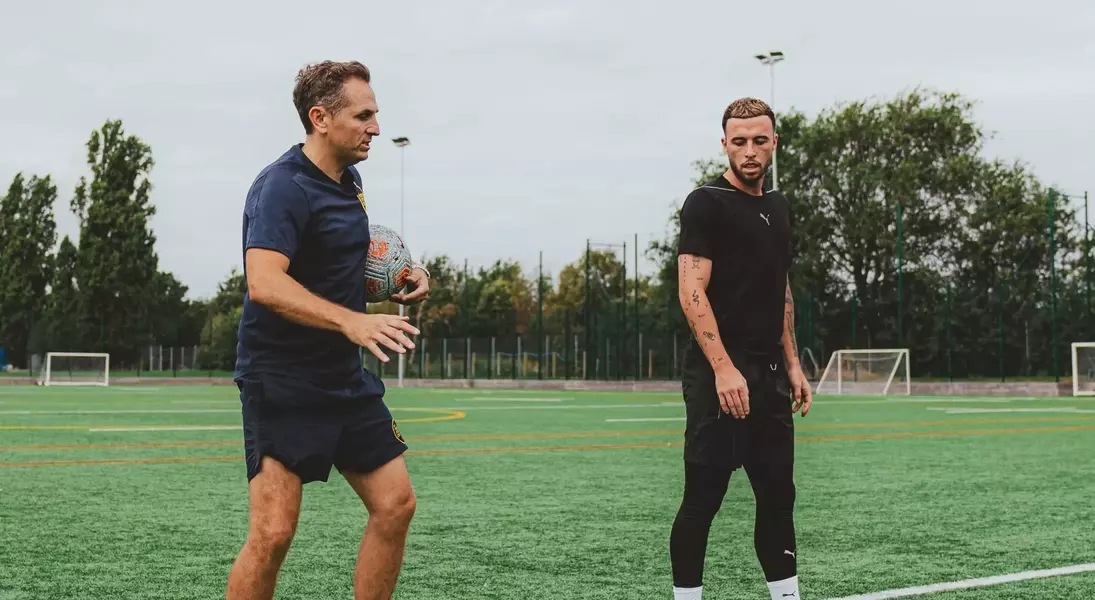

Professional footballers are increasingly seeking specialized, individual coaching outside their club structures to enhance their performance. This emerging trend highlights a growing recognition that dedicated, personalized training is essential for honing specific skills and achieving peak athletic output. Figures like Saul Isaksson-Hurst, with a background coaching at prestigious academies such as Chelsea and Tottenham, and Scott Chickelday, formerly of Tottenham's academy during Harry Kane's development, are at the vanguard of this movement. They believe that even marginal gains, achieved through meticulous attention to detail and rigorous practice, can significantly impact a player's effectiveness on the pitch. Their approach emphasizes targeted drills that replicate real-game intensity, focusing on aspects like finishing with both feet, strategic movement to create space, and understanding defensive reactions, proving that consistent effort, rather than inherent talent, is the cornerstone of success.
These individual coaches advocate for a holistic, interdisciplinary approach to player development. They collaborate with other specialists, including physiotherapists, nutritionists, and strength and conditioning experts, to ensure every facet of a player's physical and technical preparation is optimized. Chickelday, for instance, challenges the concept of 'natural goalscoring,' arguing that top strikers like Robbie Fowler and Harry Kane achieved their prowess through relentless repetition and practice, often unseen by the public. The sessions are designed to be highly intensive, incorporating elements like inflatable mannequins to simulate defenders and goalkeepers to mirror match-day conditions. This tailored training allows coaches to identify and address specific weaknesses, such as a player's non-dominant foot or heading ability, transforming potential into tangible improvements. The emphasis is not on a single 'correct' way to perform a skill, but rather on developing an effective technique that suits the individual player and the dynamic demands of the game.
The rise of individual coaching has sparked discussions within the football community, particularly concerning players seeking external support without club oversight, as evidenced by recent controversies. Nevertheless, in an era dominated by sports science and data analytics, the impact of these specialized sessions is increasingly quantifiable. Coaches use metrics like shots, goals, and assists, alongside video analysis, to track progress and demonstrate the tangible benefits of their work. Ultimately, this individualized attention empowers players to continuously refine their game, maximize their potential, and become the best version of themselves, proving that in modern football, continuous self-improvement and dedicated practice outside of traditional club training are becoming indispensable for competitive advantage.
The continuous pursuit of personal excellence, even in a team sport, embodies a powerful message: true achievement is a product of consistent effort and an unwavering commitment to self-improvement. Just as these athletes strive to enhance their individual skills for the collective good of their team, we too can uplift our communities and ourselves by embracing a similar dedication to growth and positive contribution.
