England's strategic approach to midfield dynamics, particularly the evolving role of Declan Rice, is taking center stage as the 2026 World Cup draws nearer. Manager Thomas Tuchel's tactical vision points towards a more advanced function for Rice, necessitating a specific profile for his midfield partner. This shift brings into focus players like Elliot Anderson, whose recent performances suggest he could be the crucial link that balances England's central unit.
The search for a robust deep-lying midfielder is paramount, as England has historically faced challenges in this area. Tuchel's initial matches have underscored the need for enhanced intensity and a player who can seamlessly integrate into his preferred 4-2-3-1 formation. Anderson's impressive debut against Andorra, despite the opponent's lower ranking, offered a glimpse into his potential, showcasing the physical prowess and technical acumen required to anchor the midfield and enable Rice to operate in a more forward-thinking capacity. His consistent form at Nottingham Forest, characterized by exceptional work rate and a comprehensive skill set, positions him as a strong contender for a pivotal role in the national team.
The Evolving Role of Declan Rice and Midfield Balance
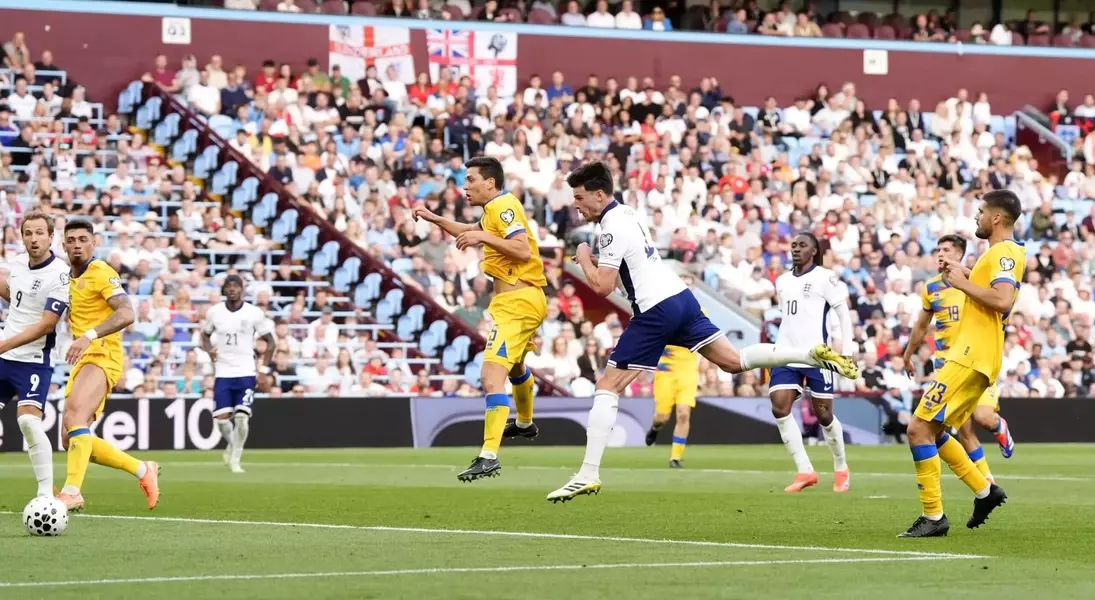
Thomas Tuchel's strategic interpretation of Declan Rice's midfield role is significantly shaping England's preparations for the 2026 World Cup. Rice's recent impressive goal in the 2-0 victory against Andorra offered a clear indication of Tuchel's intentions for the midfield composition and the type of partner he envisions for the 26-year-old. Evidence increasingly points to Tuchel favoring a 4-2-3-1 system, which relies on two complementary central midfielders. In the match against Andorra, Rice operated in a more advanced, Arsenal-esque role on the left, given the freedom to interchange positions with Myles Lewis-Skelly and to drive into the penalty area, a movement perfectly exemplified by his header for England's second goal. This suggests that Rice, either by design or circumstance, is likely to be deployed with a more dynamic, box-to-box mandate in the future, differing from the holding midfield duties he often undertook under previous management. This evolution in Rice's role directly impacts the selection of his midfield counterpart, requiring a player capable of providing the necessary balance by sitting deeper and facilitating play from the back.
This redefinition of Rice's position highlights a long-standing challenge for England: finding a proficient deep-lying midfielder. Historically, the team has struggled to consistently identify such a player, a deficiency often magnified in the aftermath of tournament defeats where England has been outmaneuvered by opponents dominating possession. Gareth Southgate's struggles to establish midfield equilibrium in last year's European Championship underscore this ongoing issue. While Trent Alexander-Arnold initially experimented in the position due to his passing range and vision, this trial was eventually replaced by Conor Gallagher's energy. Southgate ultimately settled on Kobbie Mainoo, a player whose club manager, Ruben Amorim, views him with a more attacking inclination than Southgate. The varying skill sets of these players often forced Rice to assume a more defensive, 'safety blanket' role behind them. Tuchel's recent call for greater intensity within his squad, following a subdued start to his tenure, further emphasizes the critical need for a stable and effective midfield partnership, one that can allow Rice to fully embrace his expanded responsibilities while ensuring defensive solidity and fluid ball progression.
Elliot Anderson: A Promising Solution for England's Midfield
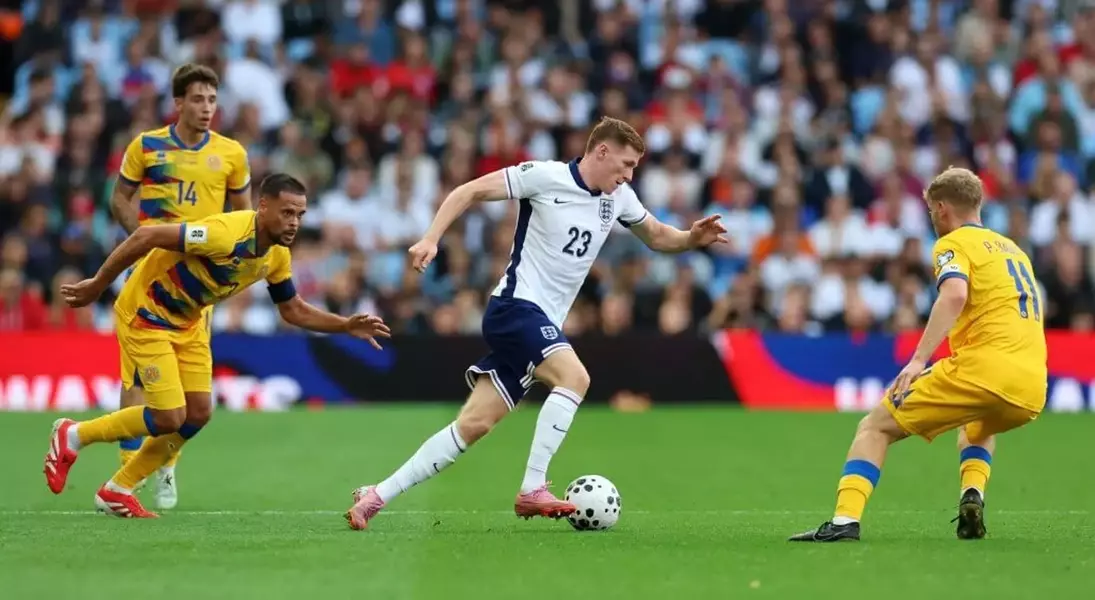
Elliot Anderson's national team debut under Thomas Tuchel presented a compelling case for his inclusion, potentially reinforcing the manager's conviction in deploying Declan Rice in a more advanced position. While acknowledging that this performance occurred against Andorra, a team ranked 174th globally, Anderson's attributes align well with England's midfield requirements. His consistent form at Nottingham Forest over the past year has merited international recognition, showcasing a diverse skill set rooted in exceptional athleticism, adept ball-carrying, and, crucially, robustness. He exhibits remarkable ground coverage with ease and swiftness, having missed only one league match last season. In the opening fixture of the current campaign against Brentford, he led all Forest players in distance covered (11.3 kilometers), with over eight kilometers of that attributed to high-intensity running. This physical durability could be a significant advantage, particularly when considering the perceived weaknesses of some of his midfield competitors; for instance, Ruben Amorim has reportedly sought to enhance Mainoo's speed, while Crystal Palace's Adam Wharton has faced injury setbacks. Tuchel himself lauded Anderson's contribution, describing him as a very physical player with significant volume, precise and clean passing.
Tuchel strategically positioned Anderson as the primary ball progressor against Andorra's defensively organized 5-4-1 formation. This tactical deployment echoed previous in-possession structures, where the holding midfielder, in this instance Anderson, dropped between the two central defenders, allowing the full-backs to push wider. Anderson demonstrated acute positional awareness from the outset, constantly adjusting to create passing lanes. His performance was characterized by a forward-thinking and confident approach, unfazed by the pressure of his debut and the significance of the occasion. He displayed bold anticipation, signaling to former Newcastle United teammate Dan Burn on multiple occasions to thread passes through the lines and consistently provided cover behind Marc Guehi when he advanced into midfield. Anderson played a crucial role in England's first goal, laying off the ball for Noni Madueke, whose subsequent cross deflected off an Andorra defender. Demonstrating exceptional accuracy, only seven of his 114 passes went astray, and those that did miss their target were often retrieved almost immediately, underscoring his relentless work ethic. Tuchel praised Anderson's overall performance, highlighting his physicality, defensive engagement, and ability to break lines with his passing. Despite a slight initial nervousness, Anderson quickly adapted, delivering a strong performance that firmly places him in contention for future, more challenging fixtures, including the upcoming match against Serbia.
