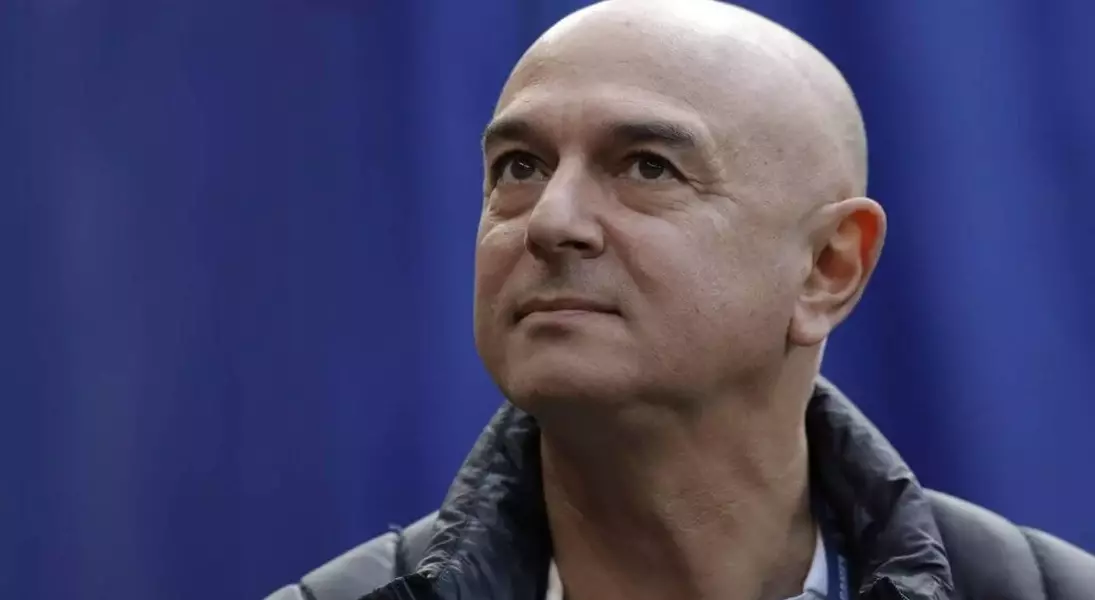
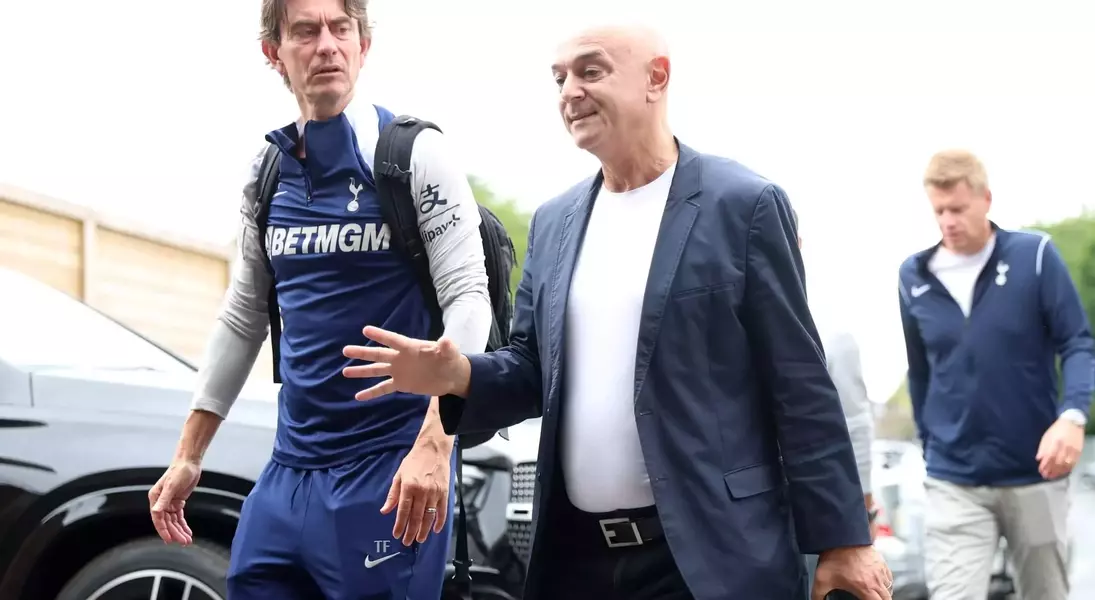
The Premier League bids farewell to one of its most compelling figures, Daniel Levy, whose 25-year stewardship of Tottenham Hotspur has drawn to a close. His time at the helm was characterized by an unwavering commitment to the club's financial health and a strategic vision that propelled Spurs onto the global stage. Levy's impactful presence, marked by a blend of business acumen and a challenging negotiation style, profoundly shaped Tottenham's trajectory and influenced the broader landscape of English football. While his tenure was not without its controversies, particularly among fan bases and rival clubs, his legacy is firmly etched in the club's unprecedented growth and the establishment of its modern, revenue-generating stadium.
A Quarter-Century of Influence: Tracing Daniel Levy's Tottenham Journey
In a significant transition that commenced in December 2000, Daniel Levy assumed control of Tottenham Hotspur, succeeding Alan Sugar as chairman. This pivotal moment initiated an era that would fundamentally reshape the club and leave a lasting imprint on the Premier League. During Levy's extensive tenure, the English football landscape underwent a colossal transformation, evolving from a domestic television deal worth £167.5 million annually to a staggering £1.675 billion by 2025, not to mention the substantial international broadcasting rights.
Reflecting on the transfer market, Tottenham's record signing in 2000 was Sergei Rebrov for £11 million. Fast forward to 2025, and the club was comfortably investing over £50 million each for players like Mohammed Kudus and Xavi Simons, a testament to the league's burgeoning financial power. This growth is further underscored by Tottenham's valuation, which soared from £60 million at the beginning of Levy's reign to an estimated £2-3 billion upon his departure.
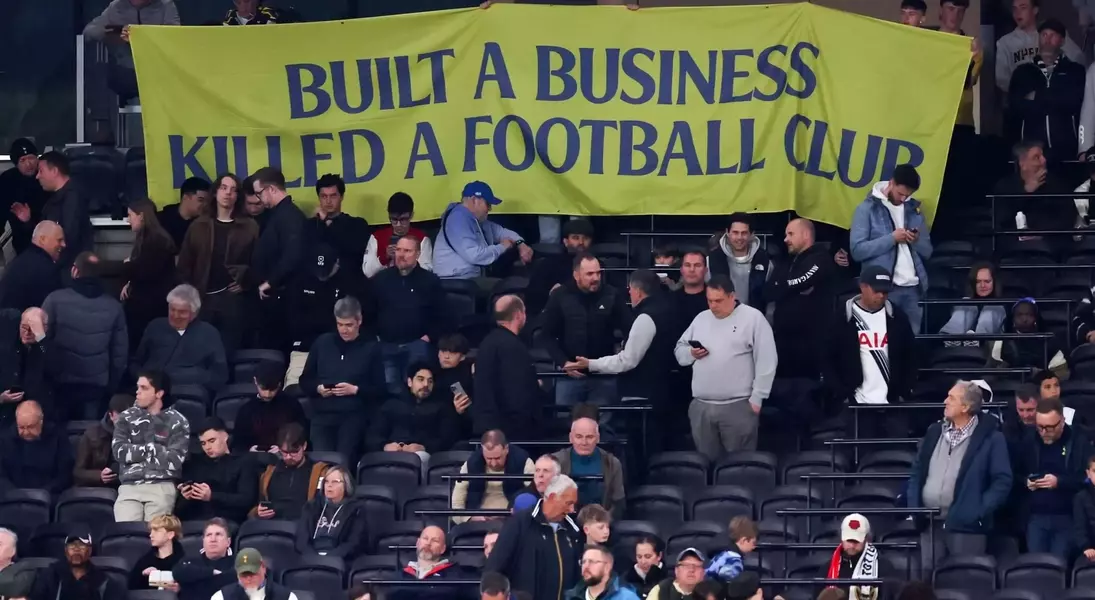
Levy was an undeniable central character in the Premier League's ongoing drama. He navigated the complex world of managerial changes, hiring and dismissing high-profile coaches such as Jose Mourinho, Antonio Conte, and Mauricio Pochettino. His negotiating prowess was legendary, exemplified by the then-world-record sale of Gareth Bale to Real Madrid for £85.3 million. Levy was also a key player in the controversial European Super League initiative in 2021, though Tottenham, like other English clubs, quickly withdrew. He became a lightning rod for supporter sentiment, a figure of both fascination and frustration, often remaining aloof from direct media and fan questioning.
His negotiation tactics were infamous. Sir Alex Ferguson, the legendary Manchester United manager, famously likened dealing with Levy to a 'hip replacement' due to the difficulty of transfer negotiations. Pep Guardiola, Manchester City's manager, sarcastically lauded Levy as 'the big master of negotiations' after Tottenham refused to sell Harry Kane in 2021. Despite this tough exterior, Levy demonstrated a more empathetic side, as evidenced by his call to Harry Redknapp after sacking him, seeking to maintain their friendship. His strong bond with Mauricio Pochettino even led to a memorable incident where Pochettino rescued Levy during a rafting trip in Patagonia, Argentina.
Levy's profile in English football was significantly elevated by the rise of transfer windows and their dramatization on television, further amplified by social media. His skill in securing deals, often pushing negotiations to the very last moment, cemented his status as one of English football's most talked-about executives. Moreover, the Super League saga, despite its fallout, highlighted how Levy had successfully positioned Tottenham within the inner sanctum of English and European football's power brokers.
While Tottenham is now recognized as one of the Premier League's 'Big Six' clubs, their journey to this elite status was gradual. They only secured a top-six finish in the Premier League's fourteenth season (2005-2006) and have won only three trophies since the league's inception in 1992: two League Cups and one Europa League. Their trophy cabinet and league standings, in comparison to other 'Big Six' members like Manchester United, Manchester City, Chelsea, Arsenal, and Liverpool, appear modest.
Nevertheless, Tottenham's league performances notably improved from 2010 onwards, consistently challenging at the top and even reaching the Champions League final in 2019. This on-field progress empowered Levy to advocate more forcefully for Tottenham's interests within the Premier League boardrooms. A notable example occurred in 2016 at London's Dorchester Hotel, where Levy expressed deep frustration about Tottenham's exclusion from a meeting of other 'Big Six' clubs discussing a potential expansion of the International Champions Cup, a precursor to what would become the Super League. Shortly thereafter, Levy and Tottenham were firmly back in the fold, notably at a November 2016 Premier League shareholders meeting, where the 'Big Six' effectively took control of negotiations for Chinese broadcast rights, seeking a larger share of revenue, believing their clubs commanded the most viewership.
Despite this unified front, the 'Big Six' was not always a harmonious entity. Levy's dedication to Tottenham's financial sustainability led him to advocate for stricter cost controls on rivals with state-backed resources. In 2013, Tottenham joined Arsenal, Liverpool, and Manchester United in a collective effort to curb inflationary spending, implicitly targeting Manchester City. Furthermore, Tottenham was among nine clubs that appealed to the Court of Arbitration for Sport to uphold a two-year UEFA ban against Manchester City in the Champions League, though this attempt was unsuccessful. Levy has also been a proponent of the Premier League's efforts to implement more stringent rules regarding related-party transactions, aiming to prevent owner-linked businesses from injecting funds into clubs via indirect sponsorships.
Despite Tottenham's remarkable growth under Levy, they remain the smallest of the 'Big Six' in terms of global reach, notably possessing fewer Twitter and Instagram followers than their counterparts. However, Levy's voice commanded immense respect in shareholder meetings, and larger clubs viewed him as a valuable ally, especially when seeking the 14 votes required for proposals to pass.
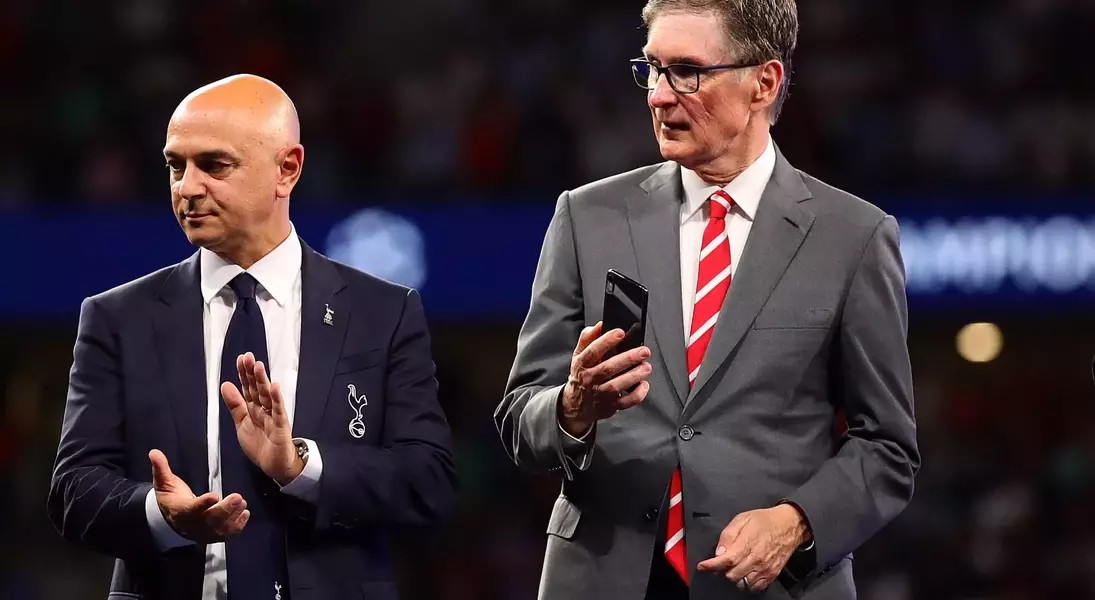
Owners such as the Glazer family (Manchester United), the Kroenkes (Arsenal), and Fenway Sports Group (Liverpool) admired Levy's willingness to push boundaries. Tottenham's participation in an Amazon Prime documentary, strategically timed during Jose Mourinho's tenure, showcased this innovative approach. Crucially, Levy earned the respect of rival owners, particularly the American contingents, through the construction of the state-of-the-art Tottenham Hotspur Stadium. This architectural marvel, seating 62,850 and generating nearly £5 million per game, serves as a financial powerhouse for the club, monetized through major concerts (including Beyoncé), go-karting facilities, and a partnership with the NFL that hosts at least two games annually.
As Daniel Levy steps down as the Premier League's longest-serving chairman, he leaves behind a transformative legacy. While his tenure may not be defined by a multitude of trophies, he is undeniably the architect who propelled Tottenham Hotspur into the future. The magnificent stadium stands as a tangible monument to his tireless efforts and visionary leadership. Now, the club's faithful hope that this impressive foundation will serve as the launchpad for a new, even more successful era for Spurs.
Daniel Levy's departure from Tottenham Hotspur marks a significant turning point in the Premier League. His 25-year tenure was a masterclass in modern football club management, demonstrating how a singular vision and unwavering commitment to financial prudence can transform a club. From a reader's perspective, Levy's story is a compelling narrative of ambition, negotiation, and strategic foresight in a rapidly evolving sporting landscape. It highlights the often-overlooked yet critical role of club executives in shaping team fortunes, beyond just on-field performance. The creation of the state-of-the-art stadium stands as a testament to his ambition and legacy, a physical manifestation of his long-term planning. His controversial but effective approach to business, earning him both detractors and admirers, underscores the complex and often ruthless world of top-tier football. As the Premier League moves forward, Levy's absence will undoubtedly leave a void, prompting other clubs to re-evaluate their leadership strategies and strive for the kind of sustainable growth he championed. His influence extended beyond Tottenham, shaping broader discussions about financial fair play, revenue distribution, and the very structure of elite football. His career serves as a reminder that success in professional sports is not solely determined by what happens on the pitch, but equally by the shrewd and sometimes contentious decisions made behind the scenes.
