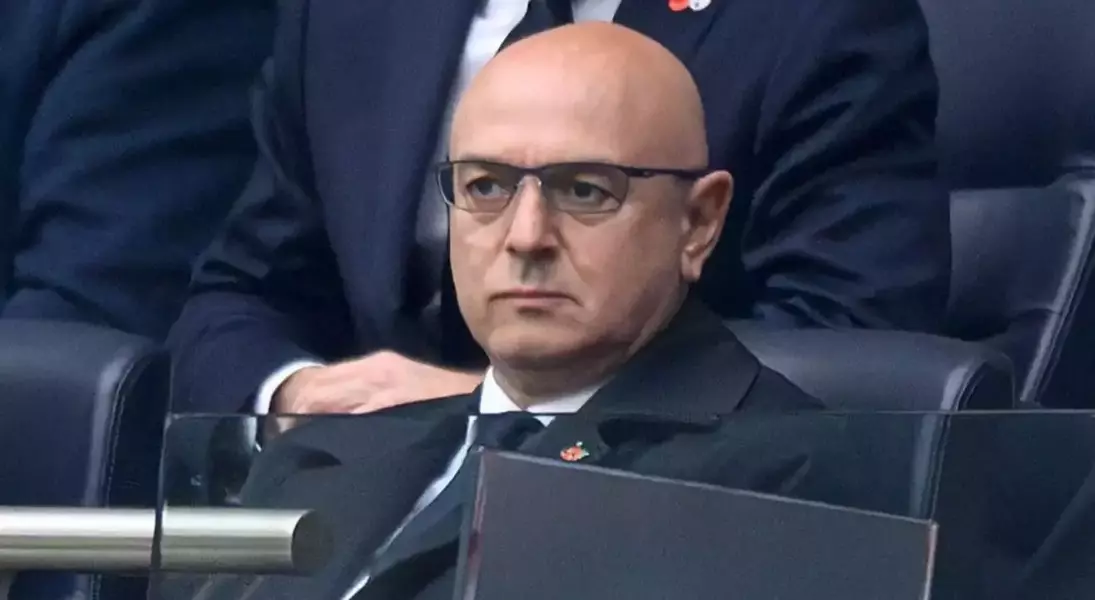
Daniel Levy's 25-year leadership at Tottenham Hotspur has come to an end, marking a significant transition for the Premier League club. His departure as Executive Chairman is reportedly part of a comprehensive reorganization by the club's ownership, aiming for a new era of achievements and growth. This strategic shift includes the appointment of Peter Charrington as the new Non-Executive Chairman, signifying a fresh leadership approach to steer the club forward.
On a recent Thursday evening, news broke that Daniel Levy was stepping down from his role, a position he held for a quarter of a century. In his public statement, the 63-year-old expressed immense satisfaction with the club's journey during his time, emphasizing its evolution into a global football powerhouse and a robust community institution. He acknowledged that the path was not always easy but highlighted the substantial progress achieved. Levy also extended gratitude to the dedicated staff, players, managers, and the loyal fanbase who supported him throughout his tenure, affirming his ongoing passion for the club.
However, an independent journalistic report suggests that Levy's exit was not entirely voluntary. Sources close to the club indicate that the decision was driven by ENIC, Tottenham's owners, who are implementing a broad strategic overhaul. This move is perceived as the final piece in a larger puzzle designed to propel the North London team to greater heights and secure more silverware. The ownership group is reportedly keen on injecting new energy and perspectives into the club's leadership, believing this fresh direction is crucial for future triumphs.
The change in leadership aims to transition Tottenham towards a more modern operational structure, moving away from a model where the chairman was seen by many as a de facto owner directly managing the club. Instead, ENIC intends to shift towards a framework where the owners primarily provide backing and support, allowing a dedicated CEO and other executive roles to handle day-to-day operations and strategic implementation. This signifies a clear intent to separate ownership responsibilities from the direct management of the club's sporting and business affairs.
The news of Levy's departure has elicited varied reactions among Tottenham supporters and football analysts. While some critics point to the club's relative lack of major trophies during his long tenure, others, including former Tottenham player Paul Robinson, have defended Levy's business acumen and commitment. Robinson emphasized Levy's dedication to the club's best interests, particularly highlighting his success in developing the club's infrastructure, including the state-of-the-art stadium and training facilities. The prevailing sentiment appears to be a mix of appreciation for his foundational work and a desire for more on-field success under the new leadership.
This significant leadership change at Tottenham Hotspur underscores a strategic realignment by the club's owners, ENIC, who are committed to fostering a new era of success and expansion. The transition from Daniel Levy's long-standing leadership to a revitalized executive structure, with Peter Charrington now in a key position, signifies a deliberate effort to evolve the club's operational model and pursue a more proactive approach to achieving its ambitions on and off the field.
