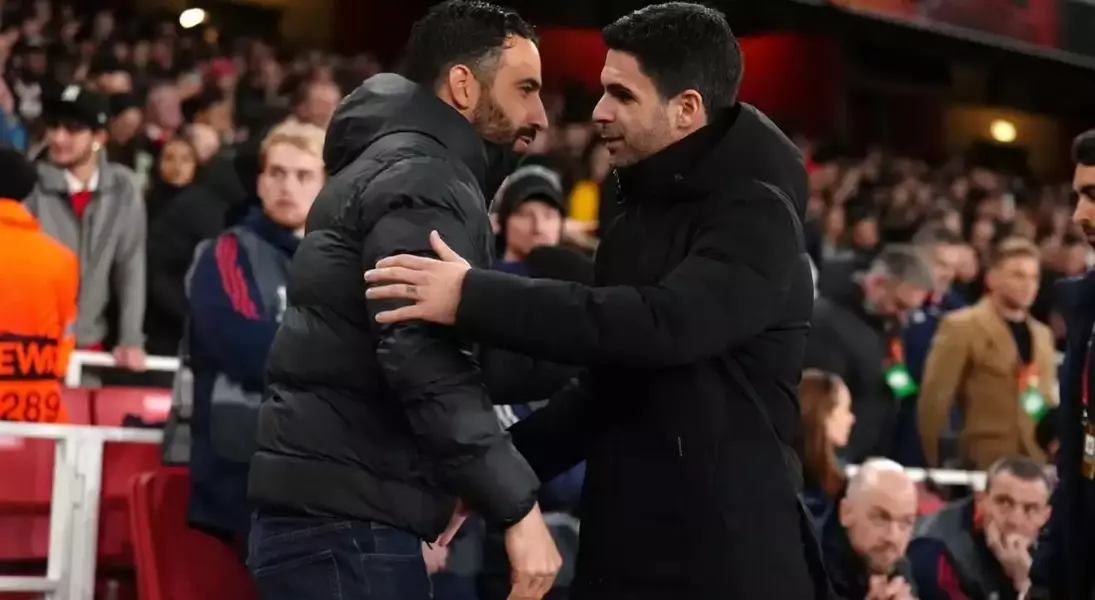
This analysis delves into the pivotal role of organizational culture in the enduring success of football clubs, contrasting the recent trajectories of Arsenal and Manchester United. It posits that a club's underlying culture can either foster prosperity or hinder progress, regardless of financial outlays or leadership adjustments. The transformation witnessed at Arsenal under Mikel Arteta serves as a compelling testament to the power of cultural reform, while Manchester United's prolonged challenges underscore the consequences of neglecting this fundamental aspect.
The Cultural Divide: Arsenal's Renaissance vs. Manchester United's Stagnation
In a thought-provoking observation by a football enthusiast from Sunderland named William, a direct comparison is drawn between the current state of Manchester United and the revitalized Arsenal under Mikel Arteta. The core argument is that Manchester United's ongoing difficulties stem from a deeply ingrained cultural issue that overshadows tactical prowess or individual player talent. Following the departure of Sir Alex Ferguson, Manchester United has invested billions and cycled through numerous managers, yet consistently failed to recapture its former glory. Players who depart Old Trafford, such as Marcus Rashford, Scott McTominay, Antony, and Elanga, frequently find renewed success elsewhere, suggesting a systemic problem within the club's environment rather than inherent player deficiencies.
Conversely, when Mikel Arteta assumed control of Arsenal in 2019, the club was in disarray, grappling with a fragmented locker room, a discontented fanbase, and a hesitant board—a scenario strikingly similar to Manchester United's present predicament. Despite this challenging start, Arteta meticulously reconstructed the club's culture. He introduced "non-negotiable" values that systematically addressed internal rot, unified the team, and garnered widespread support from both players and supporters. This cultural transformation, coupled with tactical acumen, enabled Arsenal to become a formidable force, making them exceptionally tough to overcome. The club's board, traditionally cautious with spending, has also shown increased willingness to support Arteta's vision for a robust squad, recognizing the profound impact of his cultural leadership.
The ease with which Arteta has cultivated this success has, perhaps, misled other clubs into believing that merely hiring a young manager and providing time is sufficient to achieve an attractive, expansive style of football. However, the author stresses that Manchester United's environment is inherently detrimental to player and coach development. Until this deeply rooted culture is thoroughly revamped, no amount of financial expenditure on new personnel will reverse their fortunes. The struggles of players like Marcus Rashford, whose performance at Manchester United often starkly contrasts with his displays elsewhere, exemplify this cultural impedance. The article concludes by commending Mikel Arteta's exceptional work in reshaping Arsenal, highlighting his monumental achievement in establishing a winning culture.
The reflections presented here underscore a critical lesson in sports management: success is not solely about talent acquisition or strategic planning. It is, fundamentally, about nurturing a resilient and positive organizational culture. For clubs like Manchester United, the path to recovery may lie not in further managerial changes or extravagant transfers, but in a profound introspection and an unwavering commitment to cultural transformation. Arteta's journey with Arsenal offers a blueprint, demonstrating that a coherent vision, clear values, and strong leadership can profoundly alter a club's destiny, turning division into unity and underperformance into triumph. It serves as a powerful reminder that culture, indeed, devours strategy for breakfast.
