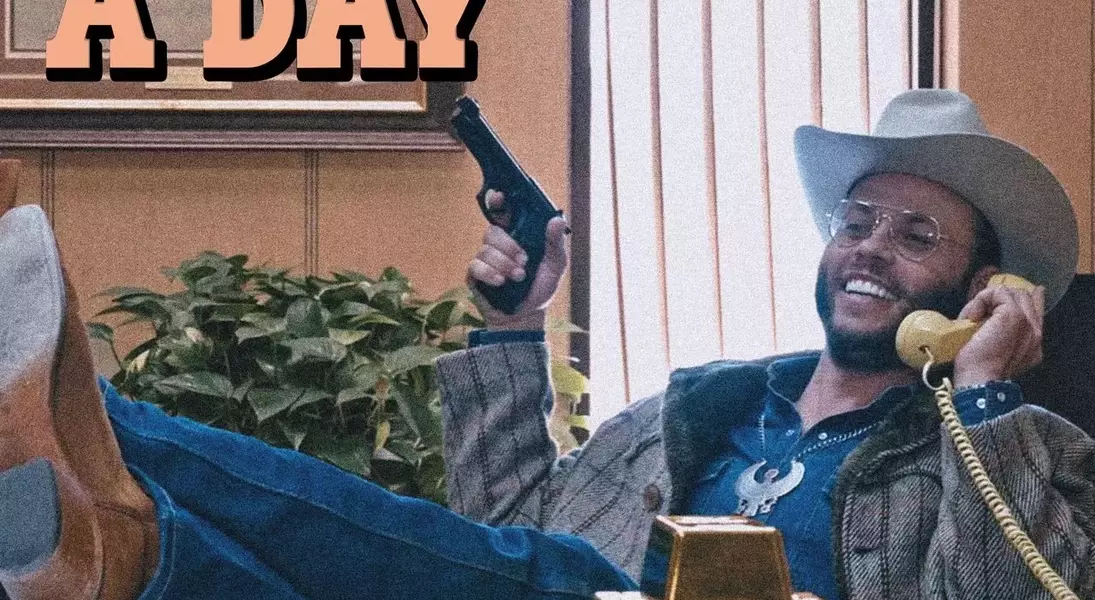
Charley Crockett's musical journey continues its relentless pace with the release of his new album, 'Dollar a Day,' arriving a mere five months after his major-label debut, 'Lonesome Drifter.' This marks his fifteenth album in a decade, a testament to his tireless dedication. While the title might suggest a narrative of constant struggle, it's more reflective of his continuous creative output. The album, much like Crockett's artistic ethos, incorporates works by other songwriters, alongside his own, highlighting his keen ability to absorb and reinterpret diverse musical elements.
Crockett's image as an authentic troubadour, complete with cowboy attire and a distinct twang, is carefully crafted from a deep appreciation for 20th-century Country & Western culture. This blend of influences gives 'Dollar a Day' a cinematic feel, with string arrangements evoking classic spaghetti Westerns and a funky undertone reminiscent of 1970s grindhouse cinema. Producer Shooter Jennings, who previously collaborated with Crockett on 'Lonesome Drifter,' masterfully enhances Crockett's sound, adding nuance and depth without sacrificing its raw, rhythmic core.
While Crockett occasionally ventures into more conventional country styles, such as the laid-back honky-tonk of 'Woman in a Bar' or the Waylon Jennings-esque swagger of 'Ain't That Right,' his true artistry shines in his exploration of the spaces where country music converges with R&B, folk, and the nostalgic sounds of vintage AM radio. A prime example is his vibrant rendition of Dan Penn and Spooner Oldham's 1960s soul anthem, 'Destroyed,' which is infused with lively keyboards and distorted guitars, giving it a contemporary yet timeless feel. This track seamlessly transitions into the album's closer, 'Alamosa,' where soul instrumentation meets lush strings, creating a soundscape that blurs the lines between Blaxploitation films and Westerns.
Crockett's intentional embrace of an old-fashioned aesthetic, even down to the album cover designed to look like a dollar-bin vinyl discovery, contributes to the captivating energy of 'Dollar a Day.' He shows little interest in adhering to narrow definitions of traditional country, instead enriching his outlaw anthem 'Lone Star' with guitar work that echoes psychedelic sitar. He even includes an instrumental piece, 'Age of the Ram (Theme),' composed by string arranger Stephen Barber, which adds a sense of grandeur to his narratives of wanderers and rogues. Despite these elaborate touches, 'Dollar a Day' remains grounded in the authentic, working-class sensibilities that Crockett has cultivated through his extensive recording and touring over the past ten years. This album is not merely a grand artistic statement or a concept album; it embodies the essence of the workingman's blues, a genre that few artists truly champion today.
In essence, 'Dollar a Day' is a testament to Charley Crockett's prolific nature and his unique ability to synthesize diverse musical traditions into a cohesive and compelling body of work. His sound is a rich tapestry woven from threads of classic country, soulful rhythms, and folk influences, all delivered with an unmistakable authenticity. The album serves as a vivid reminder of his dedication to his craft, continuously evolving his sound while honoring the roots that define his artistic identity.
