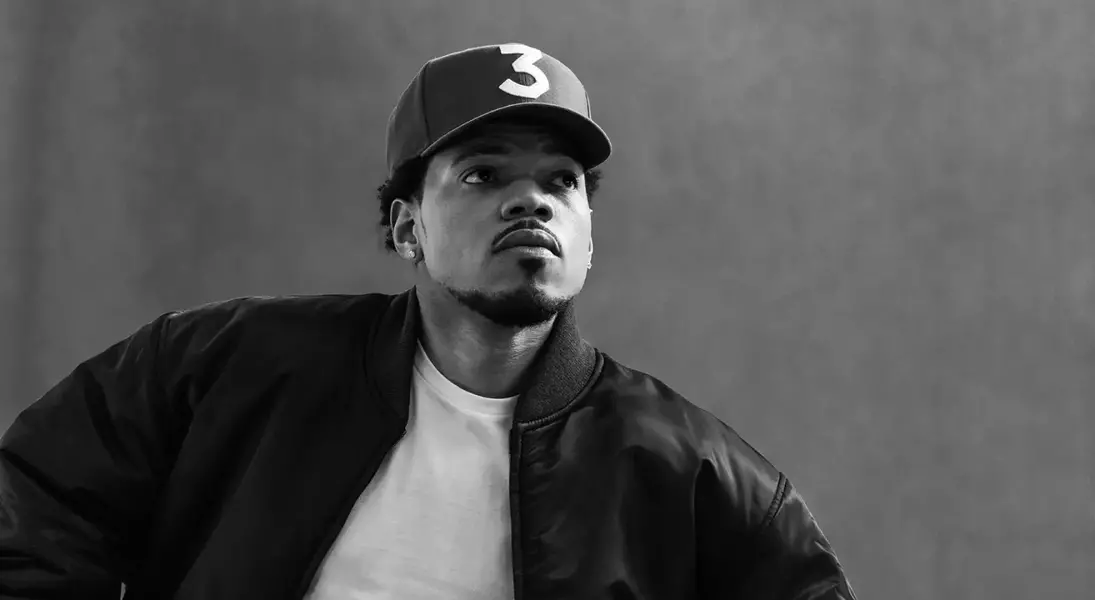
Chance the Rapper's latest album, 'Star Line,' released after a six-year hiatus, transcends mere musical performance, delivering a powerful and deeply personal narrative. It navigates the complexities of racial identity, societal challenges, and individual experiences, all while maintaining an underlying message of hope and collective upliftment. This work distinguishes itself by fostering dialogue and reflection, inviting listeners to engage with its profound themes.
The Intricate Tapestry of 'Star Line': A Detailed Exploration
On August 19, 2025, from the vibrant city of Chicago, the acclaimed artist, now 32 years old, unveiled his much-anticipated album, 'Star Line.' This release follows a period of significant personal and artistic evolution for Chance, who first gained widespread recognition during the twilight of the Obama administration. His previous work, particularly 'Coloring Book,' established him as a distinctive voice, blending gospel influences with a playful, cartoonish sensibility, echoing the groundbreaking sounds of Kanye West's early career. He notably contributed to West’s ‘Ultralight Beam’ and collaborated on chart-topping hits like ‘No Problem’ with Lil Wayne, and 'I'm the One' with DJ Khaled and Justin Bieber. During that era, his music resonated deeply with the communal spirit of the Black Lives Matter movement.
The intervening years have brought profound changes. A decade on from 'Coloring Book,' the landscape of pop culture and personal lives has shifted dramatically. Kanye West's public persona has taken a controversial turn, a topic noticeably absent from 'Star Line.' Chance himself has navigated the highs and lows of married life, culminating in a publicized divorce last year, a stark contrast to his previous album, 'The Big Day,' which celebrated his nuptials. Adding to the emotional weight, the passing of Mac Miller in 2018, a mentor since Chance’s 2013 breakthrough 'Acid Rap,' is poignantly addressed in the album's final track, 'Speed of Light,' featuring Jazmine Sullivan. In this song, Chance reflects on his journey, acknowledging fan expectations while subtly rejecting past habits: “Here, you take the acid since you concerned.”
Despite these profound shifts, Chance's inherent optimism shines through, making 'Star Line' a remarkable artistic resurgence. The album's title itself, inspired by Marcus Garvey's early 20th-century Black Star Line project, serves as a powerful symbol of aspiration, urging continued dreaming of a brighter future amidst global crises. In a deliberate departure from the diverse collaborations on 'The Big Day,' 'Star Line' predominantly features artists of color, underscoring Chance's commitment to his community. Yet, his message remains inclusive: “Don’t lay down when you know that they should feel a noose/Know it ain’t shit to lynch a Dylann Roof,” he asserts on 'Letters,' a call for Black churches to reclaim their activist roots. The track concludes with a unifying sentiment: “Love, Chance. P.S.: Bless everybody.”
The album’s ambition to encompass a broad spectrum of Black thought inevitably leads to moments of introspection and even controversy. The track 'Tree,' featuring Lil Wayne, offers a lighthearted yet politically charged take on marijuana, with Chance declaring, “Dispensary weed is a government scam.” However, Lil Wayne’s accompanying lyric, “I be smokin’ like an injun,” adds an unfortunate note. More complex is 'Just a Drop,' featuring Jay Electronica, which explores themes of systemic injustice faced by Black communities. Chance directly references the Flint Water Crisis, stating, “They don’t care if our water get dirty as f*ck.” Jay Electronica’s verse, which includes lines alluding to past accusations of antisemitism, presents a challenging moment. Yet, understanding the track's broader context reveals Chance's intention to foster difficult but necessary conversations.
The album showcases a range of musical styles, with tracks like 'The Highs and the Lows' featuring Joey Bada$$, a highlight driven by an infectious chipmunk soul beat co-produced by Chance and DexLVL. While some tracks, such as the arena-pop ballad 'Space & Time,' may falter, Chance’s masterful composition weaves together all 17 tracks into a cohesive and impactful statement. He reveals intimate reflections on fatherhood, his relationship with his ex-wife, and self-love. As he proclaims on 'Star Line Intro,' “The West Chatham Santa with some toys to give,” his enduring faith and hard-won joy are palpable. His lyrical honesty, particularly on 'Pretty,' where he admits, “Sometimes I think she was the love of my life,” and affirms, “I remember what I told myself/That I owe myself to show myself love,” underscores a journey of profound self-acceptance.
The Enduring Significance of 'Star Line' in Contemporary Dialogue
In a world grappling with complex social and political divisions, 'Star Line' stands as a crucial artistic contribution. Chance's endeavor to unite diverse perspectives within the Black community, even those with differing views, represents a vital gesture towards collective harmony. His willingness to collaborate with artists like Lil Wayne and Jay Electronica, despite their past controversies, highlights a commitment to dialogue over division. This approach is further exemplified in 'The Negro Problem,' where he uses Richard Pryor’s satire to critique internal community dynamics, and in 'Drapetomania,' where he partners with young artist BigChiefDoIt, expressing powerful sentiments of resistance. While some lyrics may push boundaries, they reflect Chance's authentic and sometimes provocative pursuit of Black unity and liberation. Ultimately, 'Star Line' is more than an album; it's a testament to resilience, a call for introspection, and a vibrant exploration of identity and community in challenging times.
