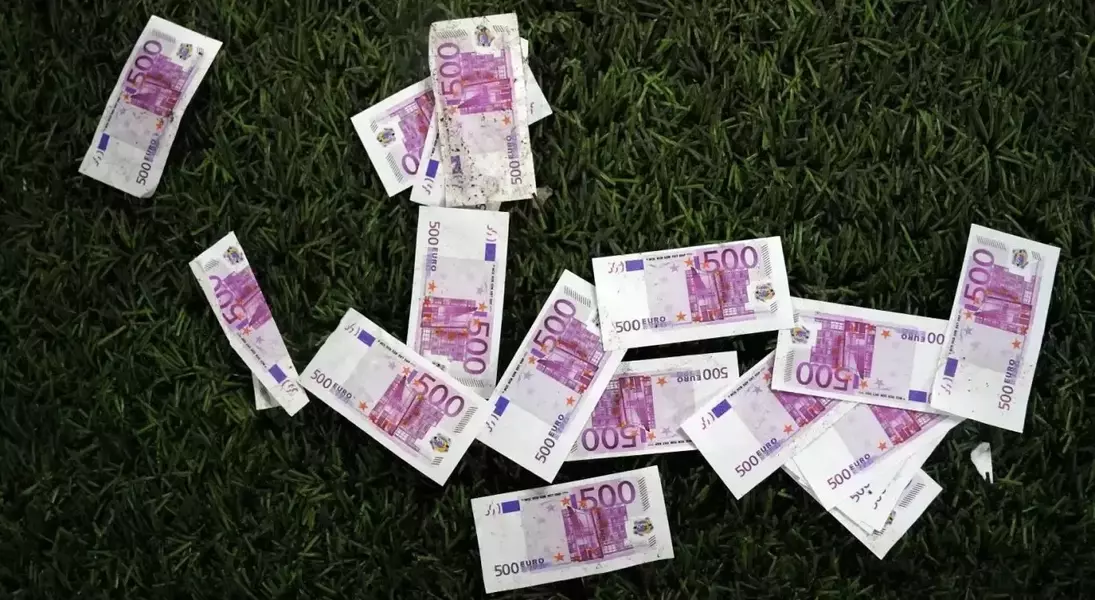
The UEFA Champions League, a pinnacle of European club football, offers participating teams not just glory but also substantial financial incentives. This season, the revamped prize money structure promises an unprecedented level of earnings for clubs, reflecting the tournament's immense commercial appeal and global reach. From guaranteed starting fees to performance-linked bonuses and broadcast revenue, the financial rewards are meticulously distributed, ensuring that elite clubs, particularly those with a strong historical presence, stand to gain significantly.
Understanding the Champions League's Lucrative Financial Ecosystem
The UEFA Champions League, an apex European club football competition, has unveiled a comprehensive and highly rewarding financial distribution model for the 2025/26 season, with a staggering total revenue of approximately £2.88 billion. This substantial sum is strategically divided, with the lion's share, over £2.1 billion (74.38%), earmarked for the clubs competing in the Champions League and Super Cup. The remaining funds are allocated to the Europa League (£490.7 million, 17.02%) and the Europa Conference League (£247.5 million, 8.6%).
Within the Champions League, the prize money is segmented into distinct categories: Firstly, an equal shares component dedicates £581.7 million (27.5%) to all 36 qualifying clubs, each receiving a guaranteed 'starting fee' of £16.2 million, irrespective of their subsequent performance. Secondly, performance-related fixed amounts total £793.6 million (37.5%). This includes £1.8 million for every league phase victory, £608,000 for each draw, and a tiered payment structure based on league phase position, ranging from £238,000 for the 36th-ranked team to £8.57 million for the top-ranked club. Any undistributed draw amounts are proportionally added to these ranking payments, further enhancing the rewards for higher-placed teams.
The third, and often most lucrative, segment is the 'value pillar,' comprising £740.6 million (35%). This component is a hybrid of club coefficient rankings and television pool revenue, inherently favoring established 'bigger' clubs with strong broadcast appeal and historical success. Consequently, powerhouses like Paris Saint-Germain, Manchester City, Bayern Munich, Liverpool, Real Madrid, Chelsea, and Arsenal are positioned to be the primary beneficiaries. Furthermore, clubs eliminated in the qualification play-offs before the league phase commence, such as Celtic and Rangers, receive a fixed fee of £3.73 million, providing a significant financial cushion.
Early estimates for the 2025/26 season reveal that leading clubs have already accumulated substantial earnings. Paris Saint-Germain tops the list with an estimated £56.3 million, followed closely by Manchester City (£55.62 million), Bayern Munich (£55.34 million), Liverpool (£54.9 million), and Real Madrid (£53.95 million). Chelsea (£50.84 million) and Arsenal (£50.13 million) also feature prominently, demonstrating the significant financial advantages enjoyed by the European elite.
Beyond the initial league phase, clubs can unlock further considerable sums by progressing through the knockout stages. Reaching the knockout round play-offs is worth £868,000, while advancing to the last 16 brings in £9.55 million. Quarter-finalists receive £10.85 million, semi-finalists £13.02 million, the losing finalists £16.06 million, and the ultimate champions a grand £21.7 million. Additionally, a Super Cup final appearance yields £3.47 million, with an extra £868,000 for the winner. Should a team achieve a perfect record, winning every league phase game and clinching the trophy, their earnings could easily surpass £115.56 million, even before factoring in TV and coefficient money, underscoring the truly extraordinary financial stakes involved in this prestigious tournament.
The sheer scale of financial rewards in the Champions League underscores the immense importance of success in this competition for clubs across Europe. For teams, particularly those outside the traditional elite, merely qualifying and performing creditably can provide a vital financial injection, enabling investment in infrastructure, talent, and long-term sustainability. However, the system also highlights a widening financial chasm, where the established giants continue to consolidate their wealth and dominance, making it increasingly challenging for smaller clubs to compete at the very highest level. This reality prompts reflection on the competitive balance within European football and the potential for these financial disparities to shape the future landscape of the sport.
