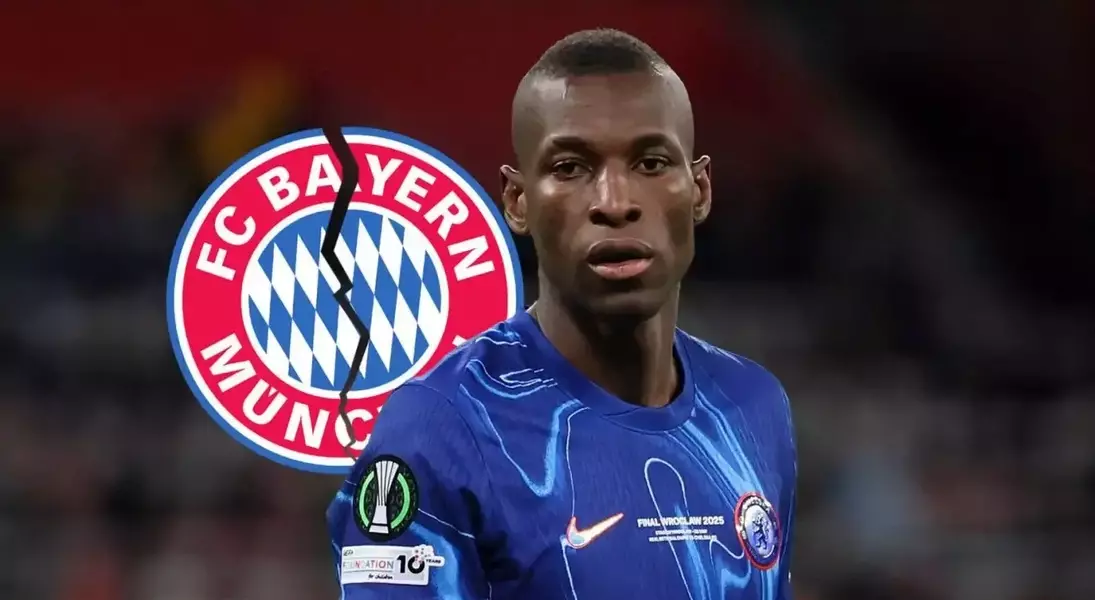
Bayern Munich's honorary president, Uli Hoeneß, has unequivocally stated that Nicolas Jackson's current loan spell at the club from Chelsea will not culminate in a permanent transfer. Hoeneß’s remarks shed light on the intricate financial arrangements of modern football deals and reflect a critical stance on the escalating costs within the transfer market, particularly highlighting the spending habits of English Premier League clubs and Saudi Arabian teams.
Hoeneß, a prominent figure in German football, articulated his views during an appearance on the 30th-anniversary broadcast of the 'Doppelpass' talk show on SPORT1. He openly shared his assessment of the transfer landscape, describing the Premier League's expenditure as 'completely crazy' and expressing concern over the substantial investments made by Saudi Arabian clubs. His commentary underscored a broader skepticism towards the burgeoning valuations of players in contemporary football.
A significant point of discussion revolved around the loan agreement for Nicolas Jackson, the Chelsea striker. Reports indicated an initial loan fee of €16.5 million (£14.3 million), with an obligation to purchase for €80 million (£69.3 million) if specific performance clauses were activated. However, Hoeneß disclosed that Jackson and his agent contributed €3 million (£2.6 million) to reduce the upfront loan cost, effectively making the fee €13.5 million. This revelation provides insight into how players and their representatives can influence transfer negotiations.
Crucially, Hoeneß revealed the condition for the €80 million permanent transfer: Jackson must start 40 games. He confidently asserted that this condition would 'never' be fulfilled, thereby dismissing any concerns among Bayern supporters about the potential for such a substantial future outlay. This perspective indicates a calculated approach by Bayern, securing a player on loan without the intention of a long-term commitment under the stipulated terms.
Beyond the Jackson deal, Hoeneß also touched upon other transfer targets. He mentioned that while Bayern had an interest in Florian Wirtz, they were unwilling to meet the reported €150 million valuation. Similarly, he dismissed Newcastle United's €90 million acquisition of Nick Woltemade as excessive, likening the current state of football transfers to a game of Monopoly, implying an irrational escalation of prices driven by wealthy entities rather than intrinsic value. Hoeneß concluded that Bayern Munich emerged as the 'real winners' of the summer transfer market, suggesting their prudence in avoiding exorbitant fees was a strategic triumph.
Ultimately, Bayern's leadership appears to be navigating the tumultuous transfer market with a blend of financial discipline and pragmatic player acquisitions. The club's stance, as conveyed by Hoeneß, reinforces a commitment to sustainable spending, even amidst a global football economy increasingly defined by monumental transfer sums.
