

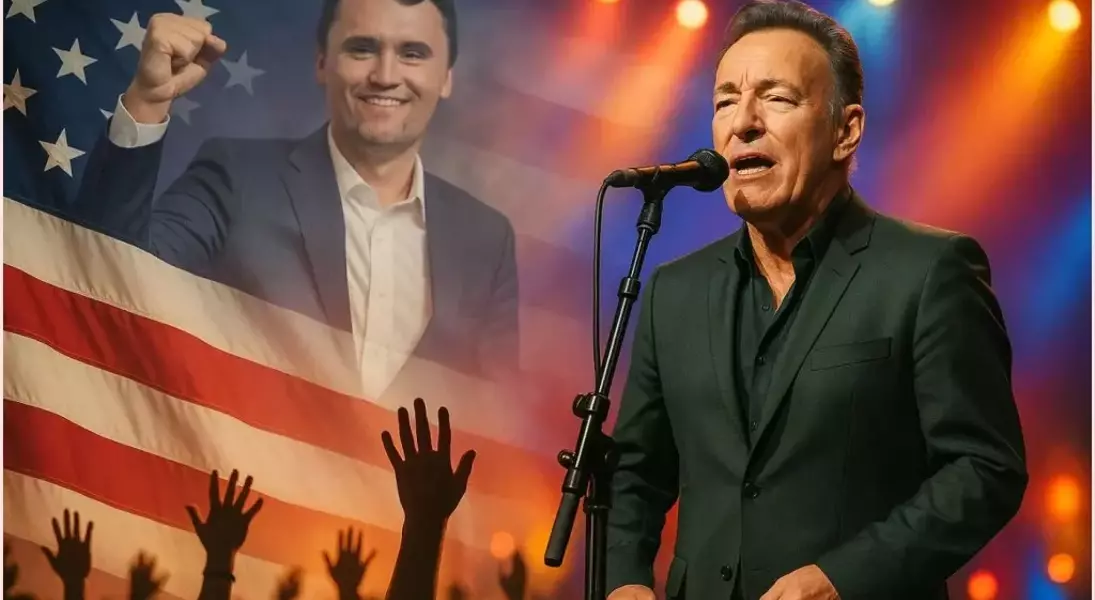
In the wake of conservative activist Charlie Kirk's demise, a curious phenomenon has emerged across various social media platforms. Fabricated accounts, fueled by artificial intelligence, suggest a collective outpouring of sorrow from the rock 'n' roll community. These spurious narratives claim that music legends such as Bruce Springsteen, Bob Dylan, and members of Led Zeppelin and the Rolling Stones have publicly grieved Kirk's death, dedicating performances and expressing profound sadness.
However, these stories are entirely baseless. Online, one might encounter AI-created images of a somber Springsteen laying flowers at a memorial, or a fabricated post asserting that Robert Plant interrupted a concert to perform \"God Bless America\" in Kirk's honor. Another widely circulated meme suggests Mick Jagger, during a New York performance, dedicated \"Angie\" to Kirk's memory, while Bob Dylan supposedly launched into \"Blowin' in the Wind\" after learning of the news. This unsettling trend is a recent development in the proliferation of AI-generated rock memes that have surfaced on social media, often exploiting the aging or ailing health of classic rock figures. While many users recognize the inauthenticity of these posts, some are misled, exemplifying the pervasive impact of digital misinformation.
Amidst this surge of artificial content, there are instances where real events stand in stark contrast. Chris Martin of Coldplay, for example, genuinely acknowledged Kirk's death during a London show, extending wishes of peace to his family. This real-world gesture, supported by verifiable video and eyewitness accounts, underscores the clear distinction between authentic expressions of sentiment and the bizarre fabrications spun by AI. The ease with which these deceptive narratives can be created and consumed highlights a critical challenge in the digital age, where distinguishing genuine information from elaborate fictions becomes increasingly difficult. The growing sophistication of AI in generating believable yet false content demands greater media literacy and critical engagement from online users.
